Understanding Legal Requirements for Firearm Storage
The responsibility of owning a firearm extends beyond mere possession; it includes ensuring the weapon is stored safely and securely to prevent accidents, theft, and misuse. Across various jurisdictions, laws surrounding firearm storage are designed to protect public safety while respecting individual rights. Understanding these legal requirements is crucial for all gun owners to avoid legal repercussions and contribute to a safer community.
The Importance of Proper Firearm Storage
Proper firearm storage is not just a legal obligation but a moral one. Unsafe storage can lead to accidental discharges, unauthorized access by children or criminals, and tragic consequences. According to the Centers for Disease Control and Prevention (CDC), over 500 unintentional firearm deaths occur annually in the United States alone, many involving children who accessed unsecured weapons.
Beyond safety concerns, improper storage increases the risk of firearms being stolen and used in crimes. The Bureau of Justice Statistics reports that approximately 280,000 firearms are stolen from households annually in the U.S., often due to inadequate storage practices. This underscores why lawmakers have instituted stringent rules governing how firearms must be stored.
Overview of Legal Requirements by Jurisdiction
Firearm storage laws vary widely across countries, states, and even municipalities. While some jurisdictions enforce comprehensive regulations, others have minimal or no specific mandates. Understanding your local laws is essential to ensure compliance.
United States
In the U.S., firearm storage laws differ significantly from state to state:
- California: Requires firearms to be stored with a locking device or in a locked container when not under the owner’s control. Additionally, handguns must be stored unloaded.
- Texas: Has no statewide requirement for locking up firearms; however, some cities may have their own ordinances.
- New York: Mandates that guns be securely stored when minors are present or if the owner knows that an unauthorized person may access the firearm.
- Massachusetts: Requires gun owners to obtain a firearm identification card (FID) and store guns in locked containers or with trigger locks.
This patchwork of regulations means gun owners must familiarize themselves with their local laws carefully. Ignorance of these requirements can result in severe penalties, including fines and criminal charges.
International Examples
Around the world, countries often impose strict firearm storage rules as part of broader gun control measures:
- Canada: The Firearms Act mandates that restricted firearms be unloaded and securely locked up or rendered inoperable when stored.
- Australia: Enforces strict licensing regimes alongside mandatory secure storage requirements such as safes bolted to walls or floors.
- United Kingdom: Requires all firearms to be stored securely, typically in approved gun cabinets meeting British Standards (BS7558).
Common Legal Standards for Firearm Storage
While specifics vary, several common elements characterize most legal requirements for firearm storage worldwide. These standards aim to minimize unauthorized access and accidents:
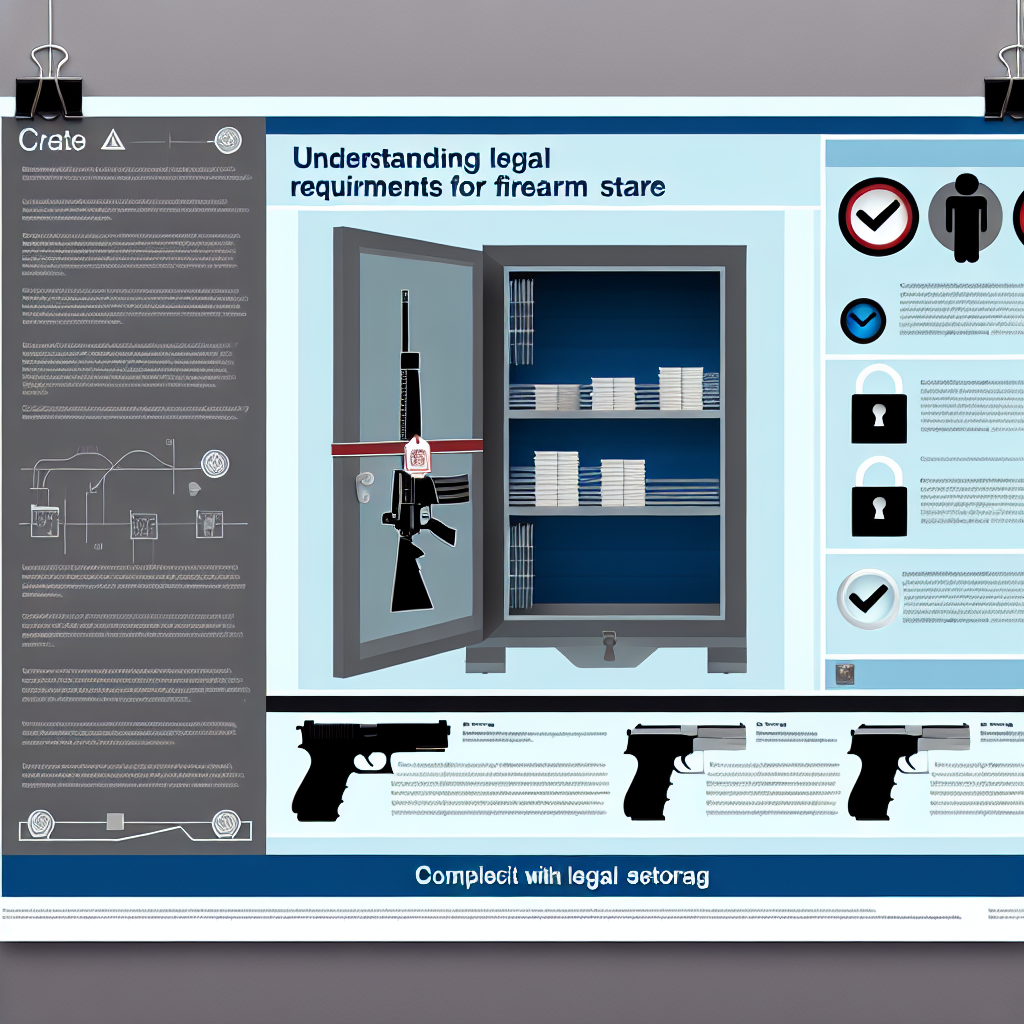
- Use of Locked Containers or Safes: Most laws require firearms to be stored in locked containers such as safes, lockboxes, or cabinets designed specifically for guns.
- Trigger Locks and Cable Locks: In addition to physical containers, many jurisdictions mandate using trigger locks or cable locks as additional safety measures.
- Unloaded Firearms: It is commonly required that firearms be unloaded before storage unless under immediate control of the owner.
- Ammunition Storage: Some laws require ammunition to be stored separately from firearms in locked containers.
- Avoiding Access by Minors: Special emphasis is placed on preventing children from accessing guns by requiring secure storage whenever minors are present at home.
The Consequences of Non-Compliance
The failure to adhere to legal firearm storage requirements can result in serious consequences. These include both criminal liability and civil penalties depending on the jurisdiction and circumstances involved.
- Criminal Charges: Violations can lead to charges ranging from misdemeanors for negligence up to felonies if improper storage results in injury or death.
- Civil Liability: Gun owners may face lawsuits if improper storage allows access leading to harm or property damage.
- No Gun Possession Rights: Some jurisdictions suspend or revoke gun licenses upon violations related to unsafe storage practices.
A well-documented case illustrating these risks occurred in Florida where a child accidentally shot himself with an unsecured handgun. The owner faced both criminal charges for negligence and civil suits filed by the child’s family. This tragic incident highlights how critical safe storage is beyond just legal compliance—it’s about preventing loss of life.
Selecting Appropriate Firearm Storage Solutions
Selecting the right firearm storage solution involves balancing security, accessibility (for lawful use), and compliance with applicable laws. Here are some options commonly considered by gun owners:
- Gun Safes and Cabinets: Heavy-duty safes with biometric locks provide high security but may limit quick access during emergencies such as home invasions.