How Gun Laws Influence Gun Manufacturing and Design
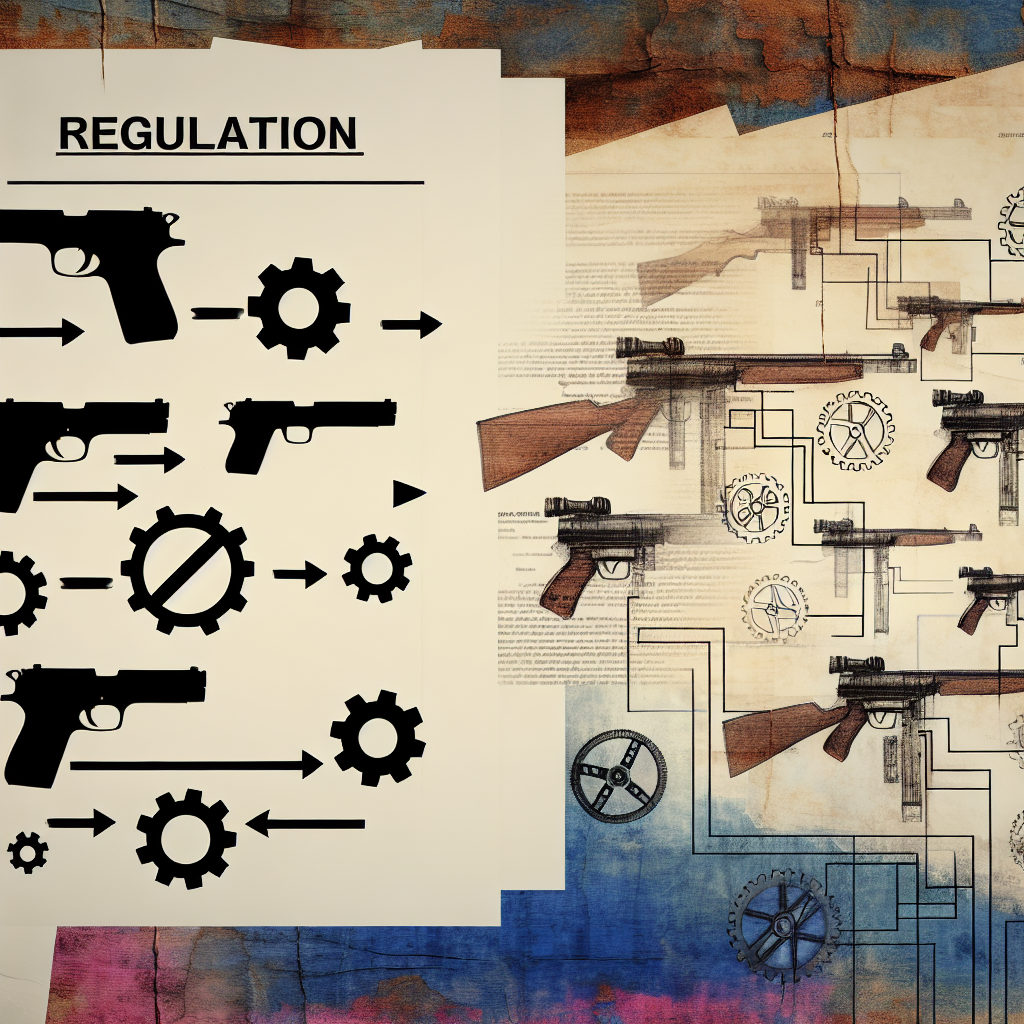
- Gun laws don’t just determine who can buy or possess a firearm. They can also influence what manufacturers build in the first place.
From barrel lengths and magazine capacities to stock configurations, imported models and required markings, firearm regulations have repeatedly shaped the products that reach the civilian market. When laws change, manufacturers frequently respond by modifying existing models, creating jurisdiction-specific versions or discontinuing products that no longer make sense for a particular market.
The result is an unusual relationship between regulation and product development. Lawmakers write rules around particular types of firearms or characteristics, manufacturers design products that comply with those rules, and new laws or court decisions can start the process all over again.
When Legal Definitions Become Design Specifications
Many firearm laws work by defining a regulated category according to specific characteristics. Once that happens, those definitions effectively become design boundaries for manufacturers.
The federal National Firearms Act is an early example. The NFA regulates several categories of firearms and devices, including short-barreled rifles, short-barreled shotguns, machineguns, silencers and certain other weapons.
A manufacturer that wants to offer a conventional rifle without placing it within the short-barreled-rifle provisions therefore has to design the commercial product around the applicable federal definition.
Similar effects occur at the state level.
California, for example, defines certain semiautomatic firearms as assault weapons according to combinations of characteristics such as detachable or fixed magazines, pistol grips, folding or telescoping stocks, flash suppressors and other specified features.
That has helped create what shooters commonly call the California-compliant or featureless firearm market. Instead of abandoning California entirely, manufacturers and accessory companies have offered configurations designed around the state’s legal definitions.
The important point isn’t any one configuration. It’s that regulation can become part of the product-development process.
A firearm may leave the same basic platform in several versions depending on where it will be sold.
The 1994 Federal Assault Weapons Ban: A Clear Historical Example
Few periods illustrate this relationship better than the federal assault-weapons ban that took effect in 1994 and expired in 2004.
The law restricted newly manufactured semiautomatic firearms that met its statutory definitions and also restricted newly manufactured magazines holding more than 10 rounds for civilian use. Firearms and magazines lawfully possessed before the effective date were generally treated differently under the law.
Manufacturers responded by changing the combinations of features offered on new firearms.
Stocks changed. Certain muzzle devices disappeared or were replaced. Bayonet lugs became less common on affected models. Ten-round magazines became standard equipment with firearms that previously might have shipped with larger magazines.
The underlying operating system of a rifle could remain substantially the same while its external configuration changed enough to fall outside the federal definition then in effect.
When the federal restrictions expired in September 2004, many of those federally driven distinctions disappeared—but not everywhere. States including California retained or adopted their own restrictions. California’s current definitions, for example, continue to regulate various semiautomatic firearms according to listed characteristics and magazine configuration.
That is why terms such as pre-ban, post-ban, compliant and featureless remain part of the firearm industry’s vocabulary decades later.
The Gun Control Act Changed Manufacturing Too
The Gun Control Act of 1968 had an even broader effect on the American firearm business.
The GCA established much of the modern federal framework governing interstate and foreign firearm commerce, including federal licensing and restrictions on firearm importation and possession by prohibited persons.
For manufacturers and importers, the effects go well beyond the retail counter.
Federally licensed manufacturers have recordkeeping obligations involving information such as firearm type, model, caliber or gauge and serial number. Federal rules also impose identification and marking requirements on commercially manufactured firearms.
Importation rules have also influenced which foreign-designed firearms reach American consumers and in what configuration.
That creates another incentive for companies serving multiple countries to maintain different versions of essentially the same product.
A model intended for the U.S. market might differ from one sold in Europe or another country—not because engineers suddenly preferred a different design, but because the regulatory environment was different.
Magazine Laws Create State-Specific Products
Magazine-capacity restrictions provide one of the easiest examples to see at the retail level.
There is no single nationwide state standard. Instead, manufacturers and distributors have to account for different rules depending on where a firearm or magazine is being sold.
New York currently permits magazines capable of holding up to 10 rounds while restricting larger-capacity magazines. New Jersey likewise generally prohibits magazines capable of holding more than 10 rounds.
As a result, a handgun that normally ships with a 15-, 17- or 20-round magazine in much of the country may have a separate SKU packaged with 10-round magazines for restricted markets.
This creates several practical consequences for manufacturers:
- Separate compliant product packages
- Additional magazine SKUs
- State-specific inventory
- Different distributor and dealer restrictions
- Additional compliance checks when laws change
For a large manufacturer selling nationwide, what appears to the consumer as a simple magazine option may actually be part of a much larger compliance system.
Do Magazine Restrictions Affect Public Safety?
That question is considerably more complicated than their effect on manufacturing.
Research on gun laws frequently produces more nuanced conclusions than political arguments on either side suggest.
RAND’s continuing review of firearm-policy research currently characterizes the evidence that bans on high-capacity magazines may reduce mass shootings and mass-shooting fatalities as limited, rather than conclusive.
That distinction matters.
It is possible to say with considerable confidence that magazine restrictions affect what manufacturers produce and sell in particular states. Determining their broader effect on crime, homicide or mass shootings requires a different kind of evidence and remains an active area of research.
For the firearm industry, however, the immediate manufacturing effect is straightforward: if an important market limits capacity, companies have an incentive to offer products that can legally be sold there.
California and the Rise of the “Compliant” Firearm
California may be the most visible American example of regulation producing an entire category of market-specific products.
The state’s assault-weapon laws identify various firearm configurations through specified characteristics. Current California definitions include such features as certain pistol grips, thumbhole stocks, folding or telescoping stocks, flash suppressors and forward pistol grips in specified semiautomatic firearm configurations.
Instead of simply eliminating semiautomatic rifles from their California catalogs, many companies have sold versions configured to remain outside those definitions.
That has affected:
- stocks
- grips
- magazine systems
- muzzle devices
- model numbers
- packaging
- distributor inventories
It has also created a separate accessory market aimed specifically at owners of compliant firearms.
California itself has used the term “featureless” in regulatory materials to describe semiautomatic firearms lacking the characteristics associated with regulated assault weapons.
That is a remarkable example of legislation influencing not just one firearm model, but an entire vocabulary and product category.
A Patchwork of State Laws Complicates Nationwide Manufacturing
For manufacturers, one of the biggest challenges isn’t necessarily complying with a single restrictive law. It’s dealing with many different ones at once.
A firearm legal for ordinary sale in one state may require a different configuration in another.
The practical response is often a combination of:
- nationwide models
- state-compliant models
- restricted-state SKUs
- distributor shipping controls
- dealer compliance systems
- warnings concerning jurisdiction-specific restrictions
That makes firearm manufacturing different from many other consumer-product industries.
A television manufacturer generally doesn’t need a New York version, a New Jersey version and a Florida version of the same television.
A firearm company may effectively have to think that way.
And because firearm laws can change through legislation, agency rules and court decisions, compliance isn’t a one-time design decision.
A model that fits the market today may require changes tomorrow.
Regulation Can Encourage Innovation—But Not Always in the Way Lawmakers Expect
It’s tempting to describe every regulatory response as either clever innovation or an attempt to evade the law.
Reality is usually less dramatic.
Businesses in regulated industries routinely design products around legal definitions. Automakers respond to emissions and safety standards. Appliance manufacturers respond to energy regulations. Pharmaceutical companies design packaging around labeling rules.
Firearm manufacturers do much the same thing.
Sometimes that leads to genuinely new products. In other cases it simply means modifying an existing product so it can continue to be sold legally.
A company may conclude that the most economical response to a regulation is to:
- change a feature
- develop a compliant variant
- limit a product to certain jurisdictions
- alter the standard accessories included with it
- discontinue the model in a particular market
That doesn’t necessarily mean the resulting firearm is technologically revolutionary.
Often, regulation changes configuration more than fundamental firearm technology.
The International Market Adds Another Layer
American firearm manufacturers aren’t the only companies dealing with this issue.
Global manufacturers face an even more complicated regulatory landscape because the same basic firearm may be subject to very different rules from one country to another.
The European Union’s Firearms Directive establishes common minimum rules covering the acquisition, possession and commercial exchange of civilian firearms while classifying firearms into regulatory categories. Individual member states can have additional national requirements.
The EU has also adopted updated rules governing imports and exports of firearms, essential components and ammunition through Regulation (EU) 2025/41.
For an international manufacturer, this means a single firearm platform might be sold with different features, capacities or configurations depending on its destination.
Export rules can influence production schedules.
Local ownership restrictions can determine whether developing a particular model is commercially worthwhile.
Marking and documentation rules can influence manufacturing processes.
And some products simply won’t be offered in markets where compliance costs outweigh potential sales.
Regulation Can Shape Which Products Companies Develop
There is another effect that’s harder to see.
Manufacturers don’t only alter products after legislation passes. They also make decisions about future products based on the regulatory environment they expect to face.
Consider a company deciding whether to invest millions of dollars developing a new firearm platform.
Engineers and executives may have to consider:
- How many states can sell it in its standard configuration?
- Will compliant variants be needed?
- Can it be exported?
- Are proposed regulations likely to affect the market?
- Will distributors need separate inventory?
- Is the potential customer base large enough to justify development?
Those aren’t purely engineering questions.
They’re business questions created partly by regulation.
Over time, that can influence which products are funded, which remain niche designs and which never reach production at all.
The Relationship Works in Both Directions
Gun laws influence firearm manufacturers, but firearm technology can also force lawmakers to reconsider existing definitions.
Many firearm statutes were written around the products and terminology that existed when the legislation was drafted.
Technology doesn’t necessarily remain inside those categories forever.
New designs, new accessories and new manufacturing methods can raise questions about how older definitions should apply. Regulators may respond with new interpretations or rules, legislatures may amend statutes, and courts may ultimately decide whether those actions fit within existing law.
The cycle then begins again:
A law defines a category.
Industry designs products within those boundaries.
Technology and the market evolve.
Lawmakers or regulators reconsider the boundaries.
That continuing feedback loop helps explain why firearm regulation can become so complicated.
Does Regulation Slow Firearm Innovation?
Sometimes—but it can also redirect it.
A restriction may make development of one type of product less attractive while encouraging manufacturers to devote resources to another.
Magazine restrictions create demand for compliant magazines.
Feature-based firearm restrictions create demand for compliant configurations.
Import rules may encourage domestic production.
Marking and traceability rules affect manufacturing and recordkeeping systems.
At the same time, complying with many different jurisdictions adds costs. Maintaining several versions of essentially the same firearm requires additional engineering, inventory, legal review, packaging and distribution management.
Those costs are ultimately part of doing business in a heavily regulated industry.
What This Means for Gun Owners
For consumers, the regulatory influence on manufacturing is visible every time a firearm is advertised as:
California compliant
10-round compliant
state compliant
or simply unavailable in particular jurisdictions.
Two firearms carrying almost identical model names can therefore arrive with different features depending on where they’re sold.
This also means buyers should be cautious about assuming that a product shown in a national advertisement is necessarily the version available in their state.
Federal, state and local firearm laws can change, and legality can depend on details that aren’t obvious from a photograph.
Checking current requirements with the appropriate government authority or a qualified local professional is far more reliable than relying on an old forum post or product description.
Final Thoughts
Gun legislation and firearm manufacturing have been influencing one another for generations.
The National Firearms Act created regulated firearm categories that remain significant today. The Gun Control Act changed how firearms are manufactured, marked, imported and distributed. The 1994 federal assault-weapons ban produced a decade of distinctly recognizable compliant firearms. State restrictions have since created their own specialized versions, magazines and product categories.
And the process continues.
Whether someone views a particular firearm regulation as sensible, ineffective or somewhere in between, one result is difficult to dispute: when lawmakers change the legal definition of what can be manufactured or sold, firearm manufacturers change their products in response.
Sometimes the difference is immediately obvious. Other times it’s a different magazine in the box, a changed component or a separate model number buried deep in a manufacturer’s catalog.
Those small differences tell a larger story about the unusual relationship between legislation, engineering and the firearm marketplace.
And that raises an interesting question for gun owners: Do regulations actually reduce the availability of particular types of firearms, or do they mostly change the form those firearms take?