Customizing Your Rifle for Long-Range Shooting
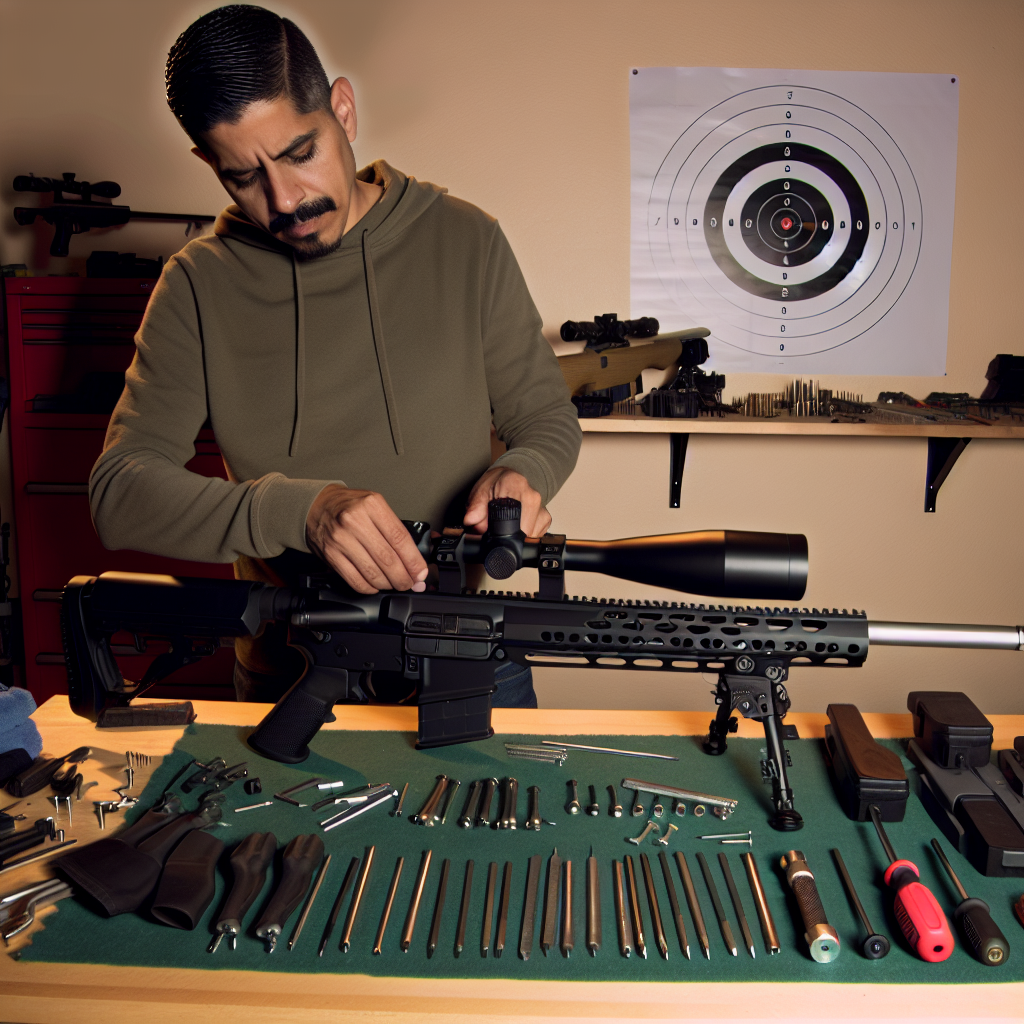
Long-range shooting is a discipline that requires precision, patience, and the right equipment. Whether you are a competitive shooter, a hunter, or an enthusiast aiming to improve your marksmanship at extended distances, customizing your rifle can significantly enhance your accuracy and overall performance. This article delves into the essential modifications and upgrades to consider when tailoring your rifle for long-range shooting.
Understanding the Fundamentals of Long-Range Shooting
Before diving into customization options, it’s crucial to understand what makes long-range shooting different from short or medium range shooting. Typically, shots beyond 500 yards are considered long-range. At these distances, factors like bullet drop, wind drift, atmospheric conditions, and even the Coriolis effect come into play.
The rifle itself must be capable of consistently delivering tight groups with minimal deviation. This means precision in manufacturing and stability in the setup. The goal of customization is to optimize every component of the rifle to achieve this level of consistency.
Key Rifle Components to Customize for Long-Range Accuracy
Several parts of a rifle can be upgraded or modified to enhance its long-range capabilities. Here’s an overview of the most impactful components:
- Barrel: The barrel plays a pivotal role in accuracy. Longer barrels (24 to 26 inches) generally provide higher muzzle velocity and improved bullet stability.
- Trigger: A crisp, light trigger pull reduces shooter-induced error.
- Stock: Stability and comfort during firing influence consistency.
- Optics: High-quality scopes with precise adjustments are critical.
- Ammunition: Matching ammunition to your rifle’s twist rate and chamber specifications improves precision.
The Barrel: Heart of Precision
The barrel’s quality and characteristics significantly affect shot placement at long distances. Match-grade barrels made from high-quality steel with precise rifling profiles ensure consistent bullet spin and exit velocity.
A common choice among long-range shooters is a heavy-contour barrel which reduces vibrations during firing and maintains rigidity. For example, Benchrest shooters often prefer barrels with a 1:8 or 1:9 twist rate for stabilizing heavier bullets used at long ranges.
A study conducted by the National Institute of Justice found that barrels with tighter tolerances could reduce group sizes by up to 30%, proving how barrel quality directly impacts performance.
Trigger Upgrades: Enhancing Shooter Control
A smooth and predictable trigger pull is essential for minimizing movement while squeezing the trigger. Factory triggers are often heavier than optimal for precision shooting; aftermarket triggers allow shooters to reduce pull weight typically to between 1.5 and 3 pounds without sacrificing safety.
Popular aftermarket triggers such as Timney or Geissele offer adjustable pull weights and crisp break points that contribute to better shot control. According to competitive shooting statistics, shooters using upgraded triggers report up to a 15% improvement in first-shot accuracy under timed conditions.
Stock Selection: Stability Meets Comfort
The stock provides the interface between shooter and rifle; its design affects recoil management and repeatability of positioning. For long-range precision, stocks made from rigid materials like fiberglass composites or carbon fiber are preferred due to their minimal flex under recoil.
Adjustable stocks allow shooters to customize length of pull, cheek weld height, and buttpad position—ensuring consistent eye alignment with the scope across multiple shots. This repeatability is key for accuracy at extended ranges where even slight inconsistencies can cause misses measured in feet on target.
Optics: The Shooter’s Window to Precision
A high-quality scope is arguably one of the most important upgrades for long-range shooting success. Modern scopes come equipped with features designed specifically for extended distance shooting:
- High magnification (15x–25x): Essential for clearly seeing distant targets.
- Tactical turrets: Allow quick adjustments for elevation and windage on-the-fly.
- MIL/MOA reticles: Provide reference points for holdovers and wind corrections.
- Parallax adjustment: Ensures reticle alignment at varying distances for increased accuracy.
The Vortex Viper PST Gen II or Nightforce ATACR series are examples favored by many long-range shooters due to their reliability and precision adjustments. In fact, data from Precision Rifle Series (PRS) competitions reveal that shooters equipped with premium optics consistently place higher in rankings compared to those using entry-level scopes.
Ammunition: Matching Ammo to Your Rifle
No matter how well you customize your rifle, ammunition quality remains paramount. Factory ammo varies widely in consistency, so many long-range enthusiasts opt for handloading their own rounds tailored specifically for their rifle’s chamber dimensions and barrel twist rate.
- Bullet Selection: Heavier bullets (168 grains or more) tend to retain velocity better over distance but require matching twist rates for stabilization.
- Powder Charges: Adjusting powder loads allows fine-tuning muzzle velocity while maintaining safe pressure levels.
- Seating Depth: Consistent bullet seating depth ensures uniform chamber pressures shot-to-shot.