How to Reload for Subsonic Ammunition: A Comprehensive Guide
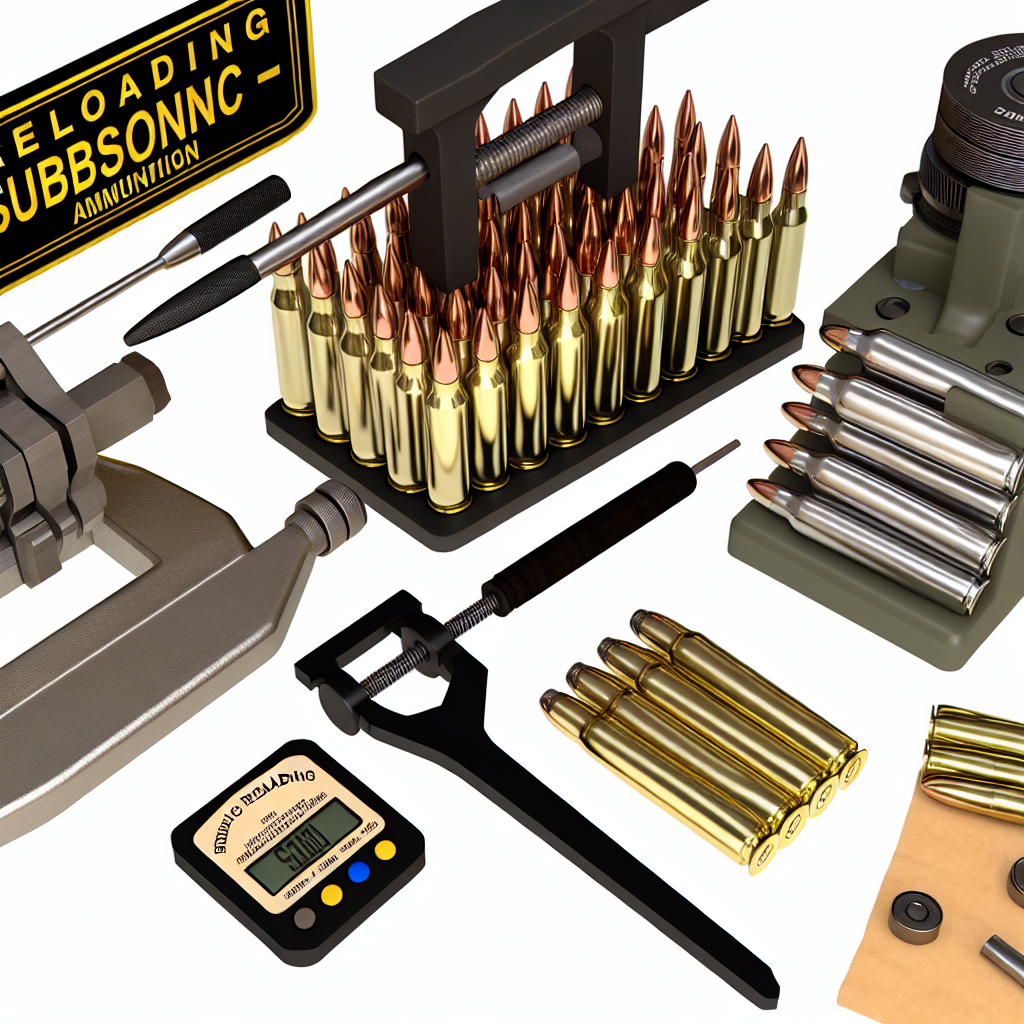
Reloading ammunition is a skill that offers shooters greater control over their firearm’s performance, cost savings, and the ability to tailor loads for specific applications. When it comes to subsonic ammunition, the stakes are even higher due to the unique ballistics and performance characteristics involved. Subsonic loads are designed to travel below the speed of sound (approximately 1,125 feet per second at sea level), which reduces noise and muzzle blast—making them popular for suppressed firearms, precision shooting, and certain hunting scenarios.
This article delves into the essentials of reloading subsonic ammunition, exploring the technical nuances, safety considerations, and practical tips for achieving reliable and effective subsonic loads. Whether you’re a seasoned reloader or a novice looking to expand your skills, this guide offers valuable insights backed by research and real-world examples.
Understanding Subsonic Ammunition: The Basics
Before diving into reloading techniques, it’s crucial to understand what defines subsonic ammunition and why it matters.
Subsonic ammunition is specifically loaded so that the bullet travels at a velocity below the speed of sound. This velocity threshold is critical because when a bullet exceeds supersonic speeds, it generates a sonic crack—a sharp noise caused by breaking the sound barrier. Subsonic rounds eliminate this sonic boom, making them ideal for use with suppressors where minimizing noise signature is paramount.
Key characteristics of subsonic ammunition include:
- Velocity: Typically less than 1,125 fps (feet per second) at sea level.
- Energy:</strong Lower kinetic energy compared to supersonic rounds but sufficient for close-to-medium range applications.
- Bullet weight: Often heavier bullets are used to maintain energy despite lower velocities.
- Applications: Tactical operations, hunting in noise-sensitive environments, target shooting with reduced recoil and noise.
A classic example is the 9mm Luger subsonic round often loaded with a 147-grain bullet traveling around 1,000 fps instead of a lighter 115-grain bullet traveling supersonically at approximately 1,200-1,300 fps.
The Advantages and Challenges of Reloading Subsonic Ammunition
Advantages:
- Noise Reduction: Combined with suppressors, subsonic ammo greatly reduces noise levels on firing ranges or in tactical situations.
- Recoil Management: Lower velocities translate to softer recoil impulses, allowing faster follow-up shots and better control.
- Cost Savings: Handloading allows customization using bulk powders and bullets which can reduce costs compared to factory subsonic ammo.
- Tuning Performance: Reloaders can optimize loads for specific firearms or purposes such as hunting or precision shooting.
Challenges:
- Powder Selection: Requires careful choice of slow-burning powders that produce consistent pressure at lower velocities without causing squib loads or excessive fouling.
- Pressure Management: Subsonic loads operate closer to the minimum pressure needed for reliable cycling in semi-automatic firearms; improper loading can cause malfunctions.
- Bullet Seating Depth: Precise seating depth is vital for consistent ignition and pressure curves.
A survey conducted by the National Shooting Sports Foundation indicated that nearly 40% of handloaders who reload specialized rounds like subsonics reported occasional issues with cycling reliability—highlighting the importance of meticulous load development in this niche area.
Selecting Components for Subsonic Reloads
The foundation of successful subsonic reloading lies in choosing appropriate components. Let’s examine each component in detail:
Pistol or Rifle Cartridge Cases
Select high-quality brass cases free from cracks or deformities. For semi-automatic firearms relying on case expansion for reliable feeding and extraction, consistency in case dimensions is critical. For example, Lapua brass is renowned for its uniformity in cartridges like .308 Winchester or .223 Remington used in subsonic rifle loads.
Bullets
A heavier bullet is often preferred for subsonic rounds because it retains energy despite lower velocities. For instance:
- .45 ACP commonly uses a heavy 230-grain bullet at ~900 fps for subsonic applications.
- .300 AAC Blackout favors bullets in the range of 190–220 grains when loaded subsonically (around 1,000 fps).
The bullet design also matters; flat-nosed or round-nosed bullets improve feeding reliability while maintaining good ballistic coefficients at lower speeds. Match-grade bullets ensure tighter tolerances which lead to better accuracy—a crucial factor since velocity reduction increases time-of-flight sensitivity to environmental factors like wind drift.
Powder Selection
This is arguably the most critical factor when reloading subsonics. Slow-burning powders allow a longer pressure curve that achieves sufficient velocity without spiking pressures dangerously high or causing erratic performance.
Common powders favored by reloaders include: Hodgdon H110 (similar to Winchester 296), Alliant Power Pro 300-MP, and Vihtavuori N110, which are known for their consistency and reliability in subsonic loads.
By carefully selecting components and adhering to best practices, reloaders can successfully create effective subsonic ammunition tailored to their needs.