The Story of the Spencer Repeating Rifle
The Spencer repeating rifle stands as one of the most revolutionary firearms in American history, significantly influencing warfare during the 19th century. Known for its rapid-fire capability and innovative design, the Spencer rifle played a pivotal role during the American Civil War and set the stage for future advancements in repeating firearms. This article delves into the fascinating story of the Spencer repeating rifle, exploring its invention, technical features, battlefield impact, and lasting legacy.
The Birth of a Revolutionary Firearm: Christopher Spencer’s Vision
The story of the Spencer repeating rifle begins with Christopher Spencer, an inventive gunsmith and businessman from Massachusetts. Born in 1833, Spencer was driven by a desire to improve firearms’ efficiency and reliability. Prior to his invention, most rifles were single-shot muzzleloaders or breechloaders that required manual reloading after each shot—a slow and cumbersome process that severely limited firing rates.
During the early 1860s, as tensions escalated toward civil war, Spencer sought to develop a firearm that could provide soldiers with a significant advantage on the battlefield through faster firing and quicker reloading mechanisms. His efforts culminated in 1860 when he patented the first successful lever-action repeating rifle using metallic rimfire cartridges.
- Innovative Mechanism: The Spencer rifle employed a lever-action system that allowed shooters to eject spent cartridges and chamber new ones rapidly.
- Metallic Cartridges: It utilized self-contained metallic rimfire cartridges, which were more reliable and less prone to misfires than traditional paper cartridges.
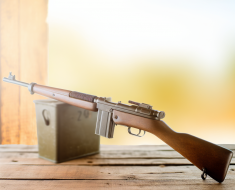
- Magazine-fed Design: The rifle featured a tubular magazine located in the buttstock capable of holding seven cartridges, enabling multiple shots before needing to reload.
This combination of features made the Spencer rifle one of the first practical repeating rifles ever produced. Its design was not only innovative but also robust enough for mass production—a critical factor for adoption by military forces.
Technical Mastery: How the Spencer Rifle Worked
The Spencer repeating rifle was groundbreaking because it combined several advanced technological components into a single firearm that could be operated effectively by soldiers under combat conditions. Understanding its mechanism helps appreciate why it was so influential.
- Lever-Action Operation: The shooter operated a large lever beneath the receiver to eject spent cartridges from the chamber and load fresh rounds from the magazine.
- Tubular Magazine: Unlike later designs with magazines under the barrel, the Spencer’s magazine was housed within the buttstock. It held seven metallic rimfire cartridges arranged end-to-end.
- Firing Mechanism: The hammer struck a rimfire cartridge primer located on the base edge of each cartridge, igniting the powder charge and firing a .56-56 caliber bullet.
- Reloading Process: When all rounds were expended, soldiers removed a spring-loaded trapdoor on the buttstock to reload up to seven new cartridges into the magazine tube quickly.
This configuration allowed an experienced soldier to fire up to seven shots in rapid succession without needing to reload after every shot—a dramatic improvement over muzzleloaders that required manual loading of powder and ball for every round fired.
The Spencer Rifle in Combat: Changing Warfare During the Civil War
The American Civil War (1861–1865) provided an ideal testing ground for new military technologies like the Spencer repeating rifle. Although initially met with skepticism by traditionalists in military command, its advantages soon became undeniable when used in battle.
The Union Army adopted approximately 20,000 Spencers during the war, equipping cavalry units primarily due to their mobility requirements. Key engagements demonstrated how this weapon could shift combat dynamics:
- The Battle of Hoover’s Gap (June 1863): Union cavalry armed with Spencers outgunned Confederate forces armed with single-shot rifles and muskets. Their ability to deliver rapid fire disrupted enemy formations and contributed significantly to Union victory.
- The Battle of Nashville (December 1864): The firepower advantage provided by Spencers helped Union troops repel Confederate assaults decisively, showcasing how rate-of-fire could influence battlefield outcomes even late in the war.
The increased rate of fire allowed soldiers armed with Spencers to lay down suppressive fire more effectively while maintaining accuracy at typical engagement ranges. It also reduced vulnerability during reloading—one of muzzleloaders’ major drawbacks—since fewer reloads meant less exposure time to enemy fire.
Statistics highlight this impact vividly:
- A trained soldier with a muzzleloader might fire two to three rounds per minute.
- A soldier armed with a Spencer could achieve up to twenty shots per minute under ideal conditions.
This almost tenfold increase in firing capacity changed cavalry tactics from hit-and-run skirmishes toward more sustained engagements supported by superior firepower. However, despite its strengths, limitations such as ammunition supply logistics and initial production costs prevented it from completely replacing traditional rifles during the war.
Challenges and Limitations: Why Didn’t Everyone Use Spencers?
Despite its advantages, widespread adoption of the Spencer repeating rifle faced obstacles that limited its immediate dominance on battlefields across America. Understanding these challenges provides context about technological adoption during wartime.
-
A significant factor was the cost of the Spencer, which was higher than that of standard rifles, making it less accessible for many units.
Ultimately, while the Spencer repeating rifle represented a significant advancement in firearm technology, its full potential was never realized during the Civil War due to logistical and economic constraints.