Famous Gunsmiths and Their Contributions
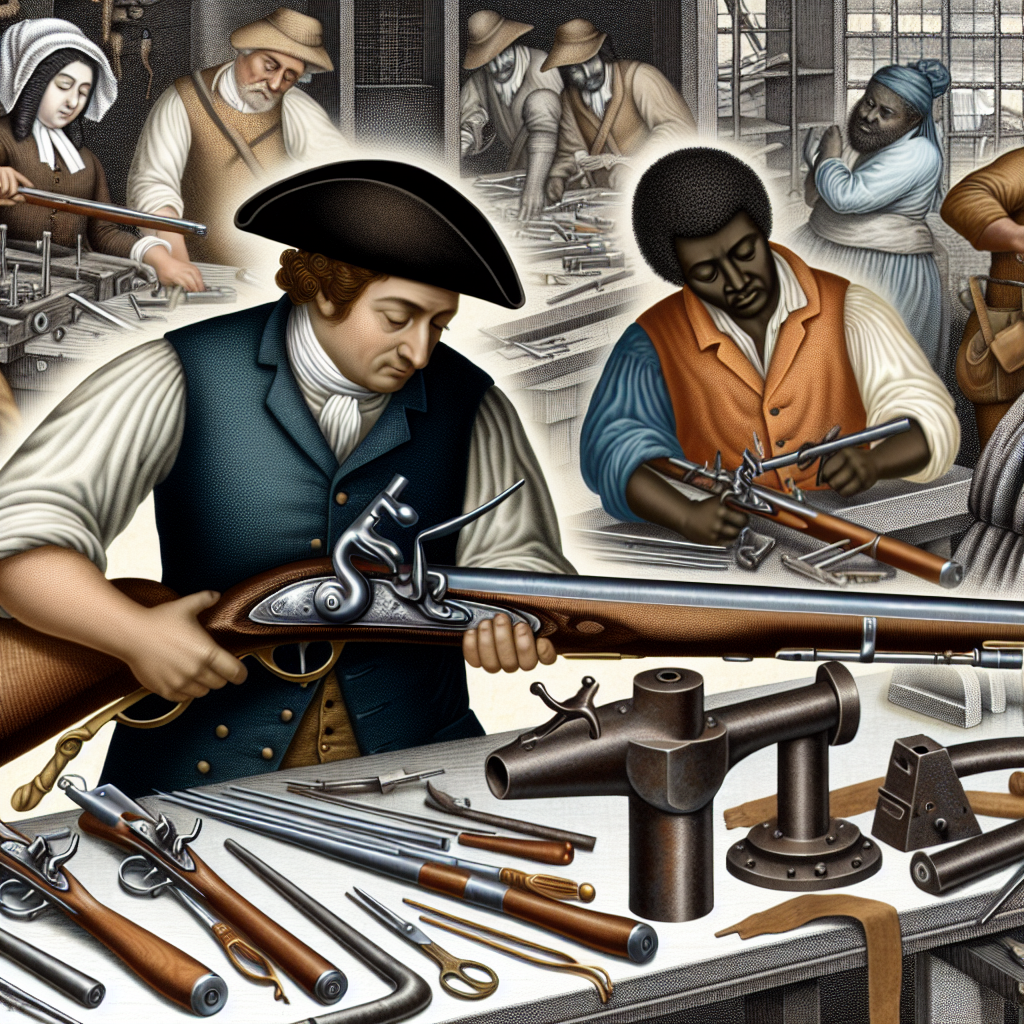
The history of firearms is deeply intertwined with the craftsmanship, innovation, and vision of gunsmiths who revolutionized weaponry over centuries. These skilled artisans have not only shaped the development of firearms but have also influenced military tactics, law enforcement, and civilian use. From the early days of muzzle-loading muskets to modern semi-automatic rifles, famous gunsmiths have left an indelible mark on the world of firearms. This article explores some of the most renowned gunsmiths in history and their groundbreaking contributions.
The Origins of Gunsmithing: Foundations Laid by Early Innovators
Gunsmithing as a craft dates back to the late Middle Ages when blacksmiths began experimenting with gunpowder and metalwork to produce early firearms. These pioneers laid the groundwork for a burgeoning industry that would evolve dramatically over the following centuries.
One of the earliest known gunsmiths was Hans Stopler, a German craftsman from Nuremberg in the 15th century, who contributed to the refinement of matchlock mechanisms. Although little is documented about him personally, his work represents early strides in firearm reliability.
Another influential figure was Jean Mariette, a French gunsmith active in the 17th century whose innovations in flintlock design greatly improved ignition systems. His advancements made firearms more dependable and quicker to load, which had significant military implications during that era.
- Significance: Early gunsmiths like Stopler and Mariette were essential in transitioning firearms from rudimentary hand cannons to more practical weapons.
- Impact: Their improvements in ignition mechanisms paved the way for more complex designs such as the flintlock and percussion cap systems.
John Browning: The Father of Modern Automatic Firearms
No discussion about famous gunsmiths is complete without highlighting John Moses Browning (1855-1926), an American inventor whose designs have shaped modern firearms globally. Browning’s prolific output includes some of the most iconic and enduring weapons used by military forces, law enforcement agencies, and civilians alike.
Browning’s contributions include:
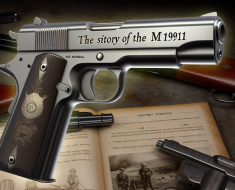
- The M1911 Pistol: Adopted by the U.S. military in 1911, this semi-automatic pistol became one of the most widely used handguns worldwide. Known for its reliability, stopping power (.45 ACP caliber), and ergonomic design, it remained standard issue for nearly a century.
- The Browning Automatic Rifle (BAR): Introduced during World War I, this weapon combined portability with automatic firepower and influenced squad-level tactics profoundly.
- The Browning Hi-Power: Developed in collaboration with Fabrique Nationale (FN) Herstal in Belgium, this pistol was among the first to feature a high-capacity magazine (13 rounds) and remains popular today.
- The M2 .50 Caliber Machine Gun: Often called “Ma Deuce,” this heavy machine gun has been a mainstay for decades due to its immense power and durability.
Browning’s genius lay not only in inventing new firearms but also in perfecting mechanisms such as short recoil operation, which increased efficiency and reliability across multiple platforms.
Siegfried Schmeisser: Precision Engineering in German Firearms
Siegfried Schmeisser was an influential German gunsmith known for his exceptional craftsmanship during the late 19th and early 20th centuries. His work focused primarily on precision rifles designed for hunting and competitive shooting—fields where accuracy is paramount.
Schmeisser’s contributions include:
- Bolt-Action Rifles: He refined bolt-action designs that improved smoothness and repeatability—crucial for long-range marksmanship.
- Custom Engraving Techniques: Schmeisser elevated firearm aesthetics through intricate metalwork without compromising functionality or durability.
- Collaborations with Mauser: His expertise helped optimize Mauser rifles widely used by military forces worldwide.
The legacy of precision engineering popularized by Schmeisser still influences contemporary custom rifle manufacturing, where meticulous attention to detail remains vital for performance shooters.
Mikhail Kalashnikov: The Architect of Ubiquitous Assault Rifles
No gunsmith’s impact is as globally recognizable as that of Mikhail Kalashnikov (1919–2013), creator of arguably the most produced assault rifle in history—the AK-47. Developed shortly after World War II within the Soviet Union, Kalashnikov’s rifle combined simplicity, ruggedness, ease of manufacture, and effectiveness under harsh conditions.
- The AK-47 Design Philosophy:
- Simplicity: Few moving parts allowed easy maintenance even by poorly trained soldiers.
- Durability: Could function reliably despite dirt, mud, sand, or extreme weather conditions.
- Mass Production: Designed for efficient assembly using stamped metal parts rather than costly machining processes.
- Cultural Impact: The AK-47 became symbolic beyond just weaponry—it appears on national flags (Mozambique), coats of arms, and has
Cultural Impact: The AK-47 became symbolic beyond just weaponry—it appears on national flags (Mozambique), coats of arms, and has influenced global military culture and conflicts.
In summary, the contributions of famous gunsmiths like Kalashnikov have shaped modern firearms and their roles in society.