The Importance of Seating Depth in Reloaded Ammo
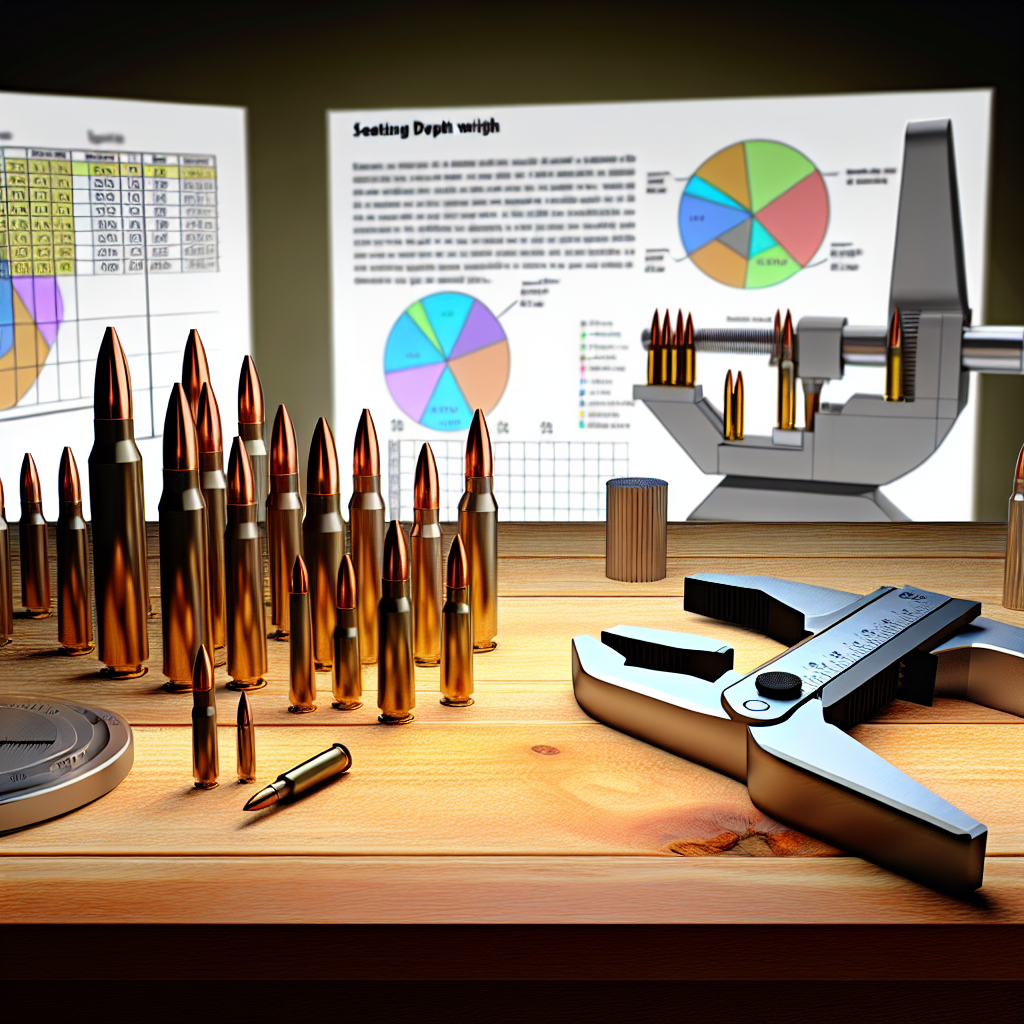
Reloading ammunition is a precise and rewarding process for shooting enthusiasts who seek better accuracy, cost savings, and customization. Among the many variables involved in reloading, seating depth—the distance a bullet is seated inside the cartridge case—is one of the most critical factors influencing performance and safety. This article delves into the importance of seating depth in reloaded ammo, exploring its effects on accuracy, pressure, and overall ballistic performance.
Understanding Seating Depth: What Is It and Why Does It Matter?
Seating depth refers to how far the bullet is inserted into the case neck before crimping or finishing the round. It is typically measured from the case mouth to a reference point on the bullet, such as the ogive (the curved portion of the bullet). This measurement directly affects the cartridge’s overall length (COL) or overall cartridge length (OAL).
Why does this matter? Because seating depth influences several key aspects of ammunition performance:
- Chamber fit: Proper seating depth ensures that cartridges fit correctly in the firearm’s chamber without causing excessive pressure or feeding issues.
- Pressure levels: Seating depth affects the volume inside the case; deeper seating reduces internal volume and can increase pressure.
- Accuracy: The bullet’s initial position relative to the rifling lands in the barrel has a direct impact on precision.
- Consistency: Uniform seating depths lead to consistent ballistic results shot after shot.
Neglecting proper seating depth can lead to dangerous pressure spikes, poor grouping, or feeding malfunctions. As such, understanding and controlling this variable is essential for safe and effective handloading.
The Science Behind Seating Depth: Pressure and Accuracy Dynamics
The internal ballistics of a cartridge are greatly influenced by seating depth due to its effect on case volume. When a bullet is seated deeper into the case, it reduces the space available for powder combustion gases, which can increase chamber pressure once fired. Conversely, seating bullets longer increases case volume and generally lowers peak pressure.
This relationship between seating depth and pressure is especially important when working with high-performance loads or magnum cartridges where pressures are already near maximum safe limits. Reloaders must carefully monitor these changes to avoid exceeding their firearm’s maximum allowable chamber pressure.
Regarding accuracy, research has shown that seating bullets so they engage with the rifling lands consistently leads to improved precision. The distance from the bullet’s ogive to where it contacts rifling—called “jump”—affects how stable and concentric each shot is as it leaves the barrel.
- A shorter jump (bullet closer to rifling) generally improves accuracy but may increase pressure slightly.
- A longer jump may reduce pressure but sometimes decrease accuracy due to less consistent bullet alignment.
A landmark study by Bryan Litz of Applied Ballistics demonstrated that bullets seated just touching or slightly engaging rifling lands tend to produce tighter groupings compared to bullets seated further out with more free bore space. However, this must be balanced against safe pressure limits.
Practical Considerations: How To Determine Optimal Seating Depth
Reloaders have several tools and methods at their disposal for determining ideal seating depths:
- Consult manufacturer specs: Bullet makers often provide recommended overall cartridge lengths based on standard chambers.
- Measure your chamber: Using a specialized tool called a “bullet comparator,” reloaders can measure exact distances from bullet ogive to cartridge base for precise repeatability.
- Copper fouling check: Seating bullets close enough to touch rifling lands may cause slight resistance when chambering—careful experimentation helps find an optimal point without excessive pressure buildup.
- Load development testing: Systematic testing with varying seating depths combined with chronograph readings and target groups helps identify ideal combinations for specific firearms and bullets.
A typical approach is starting at or slightly below manufacturer OAL recommendations then adjusting incrementally while monitoring signs of increased pressure such as flattened primers or difficult extraction.
Case Studies: Real-World Examples of Seating Depth Impact
Case Study 1: Precision Rifle Competition
A competitive long-range shooter using .308 Winchester found that initially following published OAL specifications resulted in acceptable groups around one MOA (Minute of Angle). By experimenting with shorter jumps—seating bullets approximately 0.005 inches closer to land engagement—the shooter improved group size down to sub-MOA consistently at 600 yards. However, chronograph data showed a slight increase in velocity standard deviation indicating more consistent ignition due to reduced bullet jump. This adjustment required careful monitoring for increased pressures but ultimately enhanced precision substantially during competition scenarios.
Case Study 2: Hunting Load Optimization
A hunter reloading .30-06 Springfield rounds observed occasional feeding issues when using maximum published OAL loads with long bullets seated out near magazine length limits. After reducing OAL by about 0.015 inches—seating bullets deeper into cases—the rounds fed smoothly through bolt-action rifles without noticeable loss in accuracy at typical hunting ranges (up to 300 yards). Pressure remained within safe parameters verified by primer appearance and brass condition after multiple firings.
The Risks of Improper Seating Depth: Safety Concerns and Performance Pitfalls
Understanding and optimizing seating depth is crucial for achieving both safety and performance in reloaded ammunition.