The History of the Thompson Center Contender
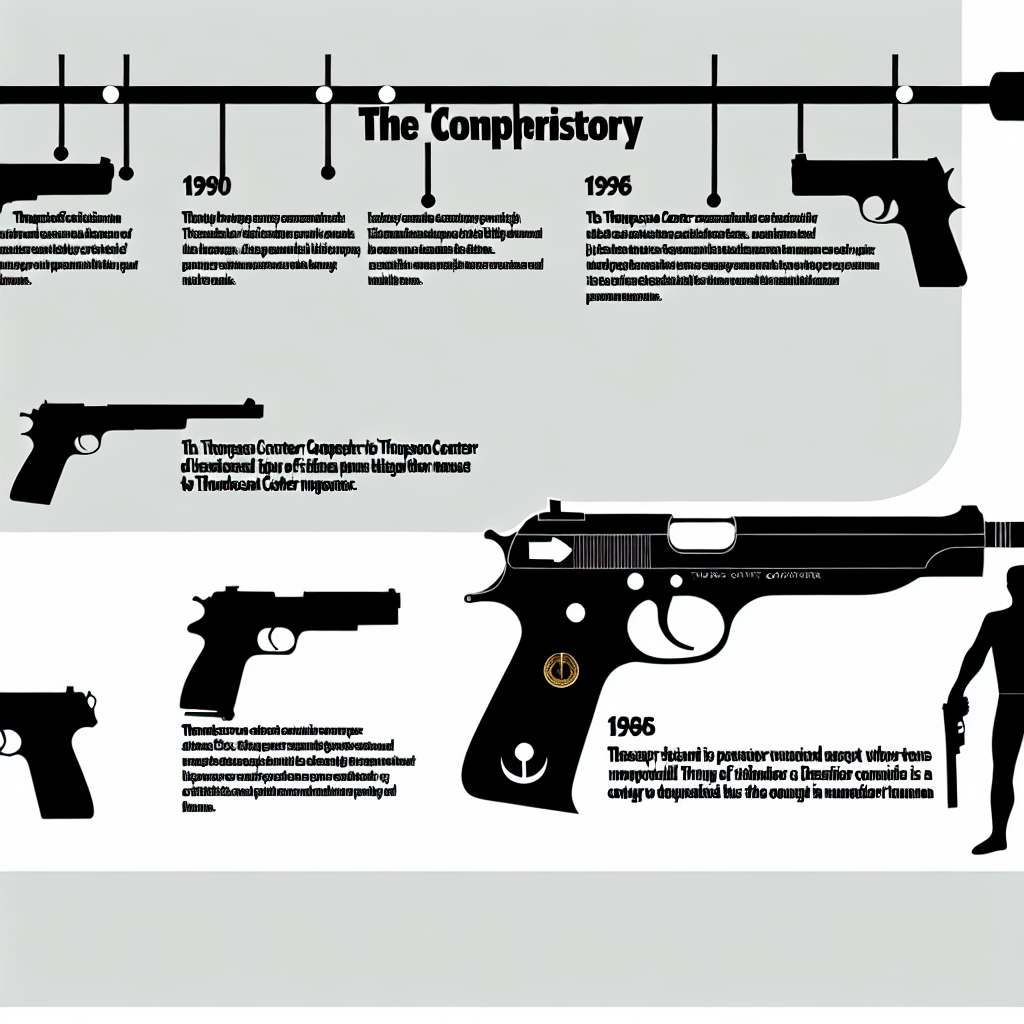
The Thompson Center Contender is a unique and versatile firearm that has captured the imagination of enthusiasts, hunters, and precision shooters since its inception. Known for its modular design and exceptional accuracy, the Contender has carved out a significant place in firearms history. This article delves into the origins, development, technical innovations, and lasting legacy of the Thompson Center Contender, offering an insightful exploration into one of America’s most distinctive firearms.
Origins: The Birth of a Revolutionary Design
The story of the Thompson Center Contender begins in the early 1960s with Warren Center and Thomas D. Thompson, two visionaries who sought to create a firearm that combined versatility with precision. Warren Center was an experienced gunsmith and inventor, while Thomas Thompson was a businessman with keen insights into market needs.
At the time, most firearms were either single-shot rifles or revolvers with limited caliber options. Center envisioned a firearm that could easily be adapted for various calibers and uses without sacrificing accuracy or ease of use. This idea led to the development of a break-action pistol/rifle hybrid — a concept quite unusual at the time.
- Initial Development: The first prototype emerged in 1967 as a single-shot pistol designed for hunting small game and target shooting.
- Collaboration: The partnership between Center and Thompson combined technical innovation with savvy marketing strategies.
- Launch: The Contender was officially introduced to the market in 1967 by Thompson/Center Arms, quickly gaining attention for its modularity.
The introduction of the Contender represented a new approach to firearms design — one that emphasized adaptability and user customization over fixed configurations.
Technical Innovations: Modularity and Precision
The hallmark feature that distinguishes the Thompson Center Contender from other firearms is its modularity. Unlike conventional guns where changing calibers or barrel lengths often requires purchasing an entirely new weapon, the Contender allows users to swap barrels quickly and easily on a single frame.
This modularity is achieved through several key design elements:
- Break-Action Frame: The break-action mechanism allows the barrel to pivot downward for loading and unloading, simplifying maintenance and barrel changes.
- Interchangeable Barrels: Barrels can be swapped without tools in many cases, allowing shooters to switch between rifle calibers (.223 Remington, .30-30 Winchester) or handgun calibers (.357 Magnum, .44 Magnum) effortlessly.
- Single-Shot Design: Although single-shot might seem like a limitation, it allows for greater precision since there are fewer moving parts affecting accuracy.
- Sights and Optics Compatibility: The frame was designed to accommodate various sights including scopes, iron sights, and even muzzle brakes or suppressors.
The design also emphasized precision shooting. The tight lock-up of the barrel to the frame ensured consistent shot placement. Many competitive shooters found that their Contenders rivaled bolt-action rifles in accuracy while offering greater flexibility.
The Evolution Through Decades: From Niche Pistol to Versatile Hunting Tool
Over time, Thompson/Center Arms expanded on the initial concept by introducing new barrel lengths, calibers, and accessories. This evolution reflected both technological advancements and shifting consumer preferences.
1970s–1980s: Growth in Popularity
During these decades, the Contender gained popularity among hunters seeking a lightweight yet powerful handgun capable of taking medium-sized game. The ability to fire rifle cartridges from a pistol-length barrel made it ideal for backcountry hunting where portability was crucial.
- The introduction of longer barrels: Allowed users to convert their pistols into carbines or short rifles.
- Ammunition diversity expanded: From .22 Hornet for small varmints up to powerful magnum rounds like .444 Marlin for larger game.
- Shooting competitions: Target shooters embraced the Contender for silhouette shooting events due to its accuracy and customizable nature.
1990s–2000s: Refinements and New Models
The company continued innovating by introducing improved materials such as stainless steel frames for corrosion resistance and enhanced durability. Additionally, different grip styles were offered to accommodate various hand sizes and shooting preferences.
- The introduction of the G2 frame: A redesigned frame featuring ergonomic improvements while maintaining backward compatibility with older barrels.
- Addition of muzzle brakes: Reduced recoil significantly when firing heavy magnum cartridges from short barrels.
- Diversification into youth models: Smaller frames catered to younger shooters entering hunting or sport shooting disciplines.
This period also saw increased competition from other manufacturers producing modular firearms; however, few matched the simplicity and reliability of the original Contender design.
The Impact on Hunting Culture and Competitive Shooting
The Thompson Center Contender had an outsized influence on both hunting culture and competitive shooting sports due largely to its adaptability. Hunters appreciated how one firearm could serve multiple roles — from handgun hunting deer in dense woods to varmint control with high-velocity rifle rounds in open fields.
-
<