Famous Firearms in World War I: A Comprehensive Exploration
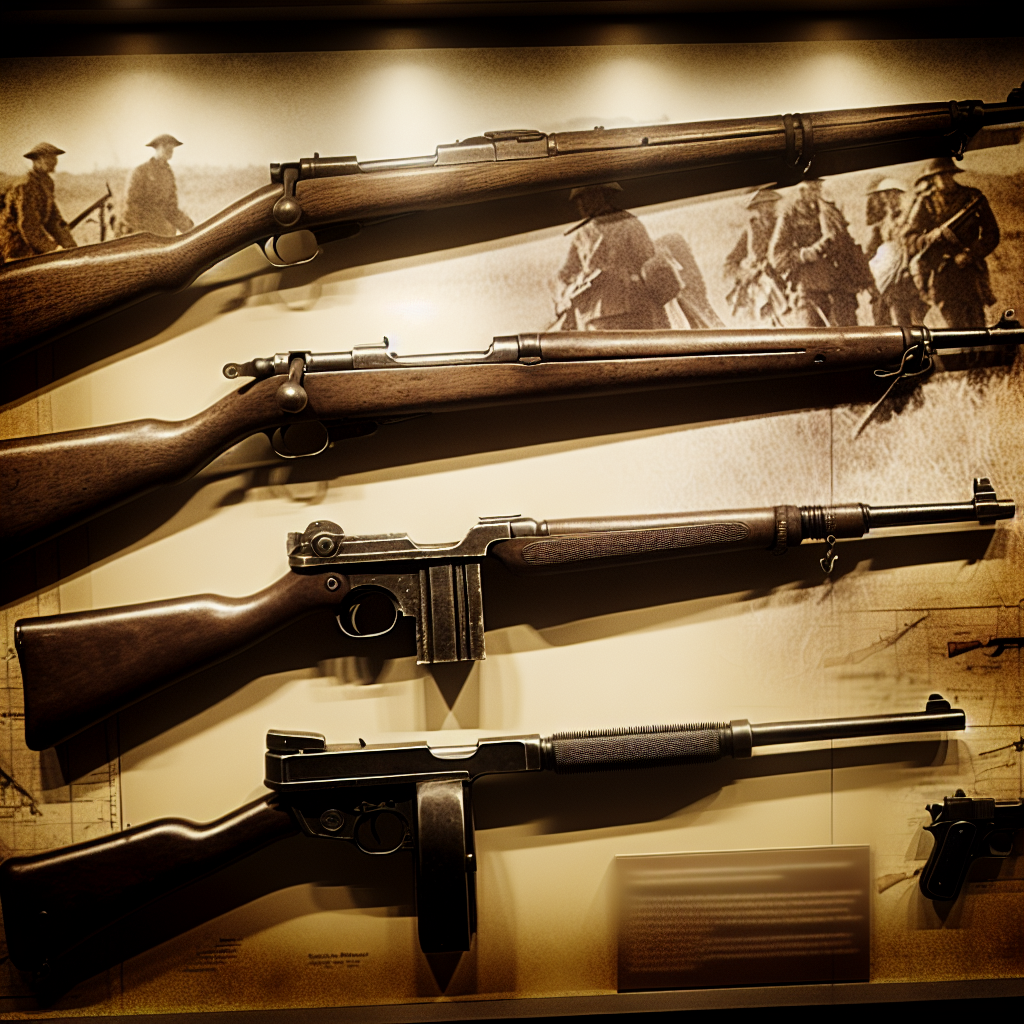
World War I, also known as the Great War, was a pivotal moment in military history that saw unprecedented technological advancements and tactical evolutions. Among the most significant aspects of this conflict were the firearms that shaped the battlefield dynamics and influenced combat strategies. This article delves into some of the most famous firearms used during World War I, examining their design, impact, and legacy.
The Role of Firearms in World War I
Before diving into specific weapons, it’s essential to understand the context in which firearms operated during World War I. The war was characterized by trench warfare, mass mobilization, and industrial-scale battles that demanded reliable, rapid-firing weapons to support infantry assaults and defensive operations.
The transition from traditional open-field battles to entrenched positions changed the nature of combat dramatically. Soldiers required firearms that could perform under harsh conditions, offer high rates of fire, and provide versatility across various combat scenarios.
This demand led to innovations in bolt-action rifles, machine guns, submachine guns, and pistols. Let’s explore some of the most iconic firearms that defined this era.
The Bolt-Action Rifles: The Backbone of Infantry
Bolt-action rifles were the primary infantry weapons used by all major powers during World War I. Their accuracy, range, and reliability made them indispensable for both offensive and defensive operations.
- Lee-Enfield SMLE (Short Magazine Lee-Enfield) – British Empire
The Lee-Enfield SMLE was arguably the most widely used rifle by British and Commonwealth forces. Known for its smooth bolt action and fast cycling rate (up to 20-30 aimed shots per minute), it provided soldiers with a significant advantage in both rate of fire and accuracy compared to contemporaries.
Features of the SMLE included a 10-round magazine—larger than most other bolt-action rifles—and robust construction that allowed it to function well in muddy trench conditions. Its effective range was approximately 500 yards (460 meters), making it suitable for both close-quarters and medium-range engagements.
- Mauser Gewehr 98 – German Empire
The Gewehr 98 was Germany’s primary service rifle during WWI. Famous for its exceptional accuracy due to a strong Mauser action and an effective range exceeding 600 meters, it was a favorite among German marksmen. However, it had a slower rate of fire compared to the Lee-Enfield due to a smaller 5-round magazine and more complex bolt mechanism.
- Mosin-Nagant M1891 – Russian Empire
The Mosin-Nagant was a rugged rifle used extensively by Russian forces. Known for its durability in extreme weather conditions—from freezing winters to muddy battlefields—it had a five-round internal magazine and an effective range similar to other bolt-action rifles.
Case Study: During the Battle of Tannenberg (1914), Russian troops armed with Mosin-Nagants faced German forces wielding Gewehr 98s. Despite being outmaneuvered strategically, Russian marksmen often held their own due to the rifle’s reliability under harsh conditions.
Machine Guns: Changing the Face of Warfare
Machine guns revolutionized warfare during WWI by providing sustained firepower capable of decimating advancing infantry formations. Their defensive capabilities contributed heavily to trench stalemates.
- Maxim Machine Gun – Used by multiple nations
The Maxim gun was one of the first fully automatic machine guns adopted on a large scale. It operated using recoil energy to eject spent cartridges and chamber new rounds without manual operation beyond trigger control. Typically water-cooled for sustained fire, it could fire up to 600 rounds per minute.
- Vickers Machine Gun – British adaptation
The Vickers machine gun was an improved derivative of the Maxim gun produced by Britain. Renowned for its reliability and ease of maintenance, it became a staple on the Western Front. It featured excellent accuracy at long ranges (up to 2,000 yards) and could maintain continuous fire for hours when properly cooled.
- MG 08 – German equivalent
The MG 08 was Germany’s standard machine gun based on Hiram Maxim’s design but adapted for German manufacturing standards. Like its British counterpart, it utilized water cooling and fired approximately 500-600 rounds per minute. It was heavily deployed in defensive positions across trenches.
Statistics: Machine guns accounted for an estimated 70-80% of all casualties on certain WWI battlefields due to their deadly suppressive capabilities.
Pistols: Sidearms in Close Combat
Pistols played a crucial role as personal defense weapons for officers, artillery crews, tank operators, and specialized troops who required compact firearms for close-quarters engagements or emergencies.
- Luger P08 – German Empire
The Luger P08 is arguably one of the most iconic pistols from World War I.
and reliability, making it a favorite among soldiers. The Luger P08 not only became a symbol of the German military but also influenced future handgun designs.
In conclusion, the firearms of World War I played a pivotal role in shaping modern warfare and left a lasting impact on military history.