How to Use Mental Visualization for Better Shooting
Whether you are a basketball player aiming for that perfect free throw, a marksman honing your precision, or a photographer seeking the ideal shot, the power of mental visualization can dramatically enhance your shooting performance. Mental visualization—also known as imagery or mental rehearsal—is a cognitive technique that allows athletes and professionals to mentally simulate their actions before executing them physically. This practice is backed by scientific research and has been shown to improve focus, confidence, and ultimately, results.
In this comprehensive article, we will explore how mental visualization works, why it is effective for improving shooting skills, practical techniques to incorporate it into your training routine, and real-world examples demonstrating its impact.
Understanding Mental Visualization: The Science Behind the Technique
Mental visualization involves creating vivid, detailed images in your mind of performing a specific action successfully. Neuroscientific research has shown that when you vividly imagine performing a task, your brain activates many of the same neural pathways as when you physically perform the task. This phenomenon is known as motor imagery.
For example, a 2011 study published in Frontiers in Human Neuroscience found that participants who engaged in mental rehearsal of a motor task showed significant improvements in performance similar to those who practiced physically. This overlap in brain activity enhances muscle memory and coordination even without physical movement.
For shooting—whether with a basketball, firearm, or camera—visualization helps improve:
- Focus and concentration: Visualization trains your mind to block out distractions and hone in on the target.
- Muscle memory: Mentally rehearsing the mechanics reinforces proper form and timing.
- Confidence: Seeing yourself succeed mentally boosts self-belief during actual performance.
- Anxiety reduction: Familiarity with the process reduces nervousness under pressure.
The Role of Visualization in Different Types of Shooting
Mental visualization is not limited to one type of shooting discipline. It applies broadly across sports and activities involving precision aiming. Here are some examples:
- Basketball Shooting: Players visualize their perfect shot trajectory—from hand positioning to follow-through—improving free throws and jump shots.
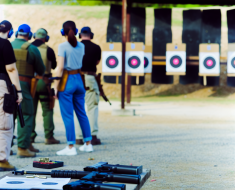
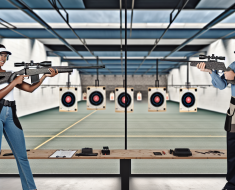
- Shooting Sports (Rifle/Pistol): Competitors mentally rehearse breath control, sight alignment, trigger squeeze, and follow-through for consistent accuracy.
- Archery: Archers picture drawing the bowstring smoothly and releasing at the exact moment to hit the bullseye.
- Photography: Photographers visualize framing, lighting conditions, and timing before pressing the shutter button to capture compelling images.
This versatility makes mental visualization an invaluable tool for anyone looking to refine their shooting skills through enhanced mental preparation.
Step-by-Step Guide: How to Practice Mental Visualization for Better Shooting
Mental visualization requires deliberate practice. Here’s how you can incorporate it effectively into your training regimen:
Create a Quiet Space
Find a quiet environment free from distractions where you can focus entirely on your mental rehearsal session. Even five to ten minutes daily can yield benefits over time.
Relax Your Body and Mind
Before visualizing, engage in deep breathing or progressive muscle relaxation techniques to calm any tension or anxiety. A relaxed state enhances clarity of mental images.
Engage All Your Senses
The most effective visualizations are multi-sensory. Don’t just “see” yourself shooting; incorporate sounds (e.g., ball swishing through net), tactile sensations (grip pressure), smells (fresh court floor), and even emotional feelings such as confidence or calmness.
Mental Rehearsal Process
- Step 1: Picture yourself preparing for the shot — stance, grip, focus on target.
- Step 2: Visualize executing each part of the motion slowly but precisely — e.g., raising arm steadily, aligning sights or gaze with target.
- Step 3: Imagine successfully hitting the target with perfect form — feel satisfaction and confidence as you see the result clearly.
- Step 4: Replay this sequence multiple times from different angles or scenarios (e.g., under pressure).
Add Positive Affirmations
Avoid negative thoughts during visualization sessions. Pair imagery with encouraging statements such as “I am focused,” “My shot is steady,” or “I remain calm under pressure” to reinforce self-belief.
Diversify Your Visualizations
Mental rehearsal should include both ideal scenarios (perfect shots) and challenging ones (misses due to distractions) followed by recovery strategies. This prepares you mentally for varied situations encountered during real performance.
The Impact of Mental Visualization: Case Studies and Statistics
The effectiveness of mental visualization is supported by numerous studies across sports disciplines:
- Muhammad Ali’s Boxing Preparation: The legendary boxer famously used visualization techniques extensively before fights. He described mentally rehearsing his moves so vividly he felt like he was already inside the ring performing flawlessly.
His success was not just due to physical training but also the mental preparation that visualization provided.
Incorporating mental visualization into your routine can enhance your performance and confidence, leading to better results in shooting and beyond.