How to Safely Store Your Tactical Gear at Home
Tactical gear is essential for military personnel, law enforcement officers, survivalists, and enthusiasts who value preparedness and security. However, owning quality tactical equipment also comes with the responsibility of storing it safely and properly. Improper storage can lead to damage, reduced functionality, or even pose safety risks to household members. This comprehensive guide explores the best practices for storing your tactical gear at home while ensuring it remains in top condition and accessible when needed.
Understanding the Importance of Proper Storage
Proper storage of tactical gear is not just about keeping things tidy—it directly impacts the longevity, reliability, and safety of your equipment. Tactical gear typically includes firearms, ammunition, body armor, knives, communication devices, and specialized clothing. Each category has specific storage requirements to prevent degradation or accidental harm.
According to a 2021 survey by the National Shooting Sports Foundation (NSSF), nearly 40% of firearm owners reported improper storage as a leading cause of equipment malfunction or loss. Additionally, environmental factors such as humidity and temperature fluctuations can severely affect gear performance over time.
By understanding how to store each type of gear correctly, you protect your investment and ensure that your equipment functions perfectly in critical situations.
Choosing the Right Storage Location
The first step in storing tactical gear safely is selecting an appropriate location within your home. Consider the following factors:
- Security: Your storage area should be secure from unauthorized access, especially if you have children or visitors. This means using locked cabinets, safes, or dedicated armories.
- Environmental Control: Excessive moisture can cause rust on metal parts and mildew on fabrics. Choose a cool, dry place with controlled humidity levels (ideally between 30-50%).
- Accessibility: While security is paramount, you also want your gear accessible during emergencies. Balancing these factors is key.
- Avoiding Direct Sunlight: UV rays can degrade materials like nylon and plastic over time.
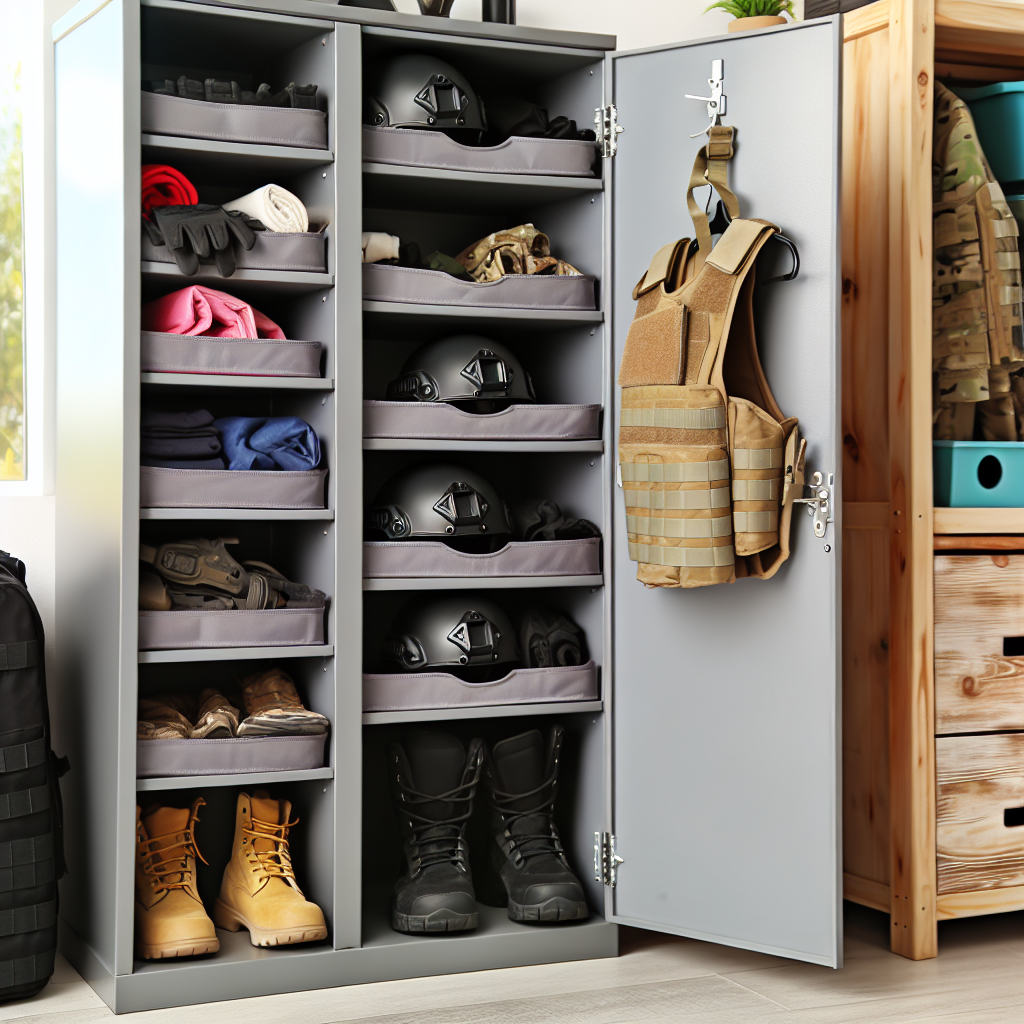
A practical example is using a dedicated gun safe for firearms that includes built-in dehumidifiers or silica gel packs to control moisture. For body armor and clothing, consider sealed plastic bins stored in a closet away from heat sources.
Safe Storage Practices for Firearms and Ammunition
Firearms require special attention due to their potential danger and sensitivity to environmental factors.
Firearm Storage Guidelines
- Use a Gun Safe: A high-quality gun safe with biometric or combination locks offers both security and peace of mind. The safe should be anchored to the floor or wall to prevent theft.
- Clean Before Storing: Always clean firearms after use before storing them to remove residue that can cause corrosion.
- Control Humidity: Use desiccants like silica gel inside the safe to absorb moisture.
- Avoid Oil Overuse: While lubrication is necessary, excessive oil can attract dust and dirt; use recommended amounts only.
Ammunition Storage Best Practices
- Keeps Ammunition Separate: Store ammunition separately from firearms in locked containers designed for ammo storage.
- Avoid Extreme Temperatures: High temperatures can cause ammunition deterioration; keep ammo in a cool environment (below 80°F).
- Check Expiration Dates: Though many rounds last decades if stored properly, periodic inspection ensures reliability.
A case study from the Bureau of Alcohol, Tobacco, Firearms and Explosives (ATF) highlights that proper firearm storage reduces accidental discharges by up to 70%, emphasizing the importance of these practices in homes with children or inexperienced users.
Caring for Body Armor and Clothing
Tactical clothing and body armor are exposed to sweat, dirt, and wear-and-tear during use. Proper storage preserves their protective qualities and comfort.
- Body Armor Storage:
- Avoid folding ballistic plates or soft armor inserts; store them flat or hung on wide hangers to maintain shape.
- Keep armor out of direct sunlight as UV rays can degrade fibers like Kevlar over time.
- If possible, store plates in climate-controlled environments with low humidity to prevent material breakdown.
- Tactical Clothing Care:
- Launder garments according to manufacturer instructions using mild detergents; avoid bleach or fabric softeners that damage fabric integrity.
- Dry clothing completely before storage to prevent mold growth—hang dry when possible rather than machine drying at high heat.
- Store folded garments inside breathable fabric bags or dedicated drawers rather than plastic bins unless moisture control is ensured via desiccants.
A report from the U.S. Army Research Laboratory found that improper storage of body armor could reduce its effectiveness by up to 30% over five years due to material degradation—highlighting why proper care matters deeply for personal safety equipment.
Tactical Accessories: Knives, Electronics & Communication Devices should be stored in a dry, secure location to prevent damage and ensure functionality. Consider using padded cases or dedicated storage boxes to protect these items from impacts and moisture.
By following these guidelines, you can extend the lifespan of your tactical gear and ensure it remains ready for use when needed.