Top Tips for Improving Your Competitive Shooting Stance
Competitive shooting is a sport that demands precision, control, and consistency. While many factors contribute to success — such as trigger control, sight alignment, and mental focus — the foundation often lies in your stance. A solid, well-practiced shooting stance enhances stability, reduces fatigue, and improves accuracy under pressure.
This article explores the top tips for improving your competitive shooting stance, supported by expert insights, practical examples, and relevant research. Whether you’re a novice or an experienced shooter looking to refine your skills, these guidelines will help you build a strong platform for success.
Understanding the Importance of a Proper Shooting Stance
Before diving into specific tips, it’s crucial to understand why stance matters so much in competitive shooting.
A proper shooting stance provides:
- Stability: The base of your shooting platform must be stable enough to absorb recoil and maintain balance.
- Consistency: Repeating the same stance helps develop muscle memory and predictable performance.
- Control: A good stance allows better control of the firearm during rapid fire or multiple shots.
- Reduced Fatigue: An ergonomically sound stance minimizes strain over long competitions.
A 2019 study by the International Journal of Sports Science & Coaching highlighted that shooters with optimized stances scored on average 12% higher in precision events compared to those with inconsistent or improper stances. This demonstrates how foundational body positioning is to competitive success.
The Fundamentals: Establishing a Solid Base
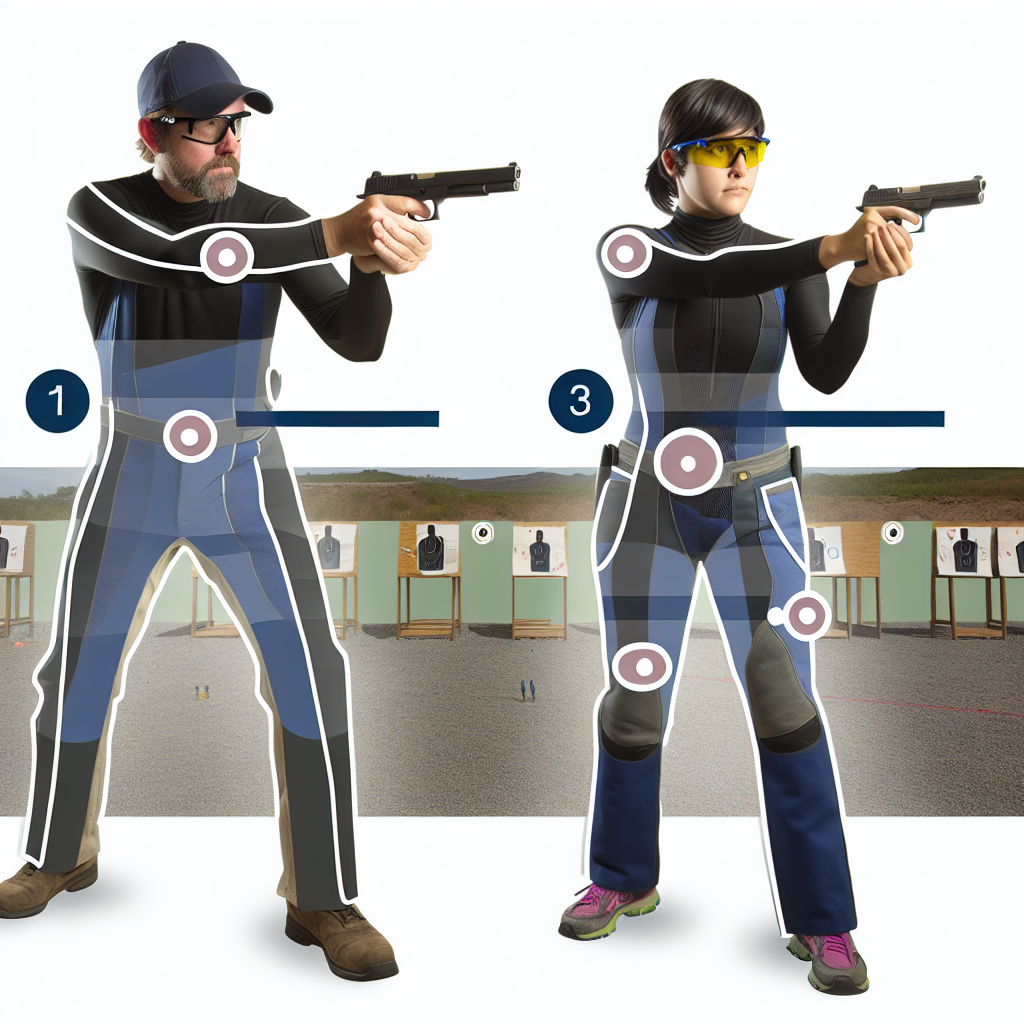
The first step toward improving your shooting stance is developing a solid base. This involves foot placement, weight distribution, and body alignment. Here are essential elements to consider:
- Foot Placement: Most competitive shooters adopt either an isosceles or Weaver stance. In the isosceles stance, feet are shoulder-width apart and roughly parallel. The Weaver stance involves placing the strong side foot slightly back at about a 45-degree angle. Experimenting with both can help you find what feels most natural and stable.
- Weight Distribution: Your weight should be balanced evenly between both feet but slightly forward onto the balls of your feet rather than your heels. This forward lean increases stability and readiness to absorb recoil.
- Knee Flexion: Slightly bending your knees helps maintain balance and allows for subtle body adjustments during shooting phases without losing stability.
- Hip Alignment: Aligning hips squarely toward the target prevents unnecessary twisting motions that can affect aim and follow-through.
A practical example comes from competitive shooter Maria Lopez who switched from flat-footed stances to adopting a slight forward lean with bent knees, resulting in a measurable improvement in her grouping tightness by nearly 15% over three months of training.
Upper Body Position: Aligning Shoulders, Arms, and Head
The upper body plays a critical role in maintaining control over the firearm during firing sequences. Key points include shoulder positioning, arm extension, and head posture.
- Shoulder Positioning: Keep your shoulders relaxed but squared toward the target. Avoid hunching or excessive tension which can cause shaking or fatigue.
- Arm Extension: Extend both arms forward firmly but not rigidly. For handgun shooters using an isosceles stance, both arms form an equal triangle with your chest. This symmetrical positioning maximizes recoil absorption and sight picture consistency.
- Grip Consistency: Ensure your grip is firm but not overly tight; excessive tension leads to muscle fatigue and tremors. Studies show that grip pressure above 15 pounds can negatively impact shot accuracy due to increased hand tremor (Journal of Applied Biomechanics, 2021).
- Head Posture: Maintain a neutral head position aligned with your spine while bringing your dominant eye naturally behind the sights. Tilting or leaning excessively can disrupt sight alignment and cause inconsistent aiming points.
An illustrative case is from World Shooting Champion Eric Johnson who emphasizes daily drills focusing on upper body relaxation techniques paired with dry-fire practice—leading him to reduce his average shot group size by nearly half over six months.
The Role of Breathing and Muscle Relaxation in Your Stance
Shooting accuracy isn’t just about physical positioning; physiological factors like breathing rhythm and muscle relaxation significantly impact performance.
- Breathe Controlled Shots: Inhale deeply before raising the firearm; exhale slowly as you align sights. Many expert marksmen recommend taking shots at natural respiratory pauses—typically after exhalation—when body movement is minimal.
- Avoid Muscle Tension: Tense muscles cause shaking; consciously relax your shoulders, neck, arms, and hands during preparation phases between shots.
- Mental Focus on Relaxation: Incorporate mindfulness or focused breathing exercises into training routines to help manage competition stress which often manifests as increased muscle tension.
A study published by the American Journal of Sports Medicine found that shooters practicing controlled breathing techniques improved their accuracy scores by up to 20%, highlighting this often-overlooked component’s importance in enhancing shooting stance and overall performance.
By integrating these tips into your training, you can significantly improve your competitive shooting skills.