Understanding “Stand Your Ground” Laws by State
“Stand Your Ground” laws have become a significant and often controversial part of the legal landscape in the United States. These laws address when and how an individual may use force, including deadly force, to defend themselves without the duty to retreat first. Given the complexity and variability of these laws across different states, understanding their nuances is crucial for both legal professionals and everyday citizens. This article explores the fundamentals of Stand Your Ground laws, how they differ state by state, notable case studies, and their broader social impact.
What Are “Stand Your Ground” Laws?
At their core, Stand Your Ground laws remove the traditional duty to retreat before using force in self-defense when faced with a perceived threat. Historically, many states required individuals to retreat if safely possible before resorting to force. However, Stand Your Ground statutes allow people to defend themselves with force without attempting to escape first.
These laws typically apply in public spaces where an individual has a legal right to be present. The key principle is that a person may use reasonable force, including deadly force, if they believe it is necessary to prevent imminent harm or death.
- No Duty to Retreat: Individuals do not have to back away from an attacker before using force.
- Self-Defense Affirmation: The law affirms the right to self-defense beyond one’s home or property.
- Legal Protections: Provides immunity from criminal prosecution and civil lawsuits in many cases where self-defense is claimed.
However, the specifics vary widely across states regarding when the law applies and what constitutes reasonable force.
The Origins and Evolution of Stand Your Ground Laws
The concept of not retreating before defending oneself dates back centuries and has roots in English common law. Traditionally, American self-defense law required a person to retreat if safely possible unless they were in their own home — known as the “Castle Doctrine.”
The modern wave of Stand Your Ground laws began in the early 2000s with Florida’s enactment of such a statute in 2005. Florida’s law gained national attention following several high-profile cases where defendants claimed Stand Your Ground as a defense.
- Florida’s Pioneering Role: Florida was the first state to pass a comprehensive Stand Your Ground law covering public spaces.
- Expansion Across States: Since then, over 30 states have enacted some form of Stand Your Ground legislation.
- Diverse Legal Approaches: Some states maintain traditional duty-to-retreat rules or limit the scope of Stand Your Ground protections.
This divergence creates a patchwork legal environment that requires careful attention when discussing or applying these laws across different jurisdictions.
Stand Your Ground Laws by State: Key Differences and Examples
The implementation of Stand Your Ground laws varies significantly between states. Below are some illustrative examples showing how these laws differ:
Florida
Florida’s Stand Your Ground law is among the broadest. It allows individuals who are not engaged in illegal activity and who feel threatened with imminent harm to use deadly force without any duty to retreat — anywhere they have a legal right to be. The law also grants immunity from prosecution if self-defense is claimed successfully.
A notable case highlighting this was George Zimmerman’s shooting of Trayvon Martin (2012). Zimmerman claimed he acted in self-defense under Florida’s statute after an altercation, which sparked nationwide debates on race, self-defense rights, and gun control.
Texas
Texas combines elements of both Castle Doctrine and Stand Your Ground principles. Under Texas law:
- A person does not have a duty to retreat if they are in a place where they have a right to be.
- The use of deadly force is justified if it is immediately necessary to protect oneself against an unlawful attack or prevent serious crimes like robbery or aggravated kidnapping.
This balance makes Texas one of the more permissive states regarding self-defense but still within certain boundaries defined by statute.
Minnesota
Minnesota does not have an explicit Stand Your Ground statute but follows case law principles that no longer require retreat when faced with an immediate threat. However, its courts examine each case carefully based on reasonableness and necessity rather than granting blanket immunity like some other states.
Maine
Maine retains a strong duty-to-retreat requirement outside one’s home except under specific circumstances such as defending against serious bodily harm or sexual assault. This makes Maine more restrictive compared to most Stand Your Ground states.
A Snapshot Summary
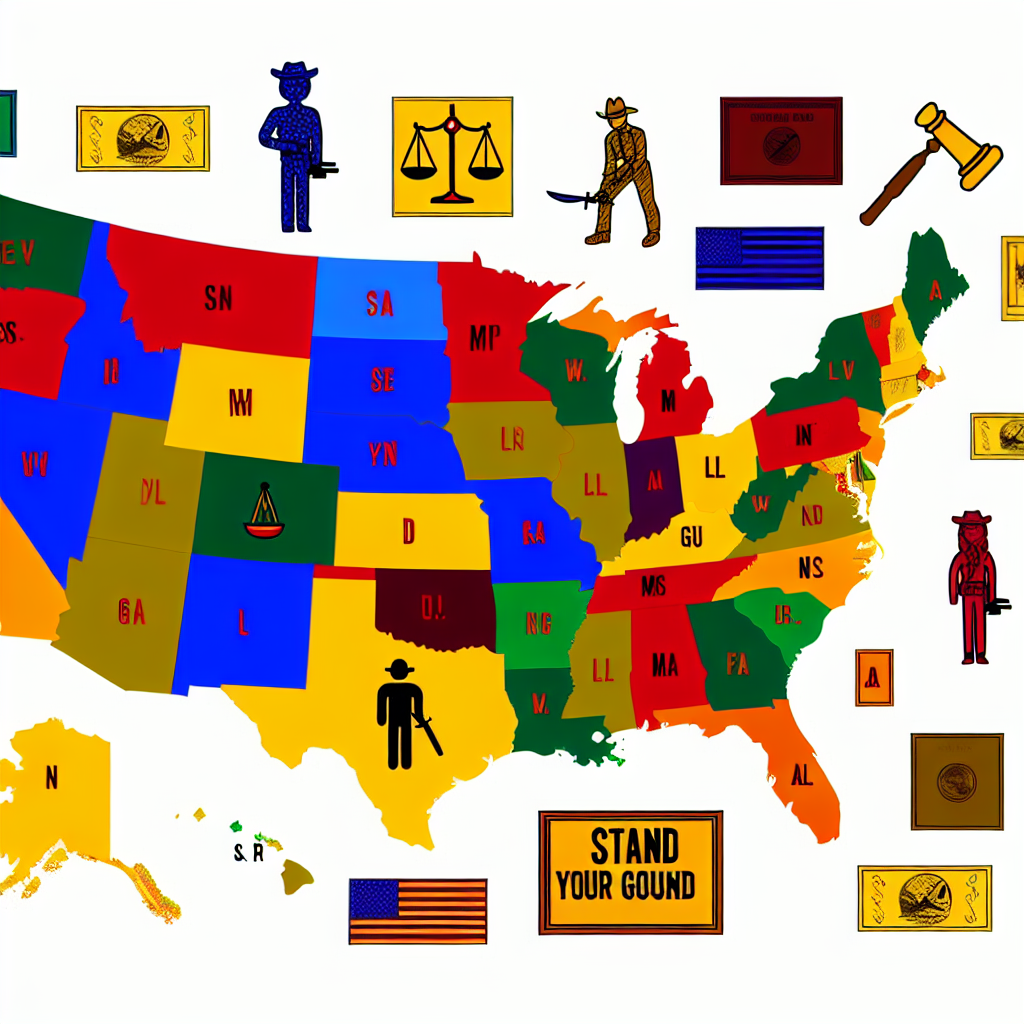
- No Duty to Retreat States (Stand Your Ground): Florida, Texas, Arizona, Georgia, Louisiana (among others).
- Duty-to-Retreat States: Maine, New York, Vermont (limited exceptions).
- No Explicit Statutes but Judicial Interpretations Favoring No Retreat: Minnesota, Illinois (with some limitations).
The Impact of Stand Your Ground Laws: Statistics and Case Studies
The social impact of these laws remains debated among scholars, policymakers, and communities.
Proponents argue that these statutes empower individuals to protect themselves without hesitation in dangerous situations. However, the ongoing debate highlights the need for careful consideration of their implications.