The History of the Walther PPK
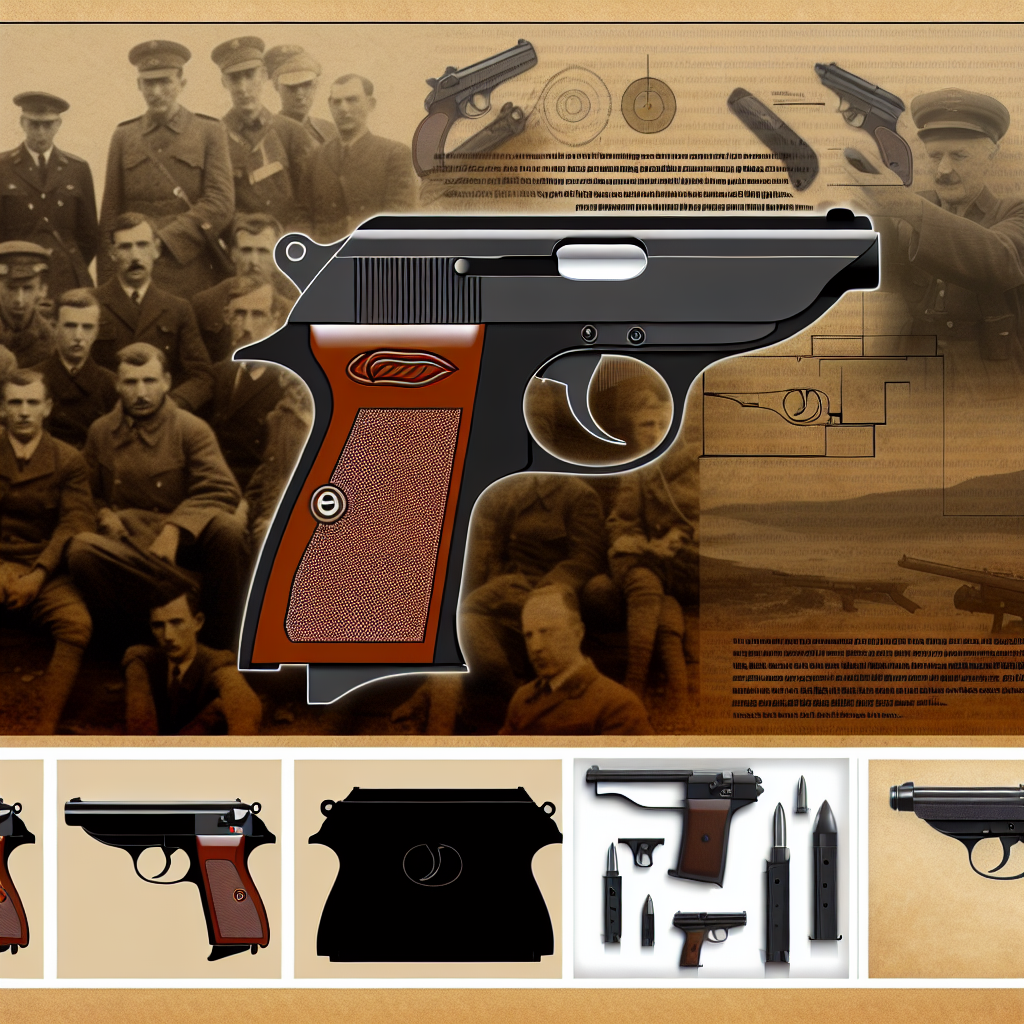
The Walther PPK is one of the most iconic firearms in history, renowned for its compact design, reliability, and cultural significance. From its inception in early 20th-century Germany to its starring role in popular culture, the PPK has left an indelible mark on both firearm enthusiasts and the general public alike. This article delves into the fascinating history of the Walther PPK, exploring its origins, technical innovations, wartime service, and enduring legacy.
Origins and Development: The Birth of a Compact Classic
The Walther PPK traces its roots back to the early 1930s when the German arms manufacturer Carl Walther GmbH sought to create a smaller version of their successful Walther PP (Polizeipistole) pistol. The PP had been introduced in 1929 as a semi-automatic pistol designed for police use, featuring a double-action trigger mechanism and a blowback operation system.
In 1930, the Walther PPK (Polizeipistole Kriminalmodell – Police Pistol Detective Model) was introduced as a more compact variant. It was specifically designed for undercover police officers and detectives who required a concealable sidearm without sacrificing firepower or reliability.
- Dimensions: The PPK was shorter and lighter than the PP, with a barrel length of 3.3 inches compared to the PP’s 4 inches.
- Caliber: Initially chambered in .32 ACP (7.65mm), later versions were also produced in .380 ACP (9mm Kurz).
- Design Features: The PPK retained the double-action/single-action trigger system and incorporated a slide-mounted safety/decocker lever.
The design was revolutionary for its time because it combined concealability with ease of use and accuracy. This made it an ideal choice not only for law enforcement but also for civilian self-defense.
Technical Innovations and Design Excellence
The Walther PPK’s engineering is notable for several key features that contributed to its success and longevity.
- Blowback Operation: Unlike recoil-operated pistols, the PPK uses a simple blowback mechanism which allows for fewer moving parts and increased reliability. This also made manufacturing simpler during times of resource scarcity.
- Double-Action/Single-Action Trigger: This feature allowed users to fire the first shot by simply pulling the trigger (double action), while subsequent shots were fired with lighter trigger pulls (single action), improving accuracy during rapid fire.
- Safety Mechanisms: The slide-mounted safety lever doubled as a decocker, allowing safe lowering of the hammer without discharging the weapon—a significant advancement in user safety at that time.
- Ergonomics: Its slim profile and grip angle made it comfortable to hold despite its small size, enhancing accuracy for concealed carry users.
This combination of features helped establish the Walther PPK as a benchmark for compact semi-automatic pistols globally. Its reliability under adverse conditions was tested repeatedly during military service and police use throughout Europe.
The Walther PPK in World War II: Service and Controversy
The outbreak of World War II saw widespread adoption of the Walther PPK by various branches of Nazi Germany’s military and police forces. It became a standard sidearm for officers in the Wehrmacht, Luftwaffe, SS, and Gestapo due to its portability and ease of concealment.
- Production Shifts: Wartime production increased dramatically; however, material shortages forced changes such as wooden grips replacing plastic ones and simplified finishes to conserve resources.
- M35 Variant: A slightly larger version called the Walther PP was sometimes preferred by military personnel due to better handling characteristics but many still favored the compactness of the PPK.
- Cultural Associations: Post-war perceptions tied to Nazi usage led to controversy surrounding ownership and display of these pistols in some countries.
A notable historical figure associated with this pistol is Reinhard Heydrich, one of Nazi Germany’s highest-ranking officials. Heydrich was assassinated in Prague in 1942 by Czech resistance fighters who used modified versions of pistols similar to or including Walther models—highlighting how these firearms became intertwined with key wartime events.
The Post-War Era: Legal Challenges and Global Popularity
After World War II ended in 1945, production at Carl Walther GmbH’s original factory in Zella-Mehlis ceased due to Allied occupation restrictions. In response, production moved to Ulm in West Germany where manufacturing resumed under new regulations aimed at preventing rearmament on a large scale.
The post-war period brought several challenges but also opportunities for growth internationally:
- Banning & Restrictions: Many countries imposed restrictions on German-made weapons immediately after WWII. However, over time these laws eased allowing renewed export opportunities.
- Ammunition Adaptations: To cater to different markets like North America where .32 ACP was less common or considered underpowered by some users, versions chambered in .380 ACP gained traction.
-
Cultural Icon Status: The Walther PPK’s design and historical significance have made it a symbol of sophistication and reliability, often featured in popular media and embraced by collectors worldwide.
Today, the Walther PPK remains a celebrated firearm, reflecting both its storied past and its enduring appeal in contemporary culture.