The History of the Springfield Armory
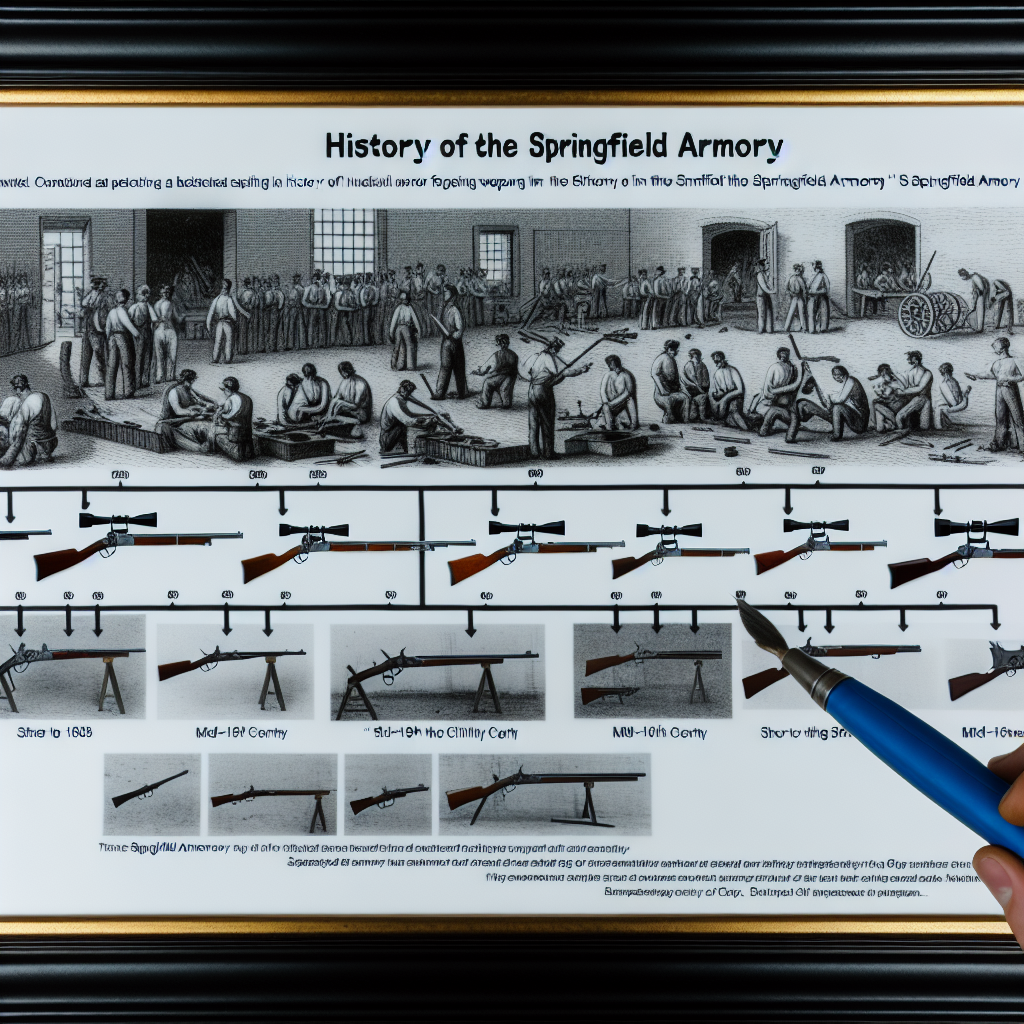
The Springfield Armory stands as one of the most iconic symbols of American military history and industrial innovation. From its establishment in the late 18th century to its role in shaping the nation’s defense capabilities, the Springfield Armory has played a crucial part in both technological advancements and historical milestones. This article delves deep into the history of this legendary institution, exploring its origins, evolution, contributions during major conflicts, and lasting legacy.
Origins and Establishment: The Birth of an Arsenal
The Springfield Armory was officially established in 1777 during the American Revolutionary War, marking the beginning of America’s efforts to develop a domestic arms manufacturing capability. Located in Springfield, Massachusetts, it was chosen strategically due to its proximity to raw materials, waterways, and transportation routes.
Before the armory’s creation, the Continental Army faced significant challenges in obtaining reliable firearms and ammunition. Much of the weaponry used by colonial militias was either imported or locally crafted with varying degrees of quality. Recognizing this vulnerability, General George Washington and other leaders advocated for a centralized facility to produce standardized arms for American forces.
- 1777: The Continental Congress authorized the establishment of the armory at Springfield.
- Early focus: Repairing captured British muskets and producing basic firearms for militia use.
- Location advantages: Access to iron from nearby Berkshire Hills and transportation via the Connecticut River.
The Springfield Armory quickly became America’s first national armory and played an essential role in transitioning from imported weapons to homegrown production during a time when self-sufficiency was critical for survival.
Industrial Innovation and Standardization in Firearms Production
One of the most significant contributions of the Springfield Armory was its pioneering role in advancing industrial manufacturing techniques. In particular, it became a cornerstone for what would later be known as the “American System” of manufacturing—an approach that emphasized interchangeable parts, mechanization, and precision engineering.
In the early 19th century, under leadership figures like Captain John H. Hall, the armory implemented revolutionary production methods that transformed firearm manufacturing globally:
- Interchangeable Parts: Hall developed machinery that could produce gun parts so precisely that they could be swapped between weapons without custom fitting. This innovation drastically improved repairability and mass production efficiency.
- Mechanized Manufacturing: The use of machine tools powered by water wheels enabled higher consistency and output compared to manual craftsmanship.
- Standardization: Parts were made to exact specifications allowing assembly-line style production decades before Henry Ford popularized it in automobiles.
This system not only enhanced military readiness but also had far-reaching effects on American industry as a whole. The Springfield Armory became a model for factories across various sectors including textiles, clock-making, and eventually automotive manufacturing.
The Springfield Armory During Major Conflicts
The armory’s historical significance is tightly linked to its role supplying arms through numerous American wars. Its evolution mirrors shifts in warfare technology and national defense priorities over nearly two centuries.
The Civil War Era
During the American Civil War (1861-1865), Springfield was instrumental in equipping Union forces with rifles that were both reliable and widely distributed. The famous Springfield Model 1861 rifle-musket became one of the most widely used infantry weapons during this conflict.
- Production Scale: At peak war production, the armory manufactured tens of thousands of rifles monthly.
- Technological Advancements: Rifling improvements enhanced accuracy while mass production met unprecedented demand.
- Strategic Importance: Control over arms supply helped maintain Union advantages on many battlefields.
The World Wars: Modernizing Arms Production
The two World Wars accelerated technological advancements at Springfield Armory even further. During World War I and World War II, new semi-automatic rifles such as the M1903 Springfield rifle reflected evolving battlefield requirements for faster firing rates combined with precision shooting capabilities.
- M1903 Rifle: Adopted officially before WWI, this rifle became noted for its accuracy due to features like a five-round internal magazine and bolt-action mechanism.
- M1 Garand Development: Though primarily produced elsewhere during WWII, design influences trace back to innovations fostered at Springfield Armory.
- Mass Production Efforts: The armory expanded infrastructure dramatically to meet wartime demands including modern assembly lines.
The experience gained during these global conflicts helped cement America’s position as a leader in military firearms technology throughout much of the twentieth century.
The Decline and Closure: End of an Era
Despite its long-standing contributions, changing defense strategies and industrial outsourcing led to reduced relevance for government-operated armories after World War II. By mid-century, private companies increasingly took over firearms production due to cost efficiencies and modernization opportunities unavailable at traditional facilities like Springfield Armory.
- Korean War & Vietnam War Periods: Production shifted primarily towards private manufacturers; Springfield’s output became more limited.
- 1968 Closure: After nearly two centuries of operation
the Springfield Armory officially closed its doors, marking the end of an era in American firearms manufacturing.
Today, its legacy continues to influence modern firearm design and production.