How to Train for Accuracy Under Time Pressure
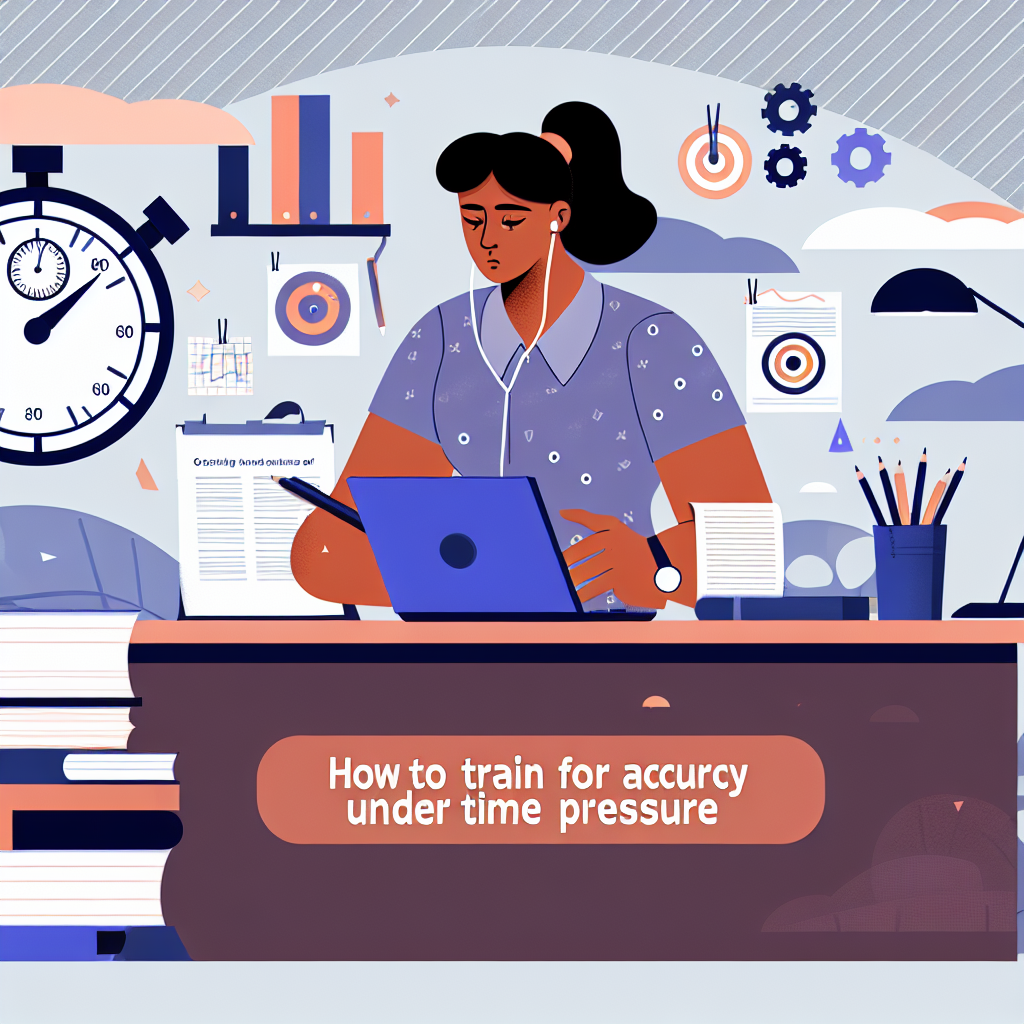
In today’s fast-paced world, the ability to perform accurately under time pressure is a highly valued skill across numerous fields—from emergency medicine and competitive sports to corporate decision-making and standardized testing. While working quickly often risks sacrificing precision, the good news is that accuracy and speed can be harmonized through deliberate training. This article explores effective strategies, psychological insights, and practical exercises designed to help you improve accuracy when time is limited.
Understanding the Challenge: Why Accuracy Deteriorates Under Pressure
Before diving into training methods, it’s important to understand why our accuracy tends to falter when the clock is ticking. Research in cognitive psychology reveals several factors at play:
- Cognitive Load Increase: Time constraints elevate stress and cognitive load, which can overwhelm working memory and impair attention control.
- Speed-Accuracy Tradeoff: Known as Fitts’ Law, this principle states that as speed increases, accuracy tends to decrease unless one develops specialized skills.
- Anxiety and Stress Response: Pressure triggers physiological responses such as increased heart rate and cortisol release, which can disrupt fine motor skills and decision-making.
- Reduced Processing Time: Less time means less opportunity for error-checking or reflection, leading to impulsive or automatic responses prone to mistakes.
A study published in the Journal of Experimental Psychology (2018) showed that participants under timed conditions made 30% more errors than those without time constraints. However, individuals who practiced under pressure improved significantly over time.
Key Principles for Training Accuracy Under Time Constraints
Developing accuracy under pressure requires a strategic approach. The following principles form the foundation of effective training:
- Incremental Exposure: Gradually increase time pressure during practice sessions rather than jumping immediately into extreme conditions.
- Focused Attention Training: Enhance your ability to maintain concentration amidst distractions through mindfulness and attentional control exercises.
- Deliberate Practice with Feedback: Engage in repetitive tasks with immediate feedback on performance to refine precision and speed simultaneously.
- Simplification and Chunking: Break complex tasks into manageable components (chunks) to reduce cognitive load during rapid execution.
- Mental Simulation and Visualization: Use mental rehearsal of performing accurately under pressure to build neural pathways supporting efficient execution.
Effective Training Techniques: From Theory to Practice
Theories are only useful when translated into actionable techniques. Below are proven methods employed by professionals in high-pressure environments:
1. Time-Boxed Practice Sessions
This method involves practicing tasks within progressively shorter time intervals while maintaining accuracy goals. For example, if you’re learning data entry or coding, start by completing tasks with no time limit but perfect accuracy. Gradually reduce the allowed time by small increments each session.
- Example: A medical student practicing diagnostic tests might begin by allowing themselves unlimited time for case studies, then move down from 30 minutes per case study to 20 minutes, then 15 minutes as their proficiency increases.
This gradual increase in temporal demands helps build resilience against pressure-induced errors without overwhelming the learner prematurely.
2. Simulated High-Pressure Environments
Create realistic scenarios that mimic the stressors of real-life situations. Simulation-based training is widely used in aviation and emergency response fields. Pilots use flight simulators that replicate unexpected emergencies requiring rapid yet accurate responses.
- Case Study: A study conducted at Stanford University involved surgeons practicing laparoscopic procedures in virtual reality simulators under timed conditions. The results showed a 40% reduction in errors after repeated exposure compared to those trained without simulation under pressure.
This method not only improves technical skill but also conditions emotional regulation systems critical for performance under duress.
3. Mindfulness and Cognitive Control Exercises
A growing body of research indicates mindfulness meditation enhances attentional focus and reduces anxiety—key factors influencing accuracy under pressure.
-
<li>Practical Exercise:> Try brief mindfulness sessions (5–10 minutes daily) focusing on breath awareness or body scans before engaging in high-pressure tasks.
- The Science Behind It: A meta-analysis published in Cognitive Therapy and Research (2020) found that mindfulness training improved cognitive flexibility and working memory capacity by approximately 25%, facilitating better error detection during fast-paced activities.
4. Error Management Training (EMT)
This technique encourages learners to embrace errors as learning opportunities rather than failures. EMT involves deliberately pushing oneself close to limits where errors are likely while maintaining composure and analyzing mistakes post-task for improvement.
- Application Example: In sales training, reps might simulate difficult client calls with strict timing while tracking mistakes made in pitch delivery or information recall. Reviewing these errors promptly helps reinforce accurate behaviors next time around despite time constraints.
5. Chunking Complex Tasks into Subtasks
Cognitive load theory suggests breaking down complex processes into smaller “chunks” enhances recall and execution
of tasks. By focusing on manageable segments, individuals can maintain accuracy even when under pressure. This method not only reduces overwhelm but also improves overall performance.
Incorporating these strategies can significantly enhance your accuracy in high-pressure situations.