The History of the Heckler & Koch MP5
The Heckler & Koch MP5 is one of the most iconic submachine guns in modern firearms history. Renowned for its reliability, accuracy, and compact design, the MP5 has been a staple in military, law enforcement, and special operations units worldwide since its introduction in the 1960s. This article delves into the fascinating history of the MP5, exploring its development, evolution, global impact, and enduring legacy.
Origins and Development: The Birth of a Legend
The origins of the Heckler & Koch MP5 can be traced back to post-World War II Germany. In the late 1950s and early 1960s, Heckler & Koch (H&K), a relatively new firearms manufacturer founded in 1949, sought to create a compact, reliable submachine gun suitable for military and police use. Inspired by the earlier designs such as the Sten gun and the British Sterling SMG, H&K aimed to combine proven concepts with innovative technology.
In 1964, H&K introduced the MP5 (Maschinenpistole 5), chambered in 9×19mm Parabellum—a cartridge favored for its balance between stopping power and manageable recoil. The MP5 was based on H&K’s G3 rifle operating system and utilized a roller-delayed blowback mechanism rather than the more common simple blowback found in many submachine guns. This design choice significantly enhanced accuracy and reliability.
- Roller-delayed blowback mechanism: Provided smoother operation and reduced recoil.
- Closed bolt firing: Improved accuracy compared to open bolt designs common at the time.
- Modular design: Allowed easy customization with different stocks, barrels, and accessories.
The first generation of MP5s quickly gained attention for their build quality and performance during trials by various European police forces. Its compact size made it ideal for close-quarters combat scenarios such as urban warfare, counter-terrorism operations, and VIP protection.
Design Features: Why the MP5 Stands Out
The success of the MP5 lies largely in its sophisticated design features that set it apart from other submachine guns of its era. While many SMGs were plagued by reliability issues or poor ergonomics, the MP5 combined several key elements that contributed to its widespread adoption:
- Roller-delayed blowback action: Unlike conventional blowback systems which rely on mass and spring tension to delay firing pin movement, H&K’s roller system used two rollers to delay bolt movement. This resulted in lower recoil impulse and greater mechanical efficiency.
- Closed bolt firing: Firing from a closed bolt improved shot-to-shot consistency by eliminating bolt movement prior to firing.
- Ergonomic controls: Ambidextrous safety selector switches allowed easy operation for both left- and right-handed users without repositioning hands.
- Modularity: Various stock options—including fixed, retractable, or folding—allowed adaptability based on mission requirements.
- Sights: The original diopter rear sight offered precision aiming capability even at longer ranges than typical for submachine guns.
This combination of advanced mechanical engineering with user-friendly features created a versatile weapon platform capable of excelling in diverse operational environments.
Global Adoption: From German Police to Elite Special Forces
The MP5’s reputation for reliability quickly spread beyond Germany. By the late 1960s and early 1970s, numerous law enforcement agencies across Europe began adopting the weapon. Its compact size made it perfect for police tactical units needing an effective firearm capable of controlled automatic fire indoors or in urban settings.
A pivotal moment cementing the MP5’s legendary status was its use by elite counter-terrorism units worldwide during high-profile hostage rescue operations. For example:
- Operation Entebbe (1976): Israeli commandos famously used MP5s during their daring raid to rescue hostages held at Uganda’s Entebbe Airport. The weapon’s accuracy and controllability were critical during close-quarter engagements inside aircraft terminals.
- British SAS: The Special Air Service adopted the MP5 extensively during counter-terrorism missions throughout the 1970s onward.
- FBI Hostage Rescue Team (HRT): The FBI selected variants of the MP5 during key domestic anti-terror operations starting in the 1980s.
The weapon’s appeal wasn’t limited to Western forces; it was exported widely across Asia, Africa, Latin America, and Middle Eastern countries. Some statistics highlight this global footprint:
- An estimated 100,000+ units have been produced since inception (as per H&K official records).
- The MP5 has been adopted by over 40 countries’ military or law enforcement agencies.
- Many international special forces units still list variants of the MP5 among their primary close-quarters weapons as recently as 2020–2024.
Evolving Variants: Adapting to Modern Needs
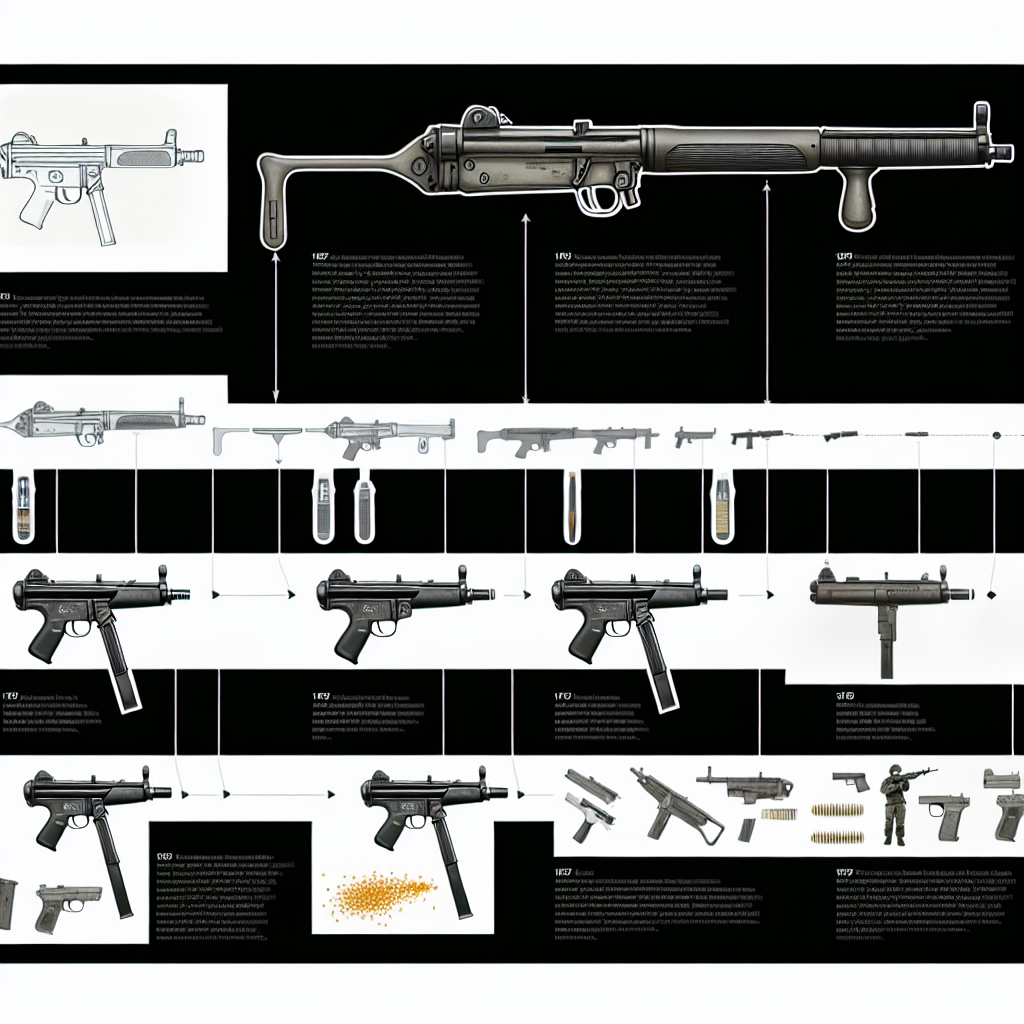
The original MP5 design spawned an entire family of variants tailored for specific operational roles or user preferences. Over five decades, Heckler & Koch introduced numerous models with incremental improvements or specialized functions
that enhanced versatility, including the MP5K for compactness and the MP5SD with an integrated suppressor. This adaptability has ensured the MP5 remains relevant in modern tactical operations.
Its enduring legacy is a testament to its design and effectiveness in various combat scenarios.