The History of the SIG Sauer P226
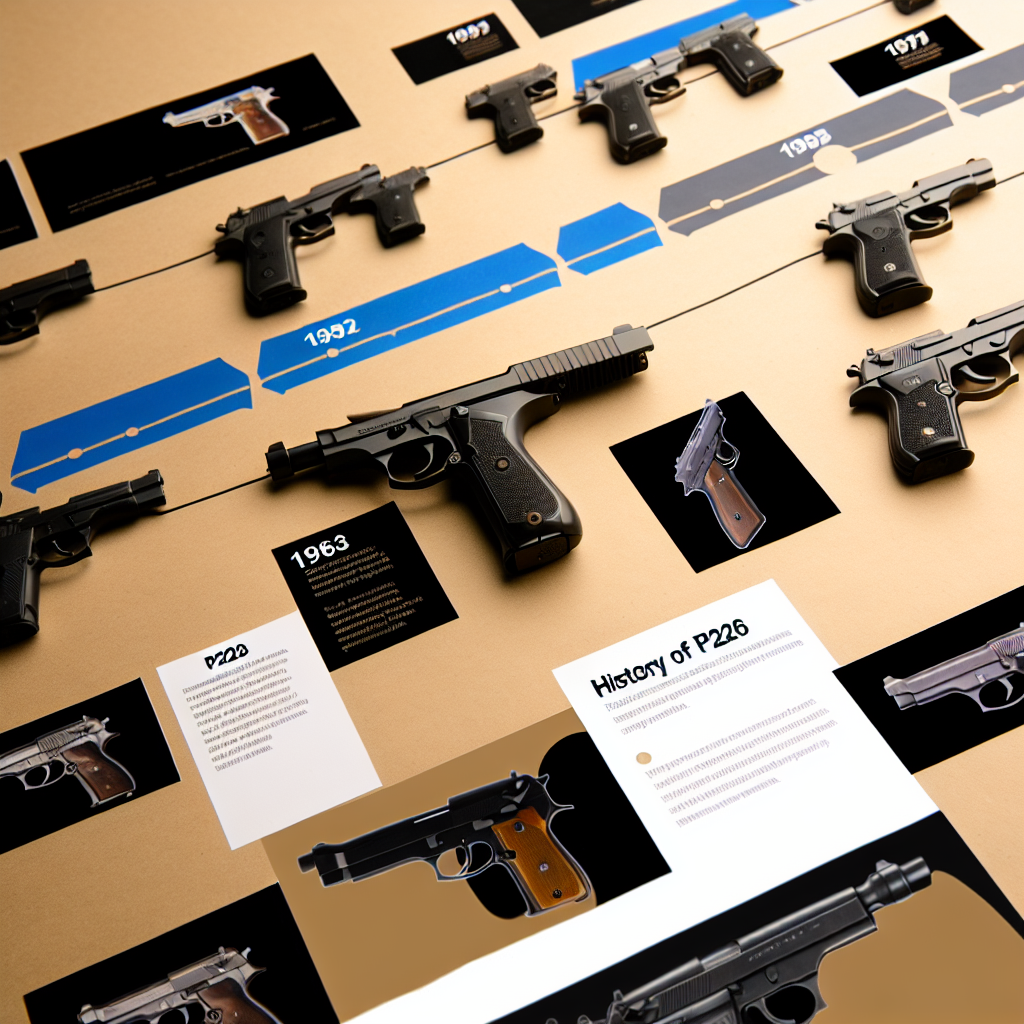
The SIG Sauer P226 is one of the most iconic and widely respected semi-automatic pistols in the world. Known for its reliability, accuracy, and robust construction, the P226 has become a staple for military, law enforcement, and civilian shooters alike. This article delves into the fascinating history of the SIG Sauer P226, exploring its origins, design evolution, adoption by various agencies, and its lasting impact on the firearms industry.
Origins and Development: The Birth of a Legend
The story of the SIG Sauer P226 begins in the 1980s during a period when many countries and agencies were seeking to replace their aging sidearms with more modern and reliable handguns. The pistol was developed by SIG Sauer, a company born from a collaboration between Schweizerische Industrie Gesellschaft (SIG) in Switzerland and J.P. Sauer & Sohn in Germany.
The development of the P226 was largely driven by the United States Military’s search for a new service pistol under the XM9 program. The goal was to find a 9mm handgun that could replace the venerable M1911A1 .45 ACP pistol, which had been in service since World War I. Several manufacturers competed in this trial, but SIG Sauer’s offering stood out due to its blend of innovative features and proven design principles.
- Design Inspiration: The P226 was based on earlier SIG Sauer models such as the P220 and P225 but incorporated improvements in ergonomics and magazine capacity.
- Caliber Choice: Chambered primarily in 9x19mm Parabellum, reflecting NATO standardization efforts.
- Material Innovation: The use of stainless steel slide and aluminum alloy frame contributed to durability without excessive weight.
The resulting pistol was introduced to compete directly with other contenders like Beretta’s 92F (later M9) and Colt’s offerings. Despite a strong showing from SIG Sauer, Beretta won the initial XM9 contract. However, this setback did not diminish the potential or appeal of the P226.
Technical Features: What Makes the P226 Stand Out?
The SIG Sauer P226 distinguished itself through a combination of engineering excellence and user-focused features that contributed to its performance under demanding conditions. Below are some key technical aspects that have made it popular across various applications:
- Double/Single Action Trigger: The P226 features a DA/SA trigger system allowing for safe carry with a hammer down but quick readiness with a single-action follow-up shot.
- Decocking Lever: An external decocking lever safely lowers the hammer without firing, enhancing safety during handling.
- High Magazine Capacity: Standard magazines hold 15 rounds of 9mm ammunition—significantly higher than many traditional pistols at its time.
- Cold Hammer-Forged Barrel: Ensures longevity and consistent accuracy over thousands of rounds fired.
- Sights: Equipped with fixed or adjustable three-dot sights optimized for rapid target acquisition.
The robust construction combined with these practical features made it an ideal choice for military personnel who required reliability under adverse conditions. In addition to military use, law enforcement agencies valued its ease of maintenance and adaptability for tactical roles.
Adoption by Military and Law Enforcement Agencies Worldwide
Though it did not win the original U.S. military contract against Beretta’s M9, the P226 found widespread adoption elsewhere — including within specialized units of the U.S. military as well as numerous international forces. Its reputation grew steadily as users praised its reliability and performance in real-world operations.
- U.S. Navy SEALs: Perhaps one of the most famous users of the P226 is the Navy SEALs, who adopted it after extensive testing found it superior for special operations missions requiring high accuracy and dependability.
- German Bundeswehr: The German armed forces adopted variants based on SIG Sauer designs which influenced further development of their sidearms.
- Law Enforcement: Many police departments worldwide selected versions of the P226 due to its balance between firepower, size, and ease of use under stress.
A notable example includes British Special Air Service (SAS) units who favored variants chambered in .40 S&W for increased stopping power during counter-terrorism operations. Additionally, countries like Canada adopted modified versions known as C22 pistols based on SIG designs similar to the P226 platform.
Evolutions and Variants: Adapting to Changing Needs
The enduring popularity of the SIG Sauer P226 led to numerous iterations designed to meet specific operational requirements or consumer preferences over time. These variants expanded upon both ergonomics and functionality while maintaining core attributes that users trusted.
- P228/P229 Series: Compact versions introduced for concealed carry or sidearm roles where full-size models were impractical; chambered in both 9mm and .40 S&W calibers.
- P226 MK25: A naval variant built specifically for U.S. Navy SEALs with enhanced corrosion resistance coatings suitable for maritime environments.
- P226 E2 (Enhanced Ergonomics): Updated
P226 E2 (Enhanced Ergonomics): Updated features such as a reduced grip circumference and improved controls, making it more user-friendly for a wider range of shooters.
Overall, the SIG Sauer P226 remains a significant player in the handgun market, known for its reliability and versatility across various applications.