How to Use Tactical Flash Bangs Safely
Tactical flash bangs, also known as stun grenades or flash grenades, are non-lethal devices designed to disorient and temporarily incapacitate targets through a combination of intense light and loud noise. Widely used by military forces, law enforcement agencies, and special operations teams around the world, these devices play a critical role in high-stakes situations such as hostage rescues, room clearing operations, and riot control.
Despite their effectiveness, flash bangs can pose serious risks if not used properly. Misuse or lack of proper safety protocols can lead to permanent hearing loss, burns, or even fatalities. This article explores how to use tactical flash bangs safely, highlighting essential precautions, best practices, and real-world insights that ensure both operational success and personnel safety.
Understanding Tactical Flash Bangs: Mechanism and Purpose
Before delving into safety procedures, it is important to understand what tactical flash bangs are and how they function.
A typical flash bang produces two primary effects:
- Bright Flash: An intense burst of light reaching up to several million candela that temporarily blinds the target by overwhelming the retina.
- Loud Bang: A concussive sound ranging from 170 to 180 decibels that causes temporary hearing loss and disorientation.
The combined sensory overload disrupts a person’s balance, coordination, and situational awareness for several seconds — providing law enforcement or military operators a crucial advantage in controlling hostile environments without resorting to lethal force.
Flash bangs typically detonate about one second after activation, allowing operators to deploy them quickly into rooms or confined spaces. However, this delay also means users must be trained to anticipate effects and protect themselves accordingly.
Essential Safety Precautions When Handling Flash Bangs
While flash bangs are designed as non-lethal tools, improper handling can result in serious injuries. The following precautions are critical for minimizing risks:
- Training is Non-Negotiable: Only personnel who have undergone comprehensive training on flash bang deployment should handle these devices. Training covers timing sequences, throw techniques, and safety distances.
- Maintain Safe Distances: Operators should maintain a minimum safe distance from the detonation point — generally at least 5 meters (16 feet) for personnel exposure. Being too close increases risk of burns or hearing damage.
- Avoid Confined Spaces with Flammable Materials: Flash bangs generate heat upon detonation which can ignite flammable substances such as gas leaks or chemical agents present in certain environments.
- Use Personal Protective Equipment (PPE): Hearing protection like earplugs or earmuffs and eye protection such as ballistic goggles are mandatory when deploying flash bangs.
- Avoid Direct Contact with the Device: Never hold the flash bang longer than necessary; toss it immediately after activation to prevent premature detonation near the operator’s body.
- Clear Communication Among Team Members: Ensure all team members know when and where a flash bang will be deployed to prevent accidental exposure or panic-induced errors.
Step-by-Step Guide: Deploying Flash Bangs Safely
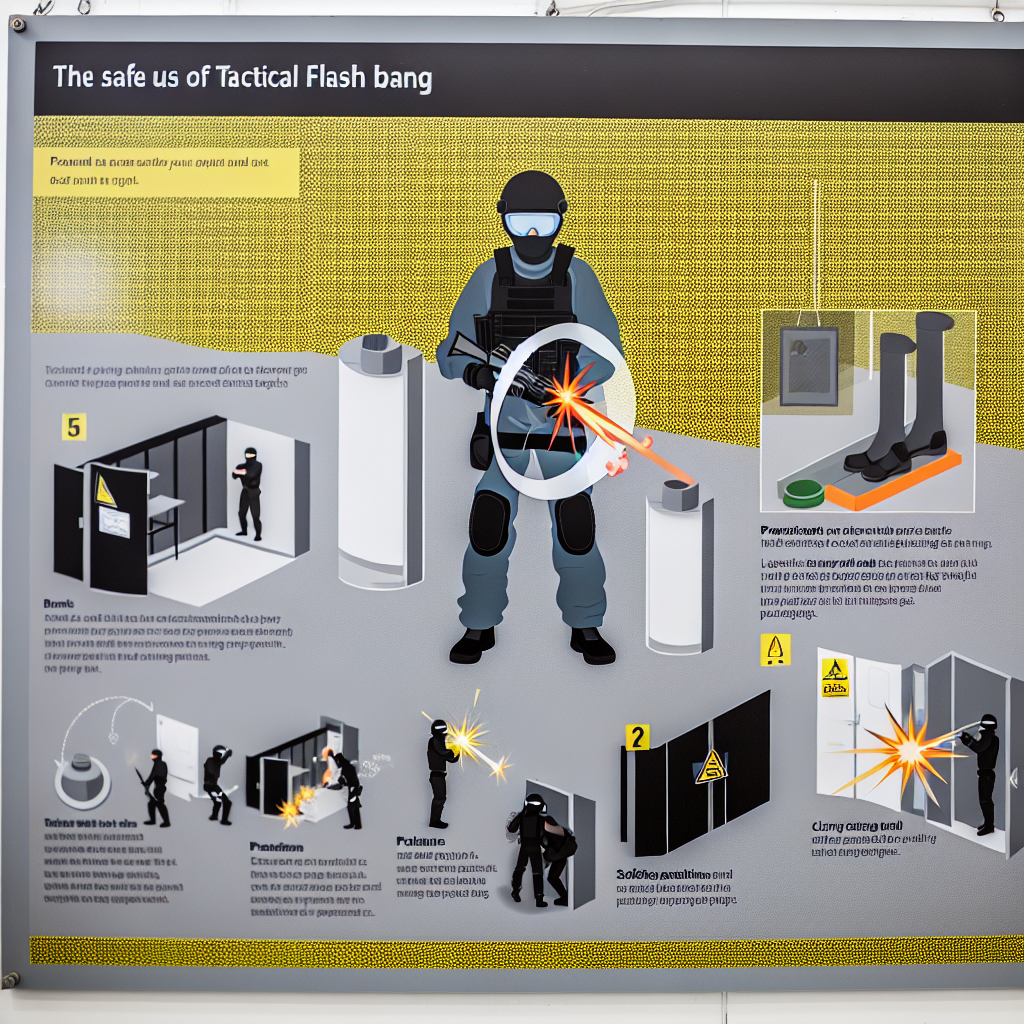
The following stepwise approach outlines how to deploy tactical flash bangs effectively while prioritizing safety:
- 1. Conduct a Risk Assessment: Before deployment, assess the environment for potential hazards such as combustible materials or close proximity of civilians.
- 2. Inform Your Team: Clearly communicate the timing and location of the device deployment so everyone is prepared for sensory overload effects.
- 3. Prepare Protective Gear: Don hearing protection and eye protection immediately prior to handling the device.
- 4. Activate Carefully: Pull the pin firmly but avoid twisting motions that could accidentally initiate premature ignition. Be aware of the device’s fuse delay (usually around one second).
- 5. Throw Strategically: Aim to toss the flash bang into an open space within the target room rather than directly at individuals or surfaces that might cause ricochet injuries.
- 6. Take Cover Immediately: After throwing the device, seek cover behind walls or barriers to shield yourself from blast effects while maintaining visual contact on entry points.
- 7. Enter with Caution: Wait briefly after detonation before entering cleared areas — this allows targets time to be disoriented but reduces risk of secondary hazards like fires or structural damage caused by concussive force.
The Role of Tactical Flash Bangs in Modern Operations: Case Studies & Statistics
Tactical flash bangs have been credited with saving countless lives during complex operations worldwide by reducing reliance on lethal force. Here are some notable examples illustrating their effective and safe use:
- The 2013 Westgate Mall Attack (Kenya): Kenyan security forces used stun grenades during their counter-terrorism response against Al-Shabaab militants barricaded inside a shopping complex. The use of flash bangs helped disorient attackers without causing widespread civilian casualties amid chaotic urban combat conditions.
- The North Hollywood Shootout (1997):: In this infamous case
The North Hollywood Shootout (1997): In this infamous case, tactical flash bangs were deployed to create distractions and provide law enforcement with the necessary advantage to apprehend armed suspects while minimizing civilian harm.
Understanding the safe and effective use of tactical flash bangs can enhance operational success and ensure the safety of both law enforcement and civilians in critical situations.