-
- A home invasion is one of those situations most people would rather not think about. But spending a little time thinking through home security before something happens can make your household safer without turning your home into a fortress.
There is also an important distinction between burglary and what people commonly call a home invasion. The FBI defines burglary as unlawful entry into a structure with the intent to commit a felony or theft. “Home invasion,” however, isn’t a single, uniformly defined national crime category. It generally refers to an unlawful entry into an occupied home, particularly when violence, threats, or confrontation are involved.
Older Bureau of Justice Statistics research illustrates why occupied burglaries deserve particular attention. Looking at household burglaries from 2003 through 2007, researchers found that someone was home during about 28% of them. Violence occurred in about 7% of all household burglaries and in about 26% of burglaries where someone was home.
The goal of preparing isn’t to assume the worst is going to happen. It’s to make your home a less attractive target, make forced entry more difficult, and give everyone in the household a simple plan if someone does try to get inside.
Start by Looking at Your Home From the Outside
Walk around your property as if you’ve never seen it before.
Where could someone approach without being noticed? Which doors or windows would be easiest to force? Is there a side gate that’s usually unlocked? Can someone reach the backyard without passing a camera or light?
Pay particular attention to:
- Front, rear and side doors
- The door between an attached garage and the house
- Sliding glass doors
- Ground-floor windows
- Garage windows
- Gates and fences
- Dark areas beside the home
- Shrubs that conceal doors or windows
- Ladders or tools stored outside
- Areas not visible from neighboring homes
Exterior lighting and landscaping matter because they can reduce the concealed spaces around entrances. North Carolina’s Department of Public Safety, for example, recommends adequate exterior lighting and keeping landscaping from creating hiding places around a home. (NC DPS)
You don’t necessarily need expensive equipment. Fixing a weak door frame or adding lighting to a dark side entrance may be more useful than buying another gadget.
Reinforce the Doors First
Exterior doors deserve particular attention because a strong lock isn’t much help if the frame around it is weak.
Check that exterior doors are solid and fit their frames properly. A quality deadbolt should be paired with a sturdy strike plate secured into the structure behind the door frame rather than relying only on short screws in the trim.
Police crime-prevention guidance commonly recommends reinforced strike plates and screws approximately three inches long so the hardware reaches farther into the framing. (North Miami)
Also inspect:
- Door jambs for cracks or previous damage
- Hinges for loose screws
- Glass immediately beside door locks
- Sliding-door locks and tracks
- The door connecting the garage to the house
- Exterior doors that are routinely left unlocked for convenience
A sliding glass door may benefit from an additional security bar or other secondary locking device. Whatever you install, make sure it doesn’t create a dangerous obstacle to getting out of the house during a fire or other emergency.
Don’t Forget the Garage
The garage is easy to overlook because it doesn’t feel like part of the living area, but an attached garage can provide another route into the house.
Keep the overhead garage door closed when you’re not actively using it and lock the interior door between the garage and the house.
It’s also worth thinking about what can be seen through garage windows. Tools, bicycles, sporting equipment and other valuables don’t need to be advertised to anyone walking past.
If you park outside, consider whether leaving a garage-door remote in the vehicle effectively gives someone who breaks into the vehicle a way to enter the garage.
Use Lighting, Cameras and Alarms as Layers
No security device makes a house burglar-proof. The idea is to create layers.
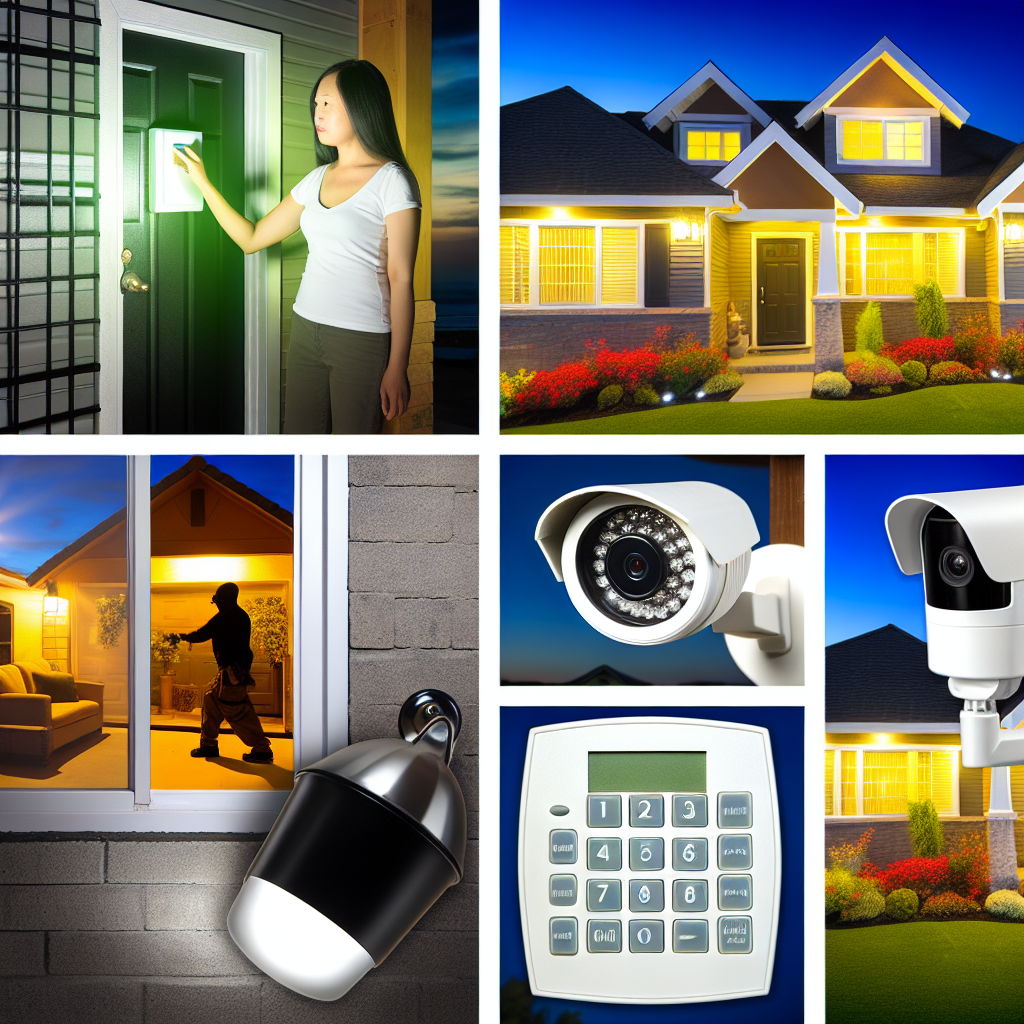
A visible camera may record someone approaching. Motion lighting can remove a concealed area. An alarm can alert you or a monitoring service. Stronger doors and locks may delay entry.
Research involving 422 incarcerated burglars gives some insight into the value offenders place on alarms. About 83% said they would try to determine whether an alarm was present before attempting a burglary, and roughly 60% said they would seek another target if an alarm was present. (Inside Charlotte)
That’s not a guarantee that an alarm will stop someone, but it suggests that visible security can influence target selection.
Modern camera systems and video doorbells also let homeowners see who’s outside without opening the door. If your cameras connect to the internet, don’t overlook digital security. The FTC recommends using strong passwords, keeping routers and camera software updated, securing the Wi-Fi network and using appropriate encryption. (Consumer Advice)
And don’t place cameras where they unnecessarily record private areas inside the home.
Have a Plan Before You Need One
Hardware is only half of home security. Everyone in the household should know what they’re supposed to do if something actually happens.
Keep the plan simple. Complicated instructions are difficult to remember under stress.
Discuss:
- Where family members should go if someone tries to force entry
- Which room provides the safest place to wait for police
- How to call 911 quickly
- How children should respond
- Whether there is a safe escape route from bedrooms
- Where pets are likely to be
- How family members can identify themselves to one another in the dark
- Where visitors or overnight guests should go
You might also establish a family code word that means, “Something is wrong—go to the safe location now.”
Children should understand that their job isn’t to investigate noises or help confront an intruder. Their job is to follow the plan.
Choose a Safe Area
You don’t necessarily need a purpose-built panic room.
A bedroom or other room with a solid door, reliable lock, cellphone access and a practical escape route may serve as a household safe area.
Keep a charged phone nearby at night. If you rely heavily on a cellphone, think about what happens if it happens to be charging in another room when you need it.
Useful items in or near the designated area might include:
- Phone and charger
- Flashlight
- First-aid kit
- House keys
- Essential medication
- Emergency contact information
Avoid creating a room that cannot be exited during a fire. Home security and fire safety need to work together.
If Someone Is Trying to Enter
If you believe someone is attempting to force their way into your home, the safest response will depend on the circumstances, layout of the home and where family members are located.
As a general rule, don’t go wandering through the house to find out who is making the noise.
If you can safely leave the home without moving toward the intruder, getting away may be the best option. Otherwise, move to your predetermined safe location, lock or barricade the door if possible and call 911.
Tell the dispatcher:
- Your address
- That someone is attempting or has made unlawful entry
- Where you and other household members are located
- Anything you know about the intruder
- Whether anyone is injured
- Any other information the dispatcher requests
Follow the dispatcher’s instructions and remain on the line if asked.
Remember that responding officers are entering a confusing situation with limited information. Follow their instructions immediately when they arrive.
What About Firearms for Home Defense?
Some households include a firearm as part of their overall home-defense plan, while others don’t. Either choice still begins with the same fundamentals: preventing entry, detecting trouble early, having a way to call police and knowing where family members will go.
If you keep firearms in the home, secure storage is particularly important. Unauthorized access by children, visitors or burglars creates risks of its own.
Anyone who intends to keep a firearm for lawful defensive purposes should understand the laws in their state and obtain competent hands-on training from a qualified instructor. Laws concerning possession, storage and defensive use of force vary by jurisdiction.
A firearm should not become a substitute for locks, lighting, alarms, awareness or an emergency plan.
Avoid Going Outside to Investigate
A camera alert at 2 a.m. or an unexpected noise in the yard doesn’t necessarily require walking outside to investigate it.
Use exterior cameras, windows or other means of observing the situation from a secure location when possible.
A strange car, open gate or person walking through the yard may warrant a call to law enforcement. It doesn’t automatically require a confrontation.
One advantage of modern security technology is precisely that it can help you gather information while maintaining distance.
Be Careful About Advertising What You Own
Home security also involves controlling information.
Large electronics boxes left beside the curb tell people what may be inside the house. Public social-media posts announcing that the entire family will be away for two weeks can do the same thing.
When traveling:
- Hold or arrange collection of mail and packages
- Keep the property maintained
- Use timers or smart lighting if appropriate
- Ask a trusted neighbor to watch the house
- Avoid publicly broadcasting exactly when the home will be vacant
Police burglary-prevention guidance routinely recommends making a vacant home appear occupied and preventing mail or deliveries from accumulating. (Lago Vista, TX)
Keep an Inventory of Valuable Property
If a burglary does occur, good records can make the aftermath easier.
Photograph valuable items and record serial numbers for electronics, tools, bicycles, firearms and other identifiable property. Store the information somewhere that won’t disappear if the computer inside the house is stolen.
Cloud storage, an encrypted backup or another secure off-site location can work well.
This information may be useful for police reports and insurance claims and can help identify recovered property.
Practice Without Becoming Paranoid
An emergency plan doesn’t need to turn into a weekly tactical exercise.
Walk through it occasionally.
Ask simple questions:
“What do we do if someone is trying to get through the front door?”
“What if it happens at night?”
“Where do the kids go?”
“Who calls 911?”
“What if the normal exit isn’t available?”
Five or ten minutes spent answering those questions may expose problems you hadn’t considered.
You may discover that a bedroom door doesn’t lock, a child doesn’t know the home address, an exterior light has burned out, or nobody can find a phone without walking into the main part of the house.
Those are easy problems to fix now.
The Best Defense Is Usually Layered
There isn’t one product that makes a home secure.
A better approach combines several relatively simple measures:
Deter: Lighting, visible security and good property maintenance make the house less inviting.
Detect: Cameras, alarms and motion sensors provide earlier warning.
Delay: Better doors, locks, windows and frames make unauthorized entry more difficult.
Communicate: Phones and alarm systems provide a way to summon help.
Plan: Family members know where to go and what they’re supposed to do.
None of those measures guarantees that a burglary or violent intrusion won’t happen. Together, however, they give you more warning, more options and more time to respond.
Final Thoughts
Preparing for a home invasion doesn’t mean expecting one.
Start with the ordinary things that are easy to neglect: lock the doors, reinforce weak entry points, illuminate dark areas, trim landscaping, secure the garage and make sure cameras and alarms actually work.
Then sit down with everyone in the household and decide what you’ll do if someone tries to enter.
The most useful home-defense plan isn’t necessarily the one with the most equipment. It’s the one everyone understands and can actually follow when something goes wrong.
And once you’ve made that plan, revisit it every so often. Families change, homes change and technology changes. Your security plan should change with them.
- A home invasion is one of those situations most people would rather not think about. But spending a little time thinking through home security before something happens can make your household safer without turning your home into a fortress.