The Role of Firearms in the American Civil War
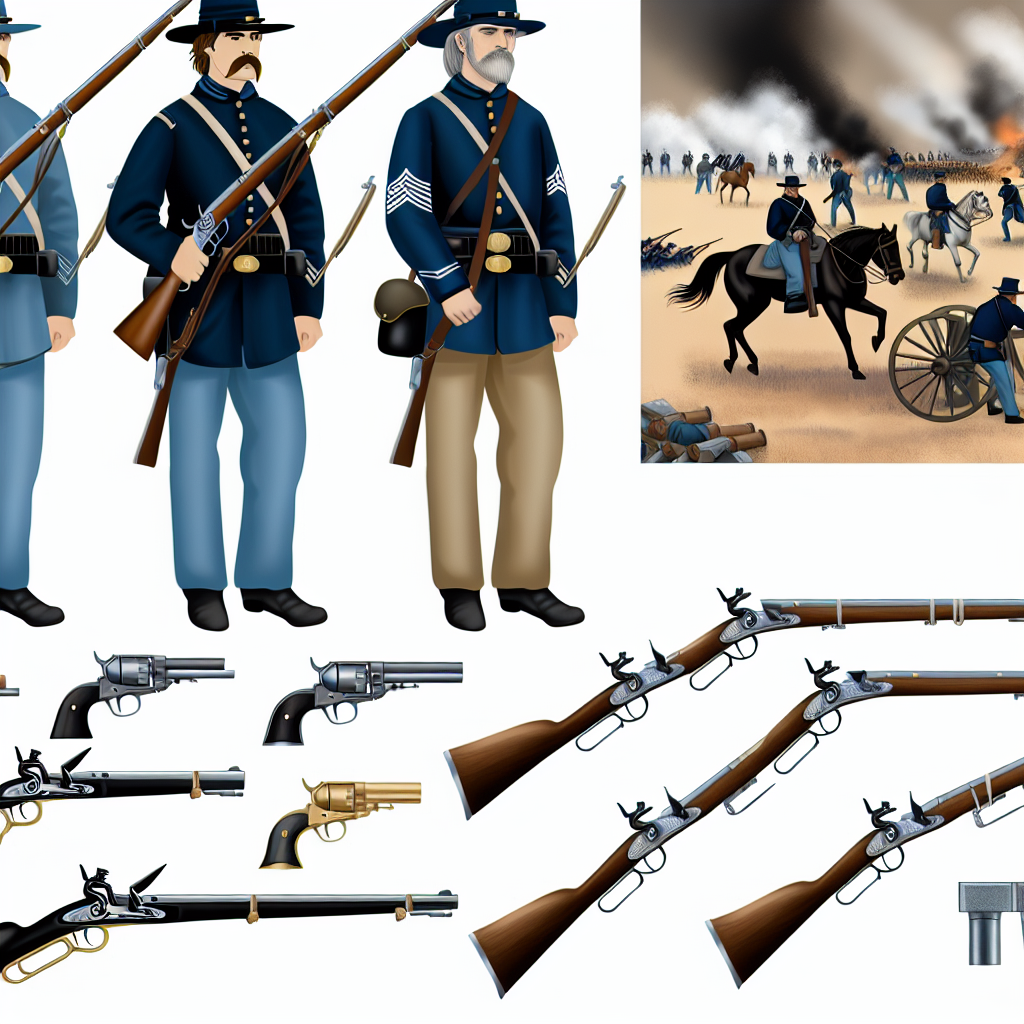
The American Civil War (1861-1865) was a defining moment in United States history, not only for its political and social consequences but also for the technological advancements it showcased on the battlefield. Among these advancements, firearms played a pivotal role in shaping tactics, strategies, and ultimately the outcome of the war. This article delves into the evolution, impact, and significance of firearms during the Civil War, providing detailed insights into how they transformed warfare in America.
The Evolution of Firearms Technology Before and During the Civil War
By the mid-19th century, firearms technology was undergoing rapid development. The Civil War became one of the first major conflicts to witness widespread use of rifled muskets and repeating rifles, which dramatically increased range, accuracy, and rate of fire compared to earlier smoothbore muskets.
Before the war, most infantry units used smoothbore muskets like the Model 1842 Springfield musket. These weapons had an effective range of about 50 to 100 yards and fired round balls that were inaccurate over long distances.
However, rifling—the process of cutting spiral grooves inside a gun barrel—allowed bullets to spin, improving accuracy and increasing effective range to 300 yards or more. The introduction of the Minié ball, a conical bullet that expanded upon firing to engage rifling grooves, further revolutionized infantry firearms.
- Springfield Model 1861 Rifle-Musket: The most widely used Union firearm with a range up to 500 yards under ideal conditions.
- Enfield Pattern 1853 Rifle-Musket: Popular with both Confederate and Union forces due to its reliability and accuracy.
- Repeating Rifles: Weapons like the Spencer and Henry rifles allowed soldiers to fire multiple rounds before reloading, significantly increasing firepower.
The rapid adoption of these advanced firearms led to changes in battlefield tactics as commanders adjusted to longer engagement ranges and increased lethality.
Impact on Infantry Tactics and Battlefield Strategy
The improved range and accuracy of rifled muskets forced armies to rethink traditional infantry tactics. Prior to these developments, massed formations advancing in close ranks were common because smoothbore muskets were ineffective at long distances. However, such formations became deadly liabilities against rifled weapons capable of targeting soldiers hundreds of yards away.
This shift resulted in several tactical evolutions during the war:
- Use of Cover and Entrenchments: Soldiers increasingly sought natural cover or dug trenches to protect themselves from accurate rifle fire.
- Skirmish Lines: Loose formations replaced tight ranks during advances or defense, reducing casualties from concentrated enemy fire.
- Defensive Strongholds: The increased lethality made offensive assaults against fortified positions costly and difficult.
The Battle of Gettysburg (July 1863) exemplifies these tactical shifts. Confederate forces under General Robert E. Lee launched frontal assaults against well-fortified Union positions on Cemetery Ridge. Despite repeated attacks such as Pickett’s Charge, Union troops armed with rifled muskets inflicted devastating casualties on attackers forced into open fields.
The Role of Repeating Firearms: Changing the Dynamics of Combat
A notable technological leap during the Civil War was the introduction of repeating firearms—guns capable of firing multiple rounds without reloading after each shot. While still relatively rare compared to single-shot muzzleloaders due to production constraints and cost, their impact was profound when deployed effectively.
- The Spencer Repeating Rifle: Featured a tubular magazine holding seven cartridges. It could fire up to 20 rounds per minute compared to two or three rounds from muzzleloaders.
- The Henry Rifle: Capable of holding fifteen rounds in its magazine, providing even greater sustained firepower.
The Union cavalry units often utilized these weapons during raids and skirmishes for their rapid-fire advantage. For example:
- Battle of Hoover’s Gap (June 1863): Union troops armed with Spencer rifles used their superior rate of fire to hold off larger Confederate forces until reinforcements arrived.
- Sherman’s March to the Sea (1864): Cavalry units equipped with repeating rifles disrupted Confederate supply lines more effectively due to their enhanced firepower.
The psychological impact on Confederate soldiers facing these faster-firing weapons cannot be overstated; many lacked access to similar technology due to limited industrial capacity in the South.
Ammunition Supply and Its Influence on Firearm Usage
A critical but often overlooked factor in firearm effectiveness was ammunition supply logistics. The North’s industrial might allowed for mass production of cartridges for various weapons at a scale unmatched by Southern factories. This disparity influenced how weapons were deployed on both sides.
- Union Advantages:
- Larger stockpiles enabled widespread issuance of advanced rifles like Springfields and Spencers.
- Sustained campaigns could be better supported with ample ammunition resupply lines.
- Confederate Challenges:
- Lack of consistent ammunition supplies often forced reliance on
captured Union ammunition, which was not always reliable or compatible with their weaponry.
Ultimately, the interplay between firearms and ammunition supply played a crucial role in determining the outcomes of battles throughout the Civil War.
- Lack of consistent ammunition supplies often forced reliance on