The Legacy of the Enfield Rifle Series
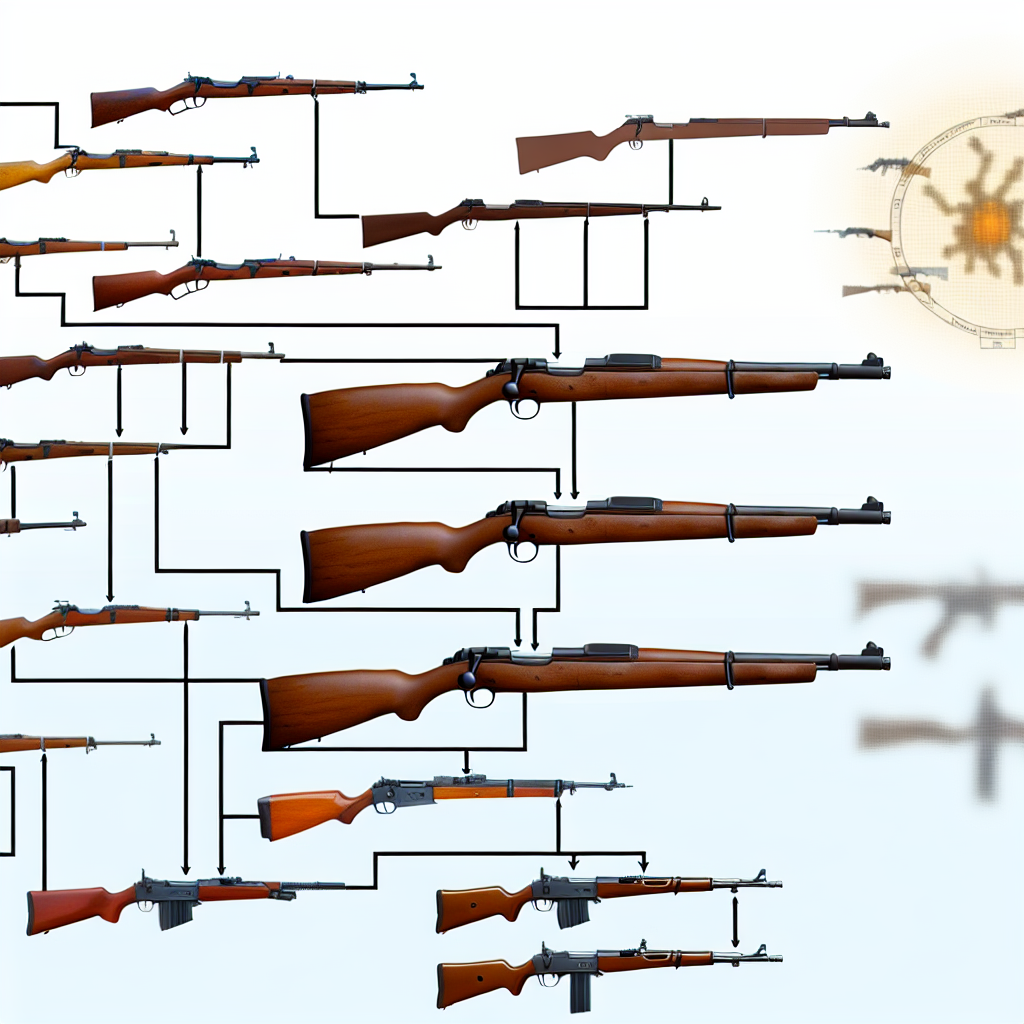
The Enfield rifle series represents one of the most iconic and enduring legacies in the history of military firearms. Originating from the Royal Small Arms Factory in Enfield, England, these rifles served as the backbone for British and Commonwealth forces for over a century. Their impact not only shaped military tactics and small arms development but also influenced global conflicts and firearm design worldwide.
This article explores the evolution, significance, and enduring legacy of the Enfield rifle series through detailed analysis, historical context, and examples from various conflicts.
The Origins and Evolution of the Enfield Rifle
The story of the Enfield rifle begins in the mid-19th century when the British Army sought to modernize its infantry weapons. The earlier muzzle-loading muskets were becoming obsolete due to advancements in cartridge technology and rifling methods.
In 1853, the Pattern 1853 Enfield rifled musket was introduced. It was a significant leap forward:
- Caliber: .577 caliber, firing a Minié ball.
- Design: Muzzle-loaded but rifled barrel allowed greater accuracy than smoothbore muskets.
- Usage: Widely used during the Crimean War and later in conflicts such as the Indian Rebellion of 1857.
The Pattern 1853 established Enfield as a premier manufacturer of military rifles. However, its muzzle-loading design soon gave way to breech-loading rifles that could be loaded faster and more reliably.
The next major milestone was the introduction of the Martini-Henry rifle in 1871:
- Breech-loading mechanism: Lever-operated dropping block action designed by Friedrich Martini.
- Caliber: .45 caliber (later .303), marking a shift towards smaller bore sizes for increased velocity.
- Adoption: Became standard issue for British forces during colonial campaigns including the Anglo-Zulu War (1879).
Following this, by the late 19th century, technological advances led to further innovation with the introduction of bolt-action rifles.
The Lee-Enfield: The Pinnacle of Enfield Engineering
The most famous rifle in the Enfield series is undoubtedly the Lee-Enfield. Its development began in the late 1880s when James Paris Lee’s bolt-action system was combined with Enfield’s manufacturing expertise.
- Mark I (SMLE): Introduced in 1904 as the Short Magazine Lee-Enfield (SMLE) Mk III, it featured a robust bolt action, high rate of fire, and reliability under adverse conditions.
- Ammunition: Chambered for .303 British cartridges, which balanced stopping power with controllability.
The SMLE quickly earned a reputation for its versatility on diverse battlefields:
- World War I: The SMLE Mk III became synonymous with British infantrymen. Its ten-round magazine capacity allowed rapid fire unmatched by many contemporaries using five-round magazines.
- Tactical advantage: Soldiers trained extensively on “mad minute” rapid firing drills, enabling experienced marksmen to fire up to 15 aimed shots per minute—a formidable rate compared to bolt-action peers like Germany’s Mauser Gewehr 98.
The Lee-Enfield continued evolving through World War II with variants such as Mk IV and No.4 Mk I models featuring improvements in sights and manufacturing techniques that facilitated mass production without sacrificing quality.
Global Impact and Usage Beyond Britain
The legacy of Enfield rifles extends far beyond British shores. These firearms saw widespread use among Commonwealth nations and were exported globally due to their proven reliability and effectiveness.
- Commonwealth Forces: Canada, Australia, New Zealand, India, South Africa all adopted various Lee-Enfield models during both World Wars.
- Post-colonial conflicts: Many former colonies retained or adapted Enfields well into mid-20th century conflicts such as the Malayan Emergency (1948–1960) and Korean War (1950–1953).
- Civilian use & sport shooting: Surplus rifles found second lives as hunting rifles or sport shooters prized their accuracy and durability worldwide.
A notable example is India’s continued manufacture of Lee-Enfields at Ishapore Arsenal until recently. Indian variants like the Ishapore 2A1 updated chambering to NATO standards (.308 Winchester) illustrating how legacy designs adapt to modern requirements.
The Technological Innovations Introduced by Enfield Rifles
The success of Enfield rifles is rooted not just in their battlefield performance but also in several key technological innovations that influenced firearm design globally:
- Bolt-Action Mechanism Efficiency: The Lee bolt-action was praised for smooth cycling and strong locking lugs enhancing safety under high-pressure rounds.
- Sight Systems: Early adjustable rear sights allowed soldiers to compensate for distance accurately; later aperture sights improved target acquisition speed during combat.
- Munitions Compatibility: The adoption of smokeless powder cartridges
Munitions Compatibility: The adoption of smokeless powder cartridges revolutionized the performance and effectiveness of firearms, allowing for greater range and accuracy compared to black powder. This innovation paved the way for modern ammunition standards.
In conclusion, the Enfield rifle series has left an indelible mark on military history, showcasing the evolution of firearm technology and its lasting impact on modern weaponry.