Collecting Firearms Used in Famous Assassinations: History, Significance, and Controversy
The allure of history often draws collectors into the realm of artifacts that bear witness to pivotal moments in time. Among the most controversial and captivating categories of collectibles are firearms used in famous assassinations. These weapons are not merely tools of violence; they are tangible links to events that shaped nations, altered political landscapes, and influenced cultural narratives worldwide. Collecting such firearms involves a complex interplay of historical significance, ethical considerations, and legal challenges.
The Historical Importance of Assassination Firearms
Firearms used in high-profile assassinations occupy a unique niche in the world of collectibles due to their direct connection to momentous historical events. These weapons serve as physical remnants of acts that often triggered profound social and political upheaval.
For example, the revolver used by John Wilkes Booth to assassinate President Abraham Lincoln on April 14, 1865, is not just a firearm; it is an artifact intertwined with the end of the American Civil War and a turning point in U.S. history. Similarly, the rifle used by Lee Harvey Oswald to assassinate President John F. Kennedy on November 22, 1963, symbolizes a tragedy that continues to evoke debate and conspiracy theories decades later.
- Connection to Historic Moments: These firearms represent more than their mechanical function; they embody significant historical episodes.
- Preservation of History: As artifacts, they offer insights into the technology and methods used during their respective eras.
- Cultural Impact: Their stories often transcend national boundaries and become part of global historical consciousness.
The preservation and study of these firearms enable historians and enthusiasts alike to gain a deeper understanding of the socio-political contexts surrounding these assassinations.
Notable Examples of Firearms Used in Famous Assassinations
Several firearms have become infamous due to their role in historic assassinations. Below are some well-documented examples that have captured public imagination and scholarly interest alike:
- Colt Derringer (John Wilkes Booth): This small pistol was used by Booth to fatally shoot Abraham Lincoln at Ford’s Theatre. The Derringer’s concealability made it a favored weapon for close-range attacks during the 19th century.
- Mannlicher-Carcano Rifle (Lee Harvey Oswald): Oswald’s choice for assassinating JFK was a bolt-action rifle manufactured in Italy. Its use has been extensively analyzed in official investigations and conspiracy theories.
- Luger P08 Pistol (Gavrilo Princip): Princip used this German-made pistol to assassinate Archduke Franz Ferdinand of Austria in 1914, an event that precipitated World War I.
- Browning Hi-Power (Lee Harvey Oswald): Besides the rifle, Oswald also possessed this semi-automatic pistol during his arrest after Kennedy’s assassination.
- Semi-automatic Pistols (Various Targets): Throughout history, many other semi-automatic pistols have been linked with assassination attempts on political figures globally.
The provenance of these firearms—meaning their documented history—greatly influences their value and authenticity as collectibles. Museums sometimes display such weapons as part of exhibits on political violence or national tragedies.
The Ethics and Controversies Surrounding Collecting Assassination Firearms
The act of collecting firearms tied to famous assassinations is not without ethical challenges. Many view these weapons as symbols of violence that caused immense suffering. Collectors must navigate sensitive moral terrain while pursuing historical preservation or personal interest.
- Respect for Victims: Displaying or trading assassination firearms can be perceived as glorifying violence or disrespecting victims and their families.
- Moral Responsibility: Collectors must consider whether owning such items contributes positively to historical education or merely satisfies sensational curiosity.
- Laws and Regulations: Legal restrictions on ownership vary widely by jurisdiction—some countries prohibit private ownership of certain firearms altogether, especially those linked with crimes.
- Cultural Sensitivities: In regions deeply affected by assassination events, public sentiment may be hostile toward collectors who handle such artifacts without context or sensitivity.
A growing number of collectors advocate for responsible stewardship by partnering with museums or educational institutions to ensure these firearms are presented within appropriate historical frameworks rather than private curiosities.
The Legal Landscape: Ownership, Authentication, and Sale
The legal status surrounding firearms used in famous assassinations is complex and varies depending on country-specific laws regarding historic weapons, crime evidence retention policies, and gun control regulations.
- Ownership Restrictions: In many countries like the United States, ownership is possible but regulated under federal laws like the National Firearms Act (NFA). Some states impose additional restrictions or require special permits for historic guns.
- Evidentiary Status: Firearms once held as evidence in criminal investigations may remain government property indefinitely or be decommissioned before transfer to collectors or museums.
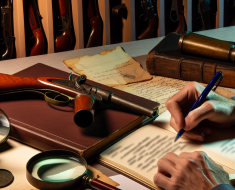
- Authentication Processes: Provenance documentation is critical when acquiring assassination firearms; expert appraisals often involve forensic analysis, chain-of-custody records,
and historical context to verify authenticity and value.
Collectors must navigate these complexities carefully to ensure compliance and preserve the historical significance of these artifacts.