The Evolution of Firearm Ammunition Over Time
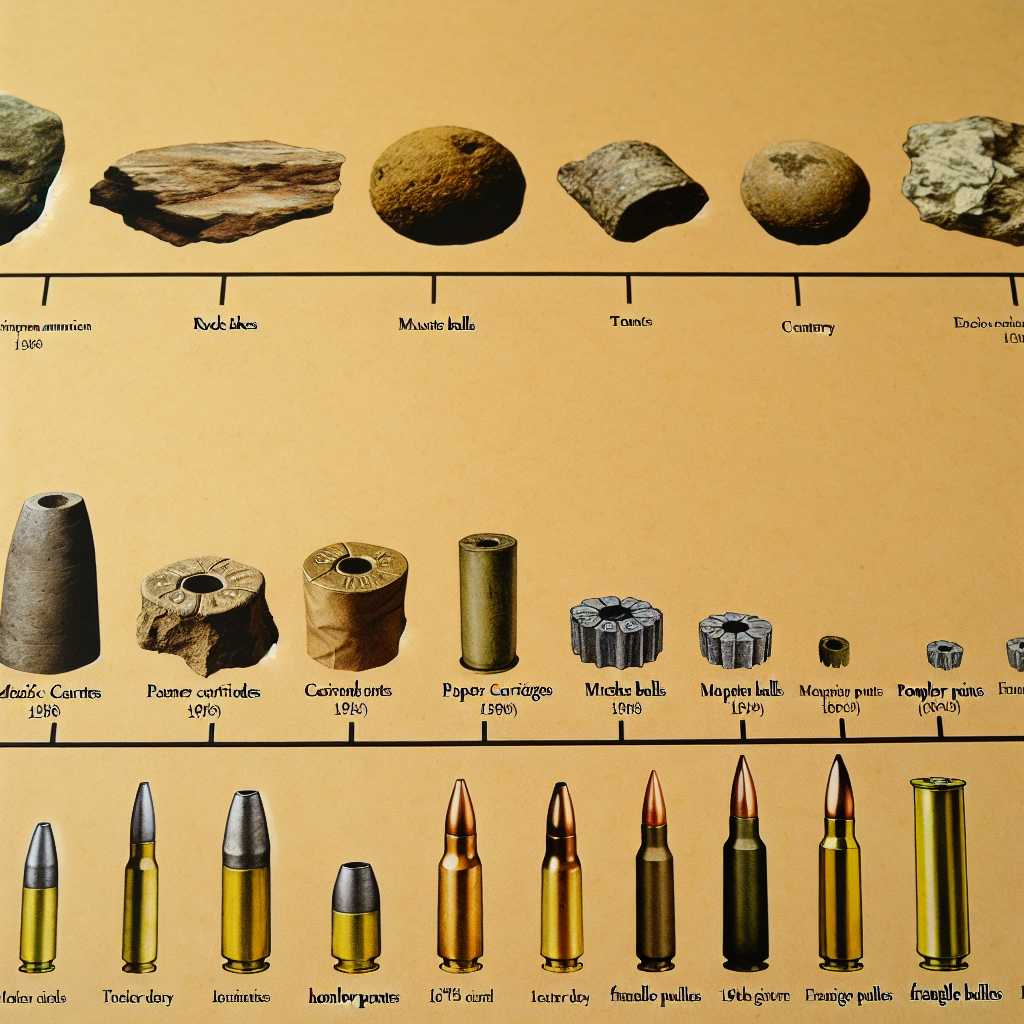
The history of firearm ammunition is a fascinating journey that mirrors the advancement of technology, metallurgy, and military tactics. From the rudimentary projectiles used in early firearms to the sophisticated cartridges of modern times, ammunition has evolved dramatically to meet the demands of accuracy, lethality, reliability, and ease of use. This article explores the key stages in the development of firearm ammunition, highlighting notable innovations, technological breakthroughs, and their impact on warfare and civilian shooting.
The Dawn of Firearm Ammunition: From Loose Powder to Lead Balls
The inception of firearm ammunition dates back to the late medieval period when gunpowder weapons began to appear on battlefields. Early firearms such as hand cannons and matchlock muskets utilized simple ammunition forms that were crude by today’s standards but revolutionary at the time.
Initially, shooters loaded loose gunpowder directly into the barrel, followed by a projectile—usually a spherical lead ball—and wadding to keep everything in place. This process was slow and cumbersome:
- Loose powder: Gunpowder was measured out manually for each shot.
- Lead balls: Cast from molten lead into spherical shapes, these were the primary projectile.
- Wadding: Material such as cloth or paper was used to hold powder and ball in position inside the barrel.
This method had several drawbacks including inconsistent powder measurement leading to varying muzzle velocities and limited protection for the powder against moisture. The round ball itself had limited aerodynamic efficiency which affected accuracy over distance.
Despite these limitations, this early form of ammunition dominated warfare for centuries, especially during conflicts like the Hundred Years’ War and early colonial battles.
The Cartridge Revolution: Combining Components for Efficiency
The 19th century marked a turning point with the invention of self-contained cartridges—units combining bullet, propellant powder, and primer into a single metallic case. This innovation drastically simplified loading procedures and improved firing rates.
The earliest known cartridge designs appeared in the early 1800s with developments such as:
- Pinfire cartridges: Invented by Casimir Lefaucheux around 1835, these cartridges contained a primer inside a small pin protruding from the case which ignited when struck by the hammer.
- Breech-loading rifles: These allowed cartridges to be loaded from the rear rather than muzzle-loading, increasing rate of fire.
- Centrally primed metallic cartridges: Introduced later in the century by inventors like Hiram Maxim and Paul Mauser, this design placed a primer at the center of the base for more reliable ignition.
The widespread adoption of cartridge firearms revolutionized military tactics. Soldiers could reload faster under fire and maintain higher rates of sustained shooting. Notable examples include:
- The Spencer Repeating Rifle: Used during the American Civil War (1861–1865), it featured a lever-action mechanism firing metallic rimfire cartridges allowing up to seven shots before reloading.
- The Mauser Model 1871: A bolt-action rifle chambered for metallic cartridges that set new standards for accuracy and reliability among military arms worldwide.
This era also saw experimentation with various propellants transitioning from black powder to smokeless powders by the late 19th century. Smokeless powder was less corrosive and produced less smoke, improving battlefield visibility significantly.
The Impact of Smokeless Powder and Bullet Design Advancements
The introduction of smokeless powder in the late 1880s represented one of the most significant advancements in ammunition technology. Invented independently by Paul Vieille in France (Poudre B) and later improved upon elsewhere, smokeless powder offered several advantages over traditional black powder:
- Higher energy density: Resulting in greater muzzle velocity without increasing cartridge size significantly.
- Reduced fouling: Less residue buildup inside barrels extended firearm service life between cleanings.
- Minimal smoke emission: Allowed soldiers better visibility during combat engagements.
This breakthrough enabled bullet designs to become more aerodynamic and lethal. The elongated spitzer bullet shape replaced round balls or blunt-nosed bullets due to its superior ballistic coefficient—resulting in flatter trajectories and better terminal performance at longer ranges. For instance:
- .30-06 Springfield cartridge (introduced in 1906): Used extensively by U.S. forces through both World Wars featuring a spitzer bullet optimized for range and accuracy.
- .303 British cartridge: Adopted by British Empire forces with similar advancements incorporating smokeless powder and pointed bullets.
This period also saw increasing standardization across armies facilitating mass production while enhancing logistical support during wars such as World War I where millions of rounds were manufactured monthly under harsh conditions.
Specialization and Diversification: Ammunition Types for Specific Roles
As firearms evolved into various categories—handguns, rifles, machine guns—the need arose for specialized ammunition tailored for distinct purposes including hunting, law enforcement, military combat, and sport shooting. Several key types emerged over time:
- Full Metal Jacket (FMJ):
Full Metal Jacket (FMJ): designed for penetration and reliability, became a staple in military applications, while other types like hollow points were developed for self-defense and hunting, emphasizing stopping power over penetration.
Today, the diversity of ammunition reflects the varied needs of users, showcasing advancements in technology and material science.