How to Improve Your Tactical Movement Skills
In both professional and recreational settings, tactical movement skills are vital for success. Whether you’re involved in military operations, law enforcement, competitive sports, or even paintball and airsoft, mastering tactical movement can significantly enhance your effectiveness, safety, and situational awareness. These skills encompass a range of techniques designed to maximize efficiency and minimize risk during movement in potentially hostile or complex environments.
This article delves into the strategies and practices you can adopt to improve your tactical movement skills. By understanding the principles behind tactical movement and applying targeted training methods, you can elevate your performance in any scenario requiring precision, speed, and safety.
Understanding the Fundamentals of Tactical Movement
Tactical movement is more than just moving from point A to point B; it involves deliberate actions that take into account threat assessment, terrain, cover utilization, and team coordination. Before diving into training techniques, it’s crucial to grasp these foundational concepts:
- Situational Awareness: Knowing your environment and identifying potential threats or obstacles before moving.
- Cover and Concealment: Using available objects or terrain features to shield yourself from enemy sight or fire.
- Movement Techniques: Methods such as high crawl, low crawl, bounding overwatch, and rushes that balance speed with stealth and protection.
- Communication: Coordinating with teammates effectively through hand signals or radio communication to maintain unit cohesion.
The importance of these fundamentals is underscored by military doctrine worldwide. For example, the U.S. Army’s Field Manual 3-21.8 highlights that effective tactical movement reduces casualties by up to 30% in combat situations by minimizing exposure time to enemy fire.
Enhancing Physical Conditioning for Tactical Agility
Tactical movement demands physical fitness that supports agility, endurance, strength, and quick reflexes. Without adequate conditioning, even the most knowledgeable individual may struggle to execute movements efficiently under stress.
Key physical attributes needed include:
- Cardiovascular Endurance: Enables sustained movement over varied terrain without fatigue.
- Explosive Strength: Important for rapid sprints or sudden changes in direction.
- Flexibility and Mobility: Helps maintain balance while maneuvering through tight spaces or uneven ground.
- Core Stability: Supports overall body control during complex movements.
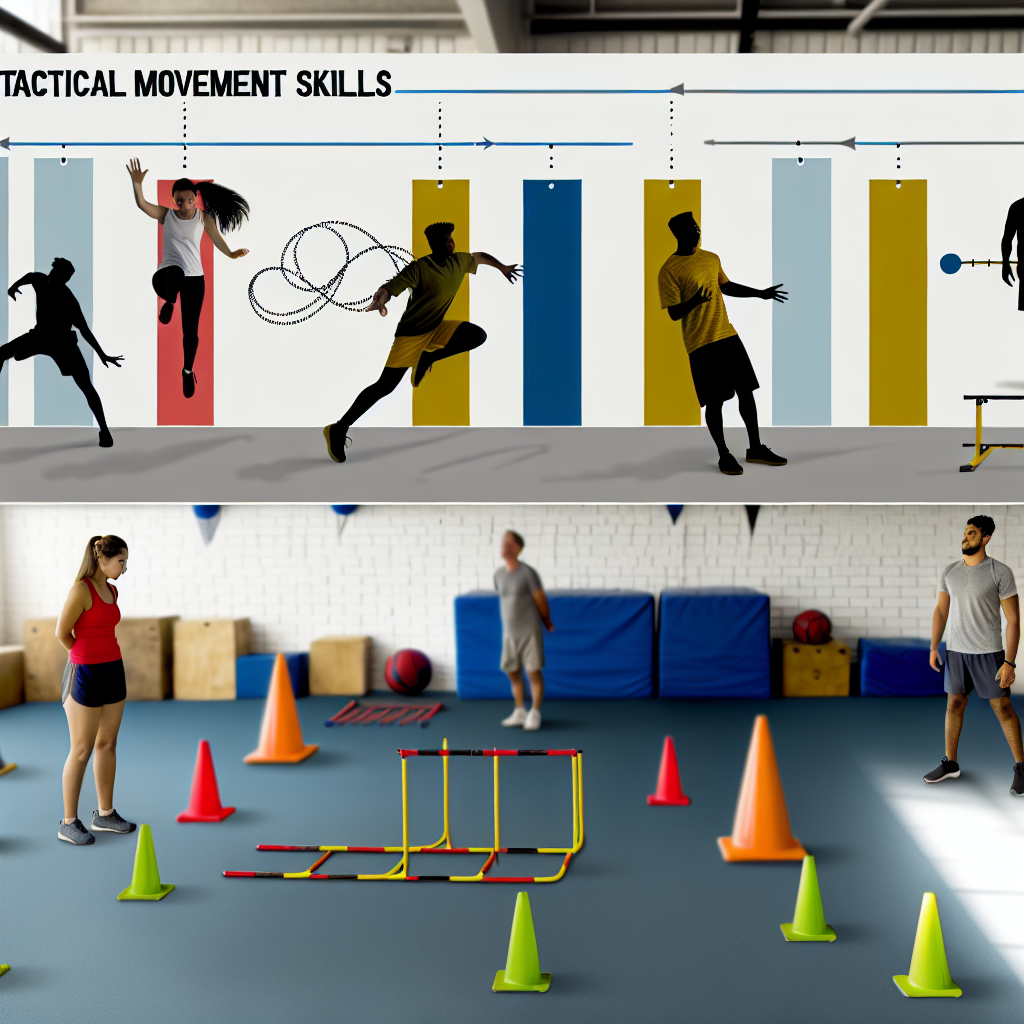
A study published in the Journal of Strength and Conditioning Research found that soldiers who incorporated functional fitness routines tailored toward agility drills improved their tactical sprint times by an average of 15% over eight weeks. Exercises like shuttle runs, ladder drills, bear crawls, and plyometrics can be integrated into regular training sessions to develop these capabilities effectively.
Mastering Core Tactical Movement Techniques
The backbone of tactical proficiency lies in mastering specific movement techniques designed for various scenarios. Below are some fundamental techniques with practical tips for improvement:
The High Crawl
This technique is used when cover is sparse but some concealment is available. The high crawl keeps the body low while maintaining forward momentum.
- Tip: Keep elbows tucked close to reduce profile size.
- Practice: Use open fields or indoor training areas to simulate crawling under obstacles with speed.
The Low Crawl
The low crawl is slower but offers maximum concealment by keeping the chest close to the ground. It’s ideal when under direct observation or fire.
- Tip: Use forearms and toes for propulsion rather than knees to avoid noise and maintain stealth.
- Practice: Incorporate dirt or grass surfaces for realistic simulation; add light gear gradually to mimic operational weight.
The Rush (Bounding Overwatch)
This method involves one team member moving while others provide cover. It balances speed with protection during open-area traversals.
- Tip: Communicate clearly using hand signals; timing is crucial between bounds to avoid exposure.
- Practice: Conduct drills with teammates focusing on synchronization and immediate response upon reaching cover positions.
Slicing the Pie (Corner Clearing)
This technique allows safe navigation around corners by incrementally exposing small angles rather than a full profile at once.
- Tip: Maintain weapon ready position aligned with line of sight; move slowly while scanning potential threat zones carefully.
- Practice: Utilize urban training facilities or mock rooms with teammates acting as targets for real-time feedback on technique efficiency.
The Role of Mental Preparation and Decision-Making
Tactical movement isn’t purely physical; mental acuity plays an equally critical role. Quick decision-making under pressure often separates successful operators from those who falter when confronted with unexpected situations.
Mental preparation strategies include:
- Mental Rehearsal: Visualizing movements before execution improves muscle memory and reduces hesitation during actual operations.
- S.T.O.
P Technique: This involves using a combination of movement and cover to optimize positioning during engagements. By integrating physical and mental techniques, operators can enhance their overall tactical effectiveness.
Consistent practice and mental preparation are essential for mastering tactical movement skills in any operational environment.