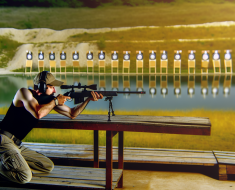
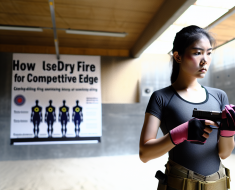
The Importance of Dry Fire Practice in Competitive Training
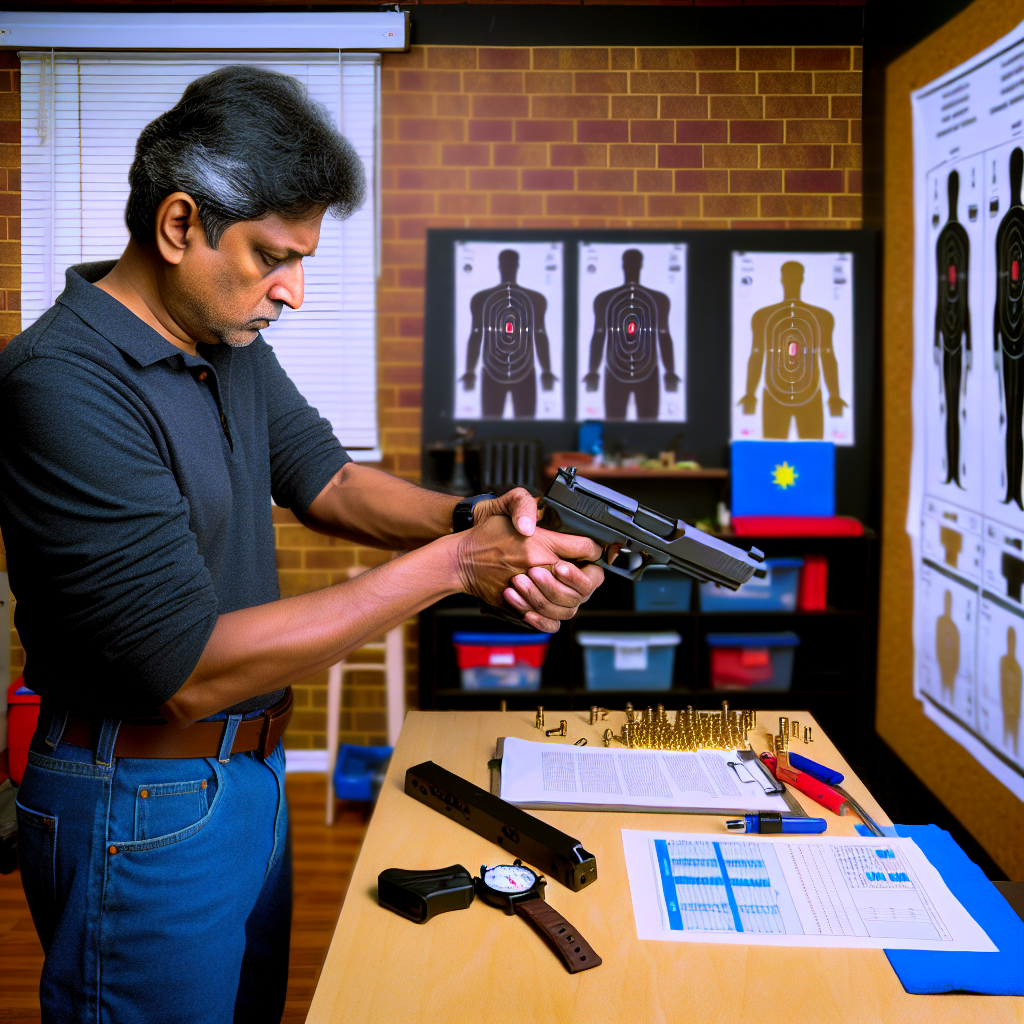
In the realm of competitive shooting and various precision sports, mastering one’s skills requires more than just live-fire practice. Among the most effective training methods is dry fire practice—a technique where shooters simulate firing their weapon without live ammunition. This method is gaining widespread recognition due to its numerous benefits, ranging from improved accuracy to enhanced mental conditioning. This article delves into why dry fire practice is a critical component in competitive training, supported by research, expert opinions, and real-world examples.
What is Dry Fire Practice?
Dry fire practice involves rehearsing the mechanics of shooting without using live rounds. It typically includes drawing the firearm, aiming, pressing the trigger, and resetting the trigger for subsequent shots—all without discharging any bullets.
While it might seem simplistic at first glance, dry fire practice enables shooters to focus on fundamental skills without distractions such as recoil or noise. This controlled environment allows for more deliberate training sessions that can be repeated frequently and safely.
- Trigger control: Practicing smooth and consistent trigger presses without flinching.
- Aiming and sight alignment: Developing muscle memory for proper sight picture.
- Drawing and presentation: Refining quick and efficient weapon draw techniques.
- Reload drills: Practicing magazine changes with precision and speed.
The ability to repeatedly perform these actions in a low-stress environment helps create automaticity when transitioning back to live-fire scenarios.
The Science Behind Dry Fire: Why It Works
The effectiveness of dry fire practice is deeply rooted in principles of motor learning and neuroplasticity—the brain’s ability to reorganize itself by forming new neural connections based on experience. When shooters repeat movements accurately during dry fire sessions, they strengthen the neural pathways responsible for those skills.
A study published in the Journal of Applied Behavior Analysis (2014) demonstrated that mental rehearsal combined with physical mimicry significantly improves motor performance. Dry fire practice essentially acts as a form of physical rehearsal, reinforcing muscle memory without the variability introduced by recoil or environmental factors.
Moreover, dry firing enables athletes to engage in deliberate practice—a method characterized by focused, goal-oriented repetition with immediate feedback. Without the distractions associated with live ammunition, shooters can critically analyze each motion and correct errors more effectively.
- Repetition builds automaticity: The more a movement is repeated correctly, the less cognitive effort it requires during competition.
- Error correction becomes easier: Slow-motion or paused dry fire drills allow for self-assessment and adjustment.
- Mental visualization: Combining dry fire with visualization techniques enhances performance under pressure.
Benefits of Dry Fire Practice in Competitive Training
The advantages of incorporating dry fire into competitive training routines are manifold. Here are some key benefits that have been highlighted by athletes and coaches alike:
1. Cost-Effectiveness
Live-fire ammunition can be expensive and sometimes difficult to access depending on location or supply chain issues. Dry fire eliminates ammunition costs entirely while still allowing meaningful skill development.
2. Increased Training Frequency
Shooters can perform dry fire drills anywhere—at home, at the range without firing rounds, or even while traveling—making it easier to train consistently. The convenience encourages daily practice rather than sporadic sessions limited by ammo availability or range hours.
3. Safety Enhancement
Practicing without live rounds significantly reduces risks associated with accidental discharges or unsafe handling during training. It also allows beginners to build confidence handling firearms before transitioning to live fire.
4. Fine-Tuning Mechanics
The absence of recoil lets shooters focus solely on fundamentals such as grip, stance, sight alignment, breathing control, and trigger press timing—often difficult to isolate during live firing due to noise and kickback distractions.
5. Psychological Conditioning
Competitive shooting demands calmness under pressure. Dry fire sessions help develop concentration skills and reduce flinching by acclimating shooters to trigger manipulation without anticipation anxiety caused by noise or recoil.
- “Dry firing has transformed my training routine,” says champion shooter Jessie Harrison. “It allows me to work on every tiny detail daily without wasting ammo.”
- A survey conducted among IPSC competitors found that over 70% integrated dry fire into their weekly regimen for improved accuracy and reaction times.
Implementing Effective Dry Fire Practice: Tips and Techniques
If you’re considering adding dry fire into your competitive training plan, here are some best practices to maximize its benefits:
- Create a dedicated safe space: Always treat your firearm as if it were loaded; ensure the area is free of distractions or hazards.
- Use snap caps or dummy rounds: These inert cartridges protect firing pins during trigger presses when using semi-automatic pistols or rifles.
- Focus on slow-motion repetition: Break down complex movements into smaller parts before increasing speed for muscle memory development.
- Add timers or shot coaches: Tools like shot timers simulate competition conditions helping improve speed while maintaining accuracy
and consistency in your practice sessions.
Incorporating these techniques into your routine can significantly enhance your performance in competitive shooting.