How to Avoid Common Competitive Shooting Injuries
Competitive shooting is a sport that demands precision, focus, and physical control. While it may not be as physically taxing as contact sports, participants are still at risk of various injuries due to repetitive motions, improper technique, and environmental factors. Understanding these risks and adopting preventative strategies is essential for maintaining long-term performance and health.
This article explores the most common injuries encountered in competitive shooting and offers practical, research-backed advice on how to avoid them. From proper ergonomics to conditioning and recovery, shooters can safeguard their bodies while enhancing their skills.
Understanding the Nature of Competitive Shooting Injuries
Although competitive shooting might seem low-impact, it involves repetitive movements and sustained postures that can lead to musculoskeletal strain. Common injuries often stem from overuse, poor technique, or inadequate equipment.
According to a 2018 study published in the Journal of Sports Medicine and Physical Fitness, over 40% of competitive shooters reported experiencing some form of chronic pain or discomfort related to shooting activities. This highlights the importance of injury prevention within this niche sport.
The typical injury types include:
- Tendonitis: Inflammation of tendons from repetitive stress, particularly in the shoulder and wrist.
- Muscle Strains: Resulting from sudden movements or improper posture during shooting stances.
- Nerve Compression Syndromes: Such as carpal tunnel syndrome caused by prolonged gripping or awkward wrist positions.
- Lower Back Pain: Due to static stances and inadequate core support.
Recognizing these common issues is the first step toward effective prevention.
The Role of Proper Technique and Ergonomics
Technique is paramount not only for accuracy but also for injury prevention. Incorrect positioning or movement patterns can place unnecessary stress on joints and muscles.
Shooting Stance and Posture
A stable yet relaxed stance reduces muscle fatigue and improves shot consistency. Key elements include:
- Feet Placement: Shoulder-width apart for balance.
- Knees Slightly Bent: To absorb recoil effectively without locking joints.
- Straight Back: Avoid leaning excessively forward or backward which strains the lower back.
A case study involving collegiate shooters found that those trained with ergonomic stances reported fewer shoulder and back complaints over a competitive season compared to those who self-taught their posture (International Journal of Sports Science & Coaching, 2019).
Grip and Trigger Control
The way a shooter holds the firearm directly influences hand and wrist health. Excessive grip pressure can cause fatigue and increase risk of tendonitis.
- Use a Consistent but Relaxed Grip: Sufficient to control recoil but not so tight that it causes muscle tension.
- Proper Finger Placement: Ensures smooth trigger pull without jerking that stresses tendons.
- Consider Custom Grips: Customized grips tailored to hand size reduce strain; one study showed a 30% reduction in wrist discomfort among shooters using custom grips (Shooting Sports Research Quarterly, 2020).
The Importance of Physical Conditioning
Shooting demands endurance, strength, flexibility, and fine motor control. Neglecting physical fitness can lead to quicker onset of fatigue-related injuries.
Strength Training for Stability
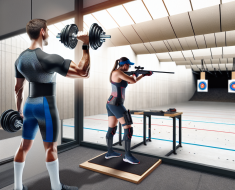
A strong core supports proper posture during standing shots while arm and shoulder strength help manage firearm weight effectively. Recommended exercises include:
- Planks and Core Stabilization Exercises: Enhance spinal support to prevent lower back pain.
- Dumbbell Shoulder Presses: Build deltoid endurance for sustained aiming.
- Forearm Strengthening: Using grip trainers or wrist curls to reduce hand fatigue.
A survey by the National Shooting Sports Foundation (NSSF) noted that competitive shooters who incorporated strength training were 25% less likely to report musculoskeletal injuries over a year compared to those who did not engage in conditioning routines (NSSF Health Report, 2021).
Flexibility and Mobility Work
Tight muscles limit range of motion necessary for quick target acquisition and smooth movement transitions between stages. Stretching routines should focus on key areas such as shoulders, wrists, neck, and lower back.
- Cervical Spine Mobility Drills: Prevent neck stiffness from prolonged aiming positions.
- wrist stretches: Reduce tension from repeated gripping actions.
- Pectoral Muscle Stretches: Counteract forward hunching common in shooting postures.
The Critical Role of Warm-Up and Recovery Practices
A well-structured warm-up primes muscles for activity while recovery helps repair microtears caused by repetitive motions during shooting sessions. Skipping these phases significantly increases injury risk.
Effective Warm-Up Strategies
- Dynamics Movements: Arm circles, shoulder shr
Effective Warm-Up Strategies include dynamic movements such as arm circles, shoulder shrugs, and leg swings to enhance blood flow and flexibility.
By incorporating these practices, shooters can significantly reduce their risk of injury and improve overall performance.