Understanding Firearm Registration Requirements by State
The issue of firearm registration in the United States is a complex and often contentious topic, shaped by a patchwork of laws that vary significantly from state to state. While federal law sets the baseline for firearm ownership and transactions, states have the authority to impose additional regulations, including registration requirements. Understanding these requirements is crucial for gun owners, prospective buyers, legal professionals, and policymakers alike.
This article delves into the nuances of firearm registration across different states, highlighting key differences, legal frameworks, and practical implications. It also explores relevant case studies and statistics to provide a comprehensive view of how firearm registration operates within the U.S.
What Is Firearm Registration?
Firearm registration refers to the process by which gun owners are required to record their firearms with a government authority—usually a state or local law enforcement agency. This process typically involves submitting identifying information about both the owner and the firearm itself, such as serial number, make, model, and caliber.
The purpose of registration can vary but generally includes:
- Facilitating law enforcement investigations related to firearms
- Ensuring compliance with ownership restrictions
- Tracking firearms involved in crimes or lost/stolen weapons
- Providing data for public safety and policy development
It is important to note that not all states require firearm registration. The requirements depend heavily on local laws and the type of firearm involved.
Federal vs. State Regulation: The Legal Landscape
At the federal level, there is no general requirement for firearm registration for most types of guns. The Bureau of Alcohol, Tobacco, Firearms and Explosives (ATF) maintains records related primarily to regulated firearms such as machine guns, short-barreled rifles/shotguns, and silencers under the National Firearms Act (NFA).
The Gun Control Act of 1968 mandates that licensed dealers maintain records of sales but does not require private gun owners to register their firearms. However, this federal baseline leaves considerable room for states to enact their own rules.
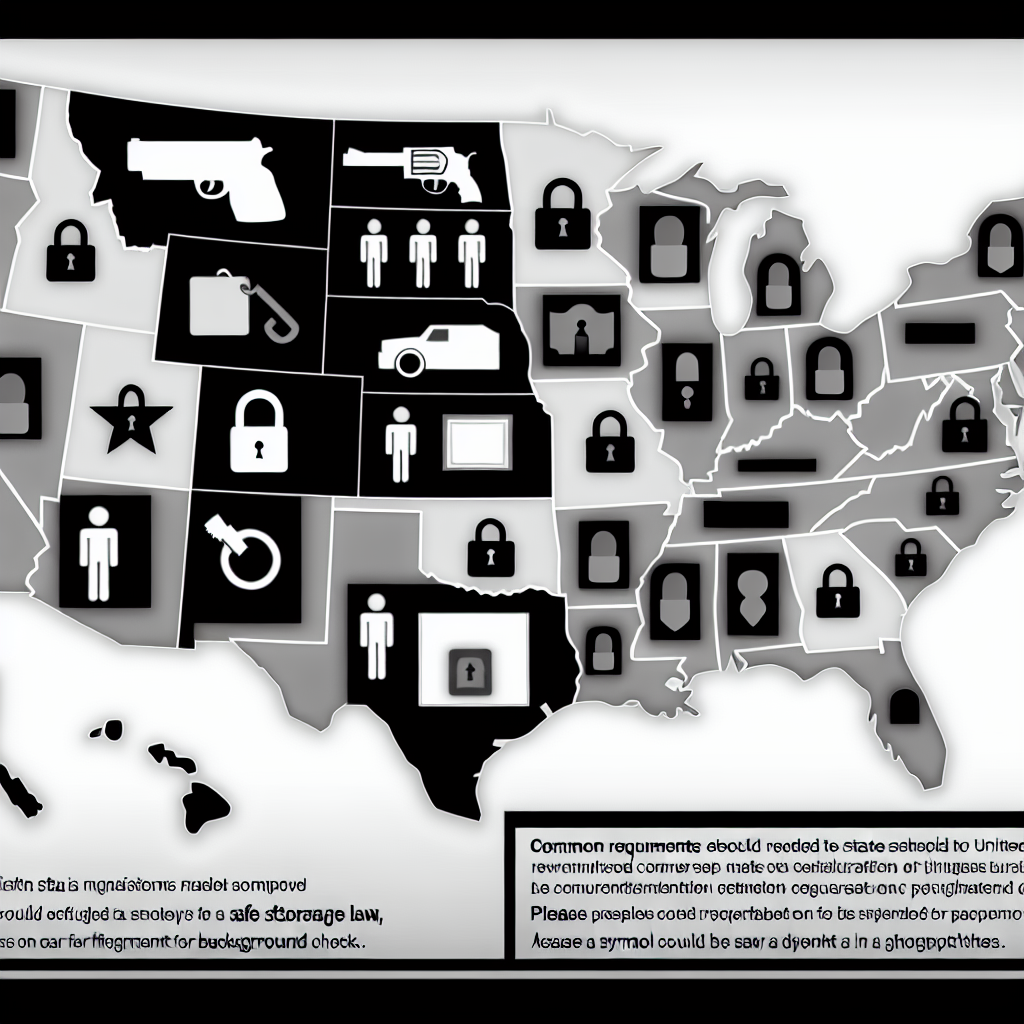
State laws on firearm registration vary dramatically:
- No Registration Required: Many states do not require any form of firearm registration for rifles or handguns owned by private citizens.
- Partial Registration: Some states require registration only for certain categories of firearms (e.g., handguns or assault weapons).
- Comprehensive Registration: A few states maintain extensive registries covering most firearms owned within their borders.
States With Comprehensive Firearm Registration Laws
A small number of states have implemented comprehensive firearm registration systems that require gun owners to register their weapons with state authorities. These systems often include detailed record-keeping requirements and can cover handguns, long guns, or both.
California
California is one of the most restrictive states regarding firearm regulations. It requires all handguns sold or transferred within the state to be registered through a Dealer Record of Sale system maintained by the California Department of Justice (DOJ). Additionally:
- All new handgun purchases must go through a background check and be registered.
- The state maintains a database tracking handgun ownership linked to individual buyers.
- The DOJ also tracks certain types of rifles categorized as “assault weapons,” requiring additional registration steps.
This system aims to prevent illegal transfers and provide law enforcement with detailed information on handgun ownership statewide.
New York
New York requires handgun owners in New York City and several other counties to register their firearms with local police departments. Outside NYC, requirements vary but generally include:
- A licensing process for handgun ownership that entails fingerprinting and background checks.
- Registration that links specific firearms to license holders.
- Special rules under the NY SAFE Act governing assault-style rifles and large-capacity magazines.
This system emphasizes control over handgun possession in urban areas while regulating certain categories of long guns statewide.
Hawaii
Hawaii enforces mandatory registration for all handguns. The process includes:
- A permit-to-purchase requirement where prospective buyers must undergo background checks before acquiring firearms.
- A registry maintained by county police departments documenting all handguns owned by residents.
- No requirement for long gun registration at present; however, regulations on possession exist at county levels.
Maryland
Maryland requires all handguns to be registered with the Maryland State Police upon purchase or transfer. The state also enforces strict licensing procedures including:
- A Handgun Qualification License (HQL) that involves safety training before purchase is permitted.
- The requirement that all private sales be conducted through licensed dealers who maintain records with the state police.
No-Registration States: Freedom Versus Regulation
A majority of U.S. states do not mandate any form of firearm registration for standard rifles or shotguns owned privately. This approach reflects a philosophy prioritizing individual privacy rights and limited government oversight over lawful gun ownership.
Examples include:
- Texas:
Examples include: Texas, where there is no requirement for firearm registration, allowing residents greater freedom in ownership.
Understanding the nuances of firearm registration can help individuals navigate the legal landscape in their respective states.