How to Build Your Own Tactical Holster
In the world of firearms and personal defense, a tactical holster is an essential accessory for securely carrying and quickly accessing your weapon. Whether you are a professional in law enforcement, military, or simply a firearms enthusiast, having a reliable holster tailored to your specific needs can dramatically improve your efficiency and safety. While there are many commercial options available, building your own tactical holster offers customization, cost savings, and a deeper understanding of the gear you depend on.
This article will guide you through the process of creating a high-quality tactical holster from scratch. We will explore the materials, design considerations, step-by-step instructions, and practical tips to ensure your homemade holster is both functional and durable.
Understanding Tactical Holsters: Purpose and Importance
A tactical holster serves multiple purposes beyond merely holding a firearm. It must secure the weapon firmly during movement, allow for fast draw times, protect the firearm from damage, and provide comfort during prolonged wear. Different tactical scenarios demand different types of holsters—some designed for concealed carry, others for open carry or duty use.
Why build your own?
- Customization: Off-the-shelf holsters may not fit your specific firearm model perfectly or suit your preferred carry style.
- Cost-effectiveness: Quality tactical holsters can be expensive; DIY options often reduce costs significantly.
- Skill development: Building your own gear increases knowledge about materials and design principles.
- Adaptability: You can modify features such as retention systems or mounting options according to your needs.
Statistics from firearms training surveys indicate that users who tailor their equipment tend to report higher satisfaction levels with their gear’s performance. For example, a study by the National Tactical Officers Association found that officers using customized holsters had 30% faster draw times in simulated stress scenarios compared to those using standard issue models.
Selecting Materials: What You Need for Durability and Comfort
The choice of materials directly affects the functionality, durability, and comfort of your tactical holster. Understanding each material’s properties will help you make informed decisions during construction.
Kydex: The Industry Standard
Kydex is a thermoplastic commonly used in professional-grade holsters due to its rigidity, form retention, and resistance to moisture. It molds perfectly around the firearm when heated and cools into a custom-fit shell.
- Pros: Lightweight, durable, resistant to chemicals and abrasion.
- Cons: Requires heat source for molding; edges must be carefully finished to avoid sharpness.
Belt Leather: Classic but Reliable
Leather offers superior comfort against the body and develops a unique patina over time. Though less rigid than Kydex, leather can be reinforced with stitching or inserts for added retention.
- Pros: Comfortable wear, traditional aesthetic, naturally breathable.
- Cons: Absorbs moisture; requires regular maintenance; less retention without additional features.
Nylon and Cordura Fabrics: Lightweight Options
Nylon-based fabrics like Cordura are popular for soft-sided tactical holsters because they are flexible yet strong. They allow quicker manufacturing but may offer less retention compared to molded plastics or leather.
- Pros: Lightweight, affordable, easy to sew.
- Cons: Less rigid; may require additional securing mechanisms like straps or Velcro.
The Design Process: Key Features for an Effective Tactical Holster
A well-designed tactical holster balances retention security with quick accessibility while maintaining wearer comfort. Before construction begins, consider these critical design elements:
- Retention Mechanism: Decide whether you want passive retention (tight fit), active retention (thumb breaks or straps), or mechanical locks (buttons or levers).
- Cant Angle: The angle at which the holster holds the firearm affects draw speed and comfort. Forward cant (around 15 degrees) favors faster draws; vertical carry suits concealment better.
- Belt Attachment System: Options include belt loops, paddle attachments, MOLLE-compatible mounts (for tactical vests), or drop-leg platforms.
- Pocket/Compartment Design: Some tactical holsters incorporate magazine pouches or utility pockets for added convenience during operations.
- Aeration and Drainage: Designing ventilation holes prevents moisture buildup which could damage both firearm and wearer’s skin over time.
A case study from Tactical Gear Innovations highlighted that users favor modular designs that allow quick swapping between belt loops and MOLLE attachments depending on mission requirements. This adaptability proved crucial in field tests involving multi-environment deployments.
Step-by-Step Guide: Building Your Own Tactical Holster
This section outlines a practical method to create a Kydex-based tactical holster—a popular choice combining durability with custom fit precision. However, many principles apply regardless of material choice.
Materials Needed
- Kydex
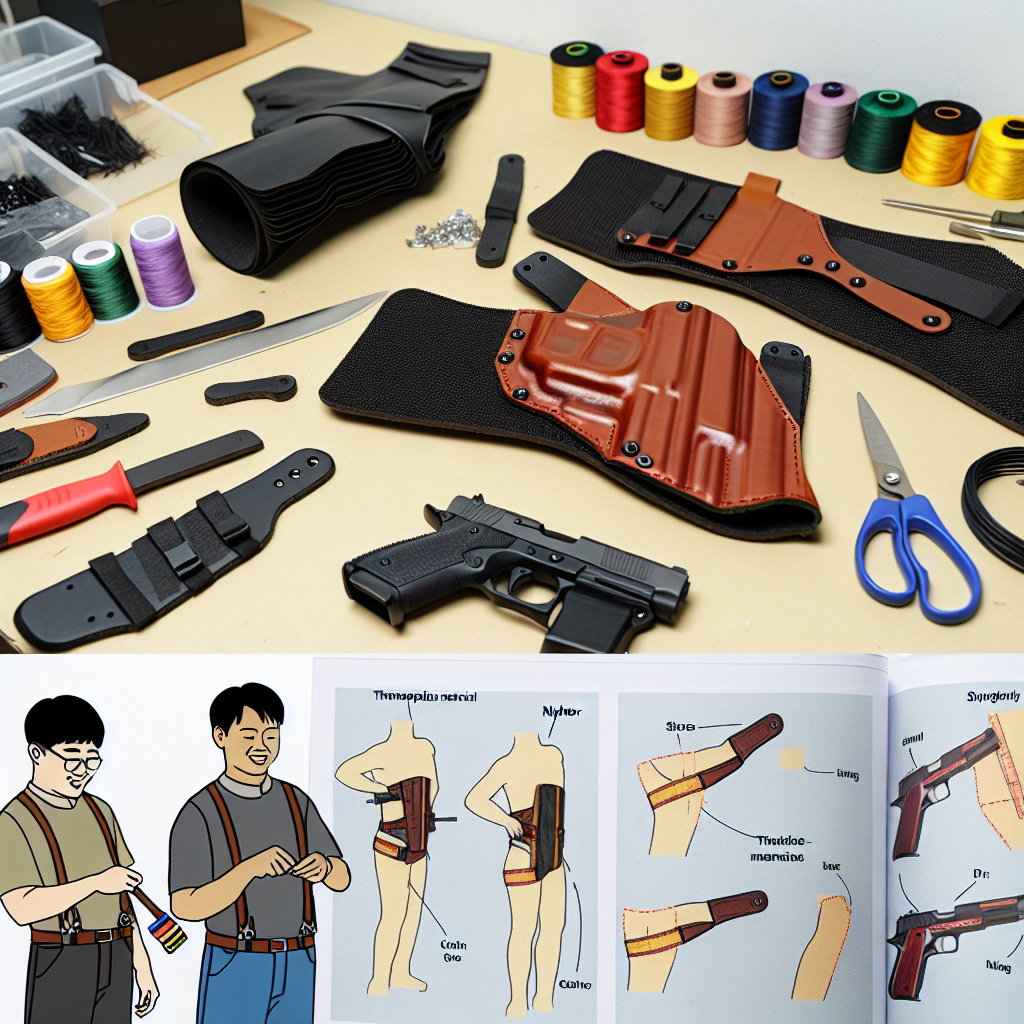
Materials Needed: Kydex sheets, a heat source, a mold (for your firearm), rivets, and straps for attachment. Start by heating the Kydex until pliable, then mold it around your firearm to shape it properly.
With the right materials and techniques, you can create a custom tactical holster that meets your specific needs.