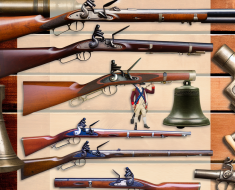
The Development of the Bolt-Action Rifle
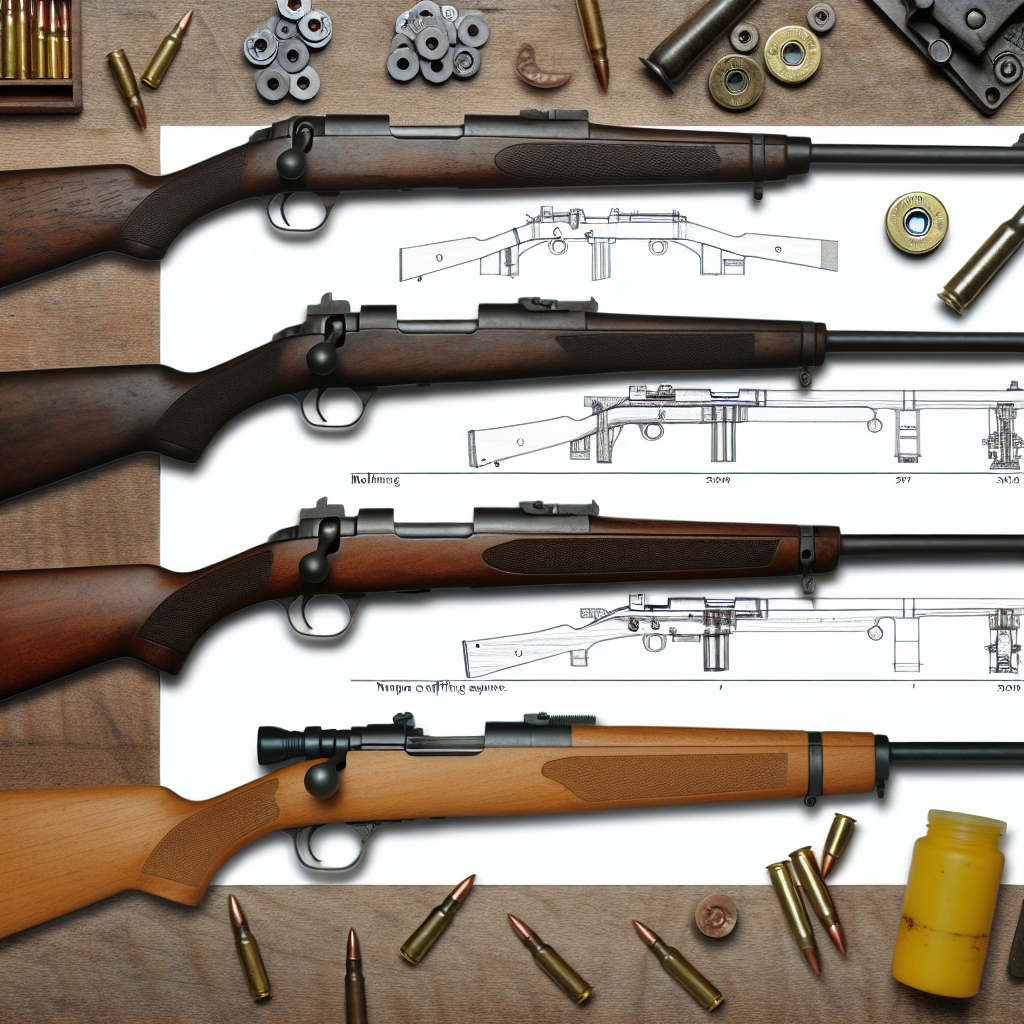
The bolt-action rifle stands as one of the most significant advancements in the history of firearms. Its design, which revolutionized military and civilian shooting alike, has influenced weapon technology for well over a century. This article delves into the fascinating development of the bolt-action rifle, tracing its origins, technological innovations, and its profound impact on warfare and hunting.
Origins and Early Innovations in Bolt-Action Technology
The bolt-action mechanism emerged during the mid-19th century, an era marked by rapid advancements in firearm technology. Prior to bolt-action rifles, soldiers primarily used muzzle-loading muskets or early breech-loaders that were slow to reload and lacked reliability.
The earliest known bolt-action rifle was developed by Johann Nikolaus von Dreyse in 1836. The “Dreyse Needle Gun,” as it was called, featured a bolt mechanism that allowed soldiers to reload faster than muzzle-loading weapons by inserting cartridges directly into the breech.
- Dreyse Needle Gun (1836): This Prussian innovation was revolutionary for its time, employing a bolt action with a needle-like firing pin to ignite a paper cartridge from the rear. It gave Prussian forces a tactical advantage in conflicts such as the Austro-Prussian War (1866).
- Chassepot Rifle (1866): Developed by France as a response to the Dreyse, this rifle improved upon the bolt action with better sealing and increased range, using paper cartridges ignited by a needle firing pin.
- Early Challenges: Despite these advances, early bolt-actions had limitations including slow rates of fire compared to later designs and issues with gas leakage due to imperfect breech seals.
The key innovation of these early rifles was their use of self-contained cartridges instead of loose powder and ball. This development allowed quicker reloading and improved reliability — foundational features that would shape future firearm designs.
Technological Advancements: From Single-Shot to Repeating Bolt-Actions
As firearms technology progressed through the late 19th century, inventors sought to combine bolt-action mechanisms with magazine feeding systems to increase rate of fire without sacrificing accuracy or reliability.
A major leap occurred with the introduction of metallic cartridges — sturdier rounds that facilitated faster extraction and loading. This innovation paved the way for repeating rifles using bolt actions.
- Mauser Model 1871: Germany’s first standard-issue bolt-action rifle used single-shot metallic cartridges but laid groundwork for future improvements.
- Mauser Model 1898: Often hailed as one of the most influential rifle designs ever made, this model introduced controlled-feed bolt mechanisms, stripper clip loading systems, and strong locking lugs for enhanced safety and durability.
- Lebel Model 1886: France’s innovative design used smokeless powder cartridges combined with a tube magazine; though not strictly bolt-action in feeding system design, it influenced contemporary developments towards higher-capacity rifles.
The Mauser 1898 stands out because many modern rifles still borrow heavily from its design principles. Its controlled-feed extractor prevented double feeds and jams—a critical feature in combat scenarios—while its robust construction allowed for powerful cartridges capable of long-range precision shooting.
The Bolt-Action Rifle’s Role in Military Conflicts
Bolt-action rifles became standard military equipment worldwide during the late 19th and early 20th centuries. Their accuracy, reliability under harsh conditions, and relatively high rate of fire made them formidable weapons on battlefields from Europe to Asia.
Several key conflicts illustrate how bolt-actions shaped military history:
- Franco-Prussian War (1870-1871): The Prussian army’s use of the Dreyse Needle Gun contributed significantly to their victory against French forces armed mainly with muzzle-loaders.
- Second Boer War (1899-1902): British troops wielded Lee-Metford rifles while Boer fighters used Mauser-pattern rifles—both bolt-actions—which demonstrated superior range and accuracy compared to older weapons.
- World War I (1914-1918): Bolt-action rifles like the British Lee-Enfield, German Mauser Gewehr 98, Russian Mosin-Nagant, and French Lebel became iconic symbols of trench warfare. Despite emerging semi-automatic technologies near war’s end, bolt-actions remained dominant due to mass production capabilities and battlefield familiarity.
The statistics from World War I emphasize their impact: millions of these rifles were produced across belligerent nations. For example:
- The British Lee-Enfield Mk III saw over 17 million units produced during WWI alone.
- The German Mauser Gewehr 98 exceeded production numbers above five million during this period.
This massive scale ensured that infantry units were equipped with reliable weapons capable of delivering accurate fire at ranges up to 600 meters or more—a decisive factor in many battles.
Civilian Adoption: Hunting and Sporting Applications
Beyond military use, bolt-action rifles found widespread adoption among civilian shooters for hunting and sport shooting throughout the 20th century. Their inherent precision made them ideal tools for long-range marksmanship where repeatable accuracy is paramount.
Civilian models evolved from military designs, incorporating features that catered to hunters and sport shooters, such as lighter weights and improved ergonomics. This evolution solidified the bolt-action rifle’s place in both military and civilian contexts.
Today, the bolt-action rifle remains a popular choice for precision shooting, illustrating its enduring legacy in firearm history.