The History of the Thompson Submachine Gun
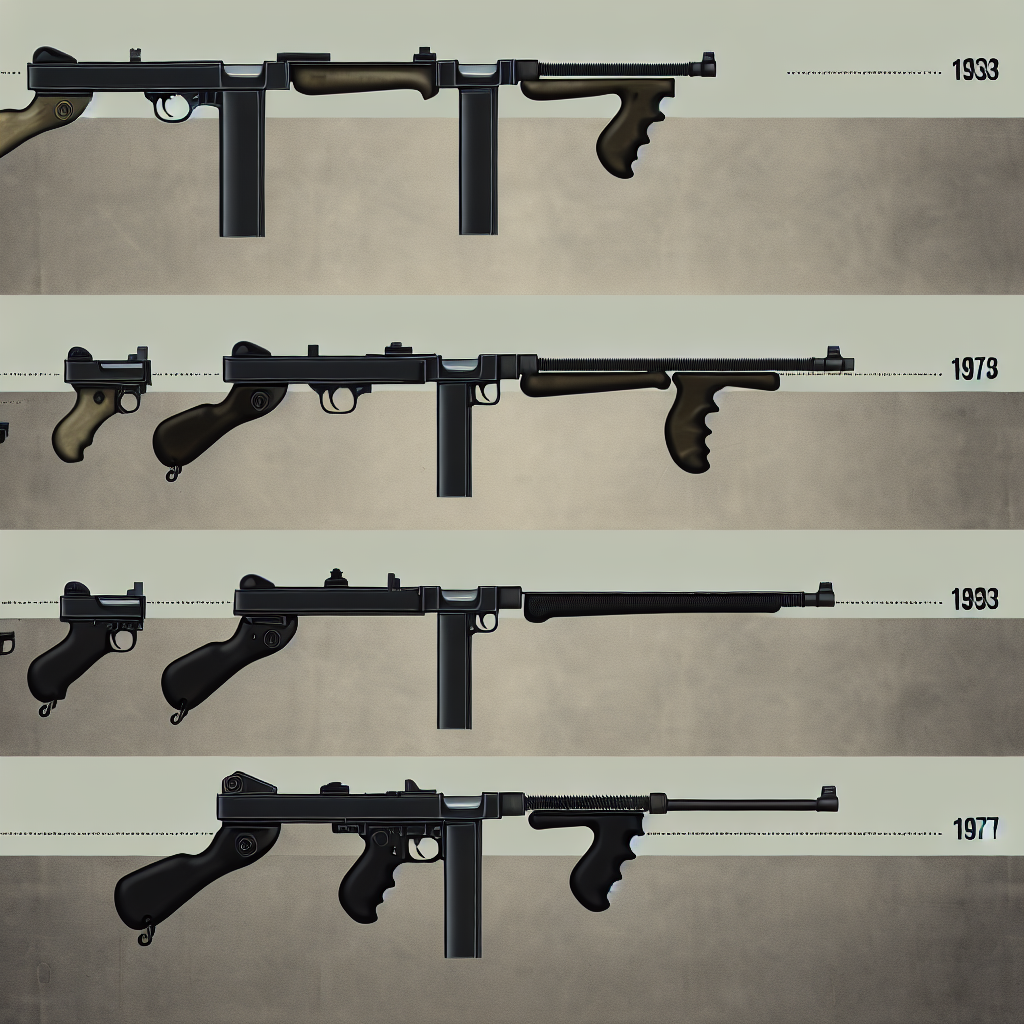
The Thompson submachine gun, often referred to as the “Tommy Gun,” stands as one of the most iconic firearms in modern history. From its inception in the early 20th century to its widespread use in wars and by law enforcement agencies, the Thompson has left an indelible mark on military and cultural history. This article explores the fascinating journey of the Thompson submachine gun, highlighting its design evolution, wartime applications, and lasting legacy.
Origins and Development: The Birth of a Legend
The story of the Thompson submachine gun begins with John T. Thompson, a former U.S. Army officer who envisioned a weapon that combined the rapid-fire capability of a machine gun with the portability and ease of use needed by infantry soldiers. His goal was to create a firearm suitable for close-quarter combat, which was becoming increasingly relevant during World War I trench warfare.
Development officially started in 1918 when Thompson founded the Auto-Ordnance Company to bring his vision to life. Although it was too late to see action in World War I, the design was revolutionary for its time:
- Caliber: .45 ACP (Automatic Colt Pistol), known for stopping power at close range.
- Rate of Fire: Approximately 600-700 rounds per minute, making it highly effective in suppressive fire situations.
- Operating Mechanism: Blowback operation with an open bolt design.
The first prototypes were completed by 1919, but production was slow due to technical challenges and the post-war drawdown in military spending. However, the weapon’s unique features soon attracted attention from various groups beyond just military forces.
The Tommy Gun in Prohibition-Era America: From Law Enforcement to Organized Crime
During the 1920s and early 1930s, the Thompson submachine gun gained notoriety in the United States amid Prohibition—the period when alcohol production and sale were illegal. The weapon’s compact size, high rate of fire, and powerful .45 caliber rounds made it ideal for both law enforcement agents combating bootleggers and criminals enforcing their turf.
The Tommy Gun became a symbol associated with gangsters such as Al Capone and “Machine Gun” Kelly. Its effectiveness in drive-by shootings and raids on speakeasies cemented its reputation as a formidable tool of crime:
- St. Valentine’s Day Massacre (1929): Perhaps the most infamous example where members of Al Capone’s gang used Thompsons to kill seven rival gangsters in Chicago.
- Law Enforcement Adoption: Agencies like the FBI began using Thompsons to combat organized crime, marking one of the earliest instances where federal forces adopted submachine guns.
This duality—being used by both criminals and law enforcers—added complexity to public perception of the Tommy Gun during this era. Despite its criminal associations, it remained a technically advanced firearm admired for its reliability and firepower.
The Thompson Submachine Gun in World War II: A Battlefield Staple
With the outbreak of World War II, demand for effective infantry weapons surged globally. The United States military recognized that existing rifles were cumbersome for close-quarters fighting often encountered in urban warfare or jungle combat. The Thompson submachine gun emerged as an essential tool during this period due to several factors:
- Reliability: Rugged construction allowed it to function well under harsh battlefield conditions.
- Simplicity: Easy training curve enabled rapid deployment among troops.
- Lethality: The .45 ACP round was effective against enemy soldiers at close range.
The U.S. produced multiple variants during WWII, including:
- M1928A1 Model: Featured a cut-down barrel and cooling fins for weight reduction.
- M1 Model: Simplified design with fewer parts to speed manufacturing; replaced drum magazines with box magazines for reliability.
The weapon saw extensive use by American infantrymen, paratroopers, Marines, and special forces across multiple theaters such as Europe, North Africa, and the Pacific Islands. Notably:
- D-Day Landings (1944): Many U.S. troops carried Thompsons into Normandy beaches during one of history’s largest amphibious assaults.
- Pacific Jungle Warfare: The compact nature of the Tommy Gun made it ideal for dense jungle battles against Japanese forces.
Internationally, Allied forces including British Commandos also adopted the Thompson under lend-lease agreements. Its presence on battlefields worldwide attested to its versatility despite being heavier than some contemporaries like the German MP40 or British Sten gun.
Technical Innovations and Variants: Evolving Design Over Time
The Thompson submachine gun underwent numerous modifications throughout its service life aimed at improving performance while reducing costs and weight. Key innovations included:
- Simplification of Manufacturing Processes: Early models were expensive due to intricate machining; later models used stamped parts allowing mass production during wartime urgency.
- Ammunition Feeding Systems: Initially equipped
Ammunition Feeding Systems: Initially equipped with a drum magazine, later versions transitioned to more efficient stick magazines, enhancing reliability and ease of use in combat situations.
Overall, the Thompson submachine gun remains a significant icon in military history, symbolizing innovation and adaptability in firearms design.