The Evolution of the AR-15: From Military to Civilian Icon
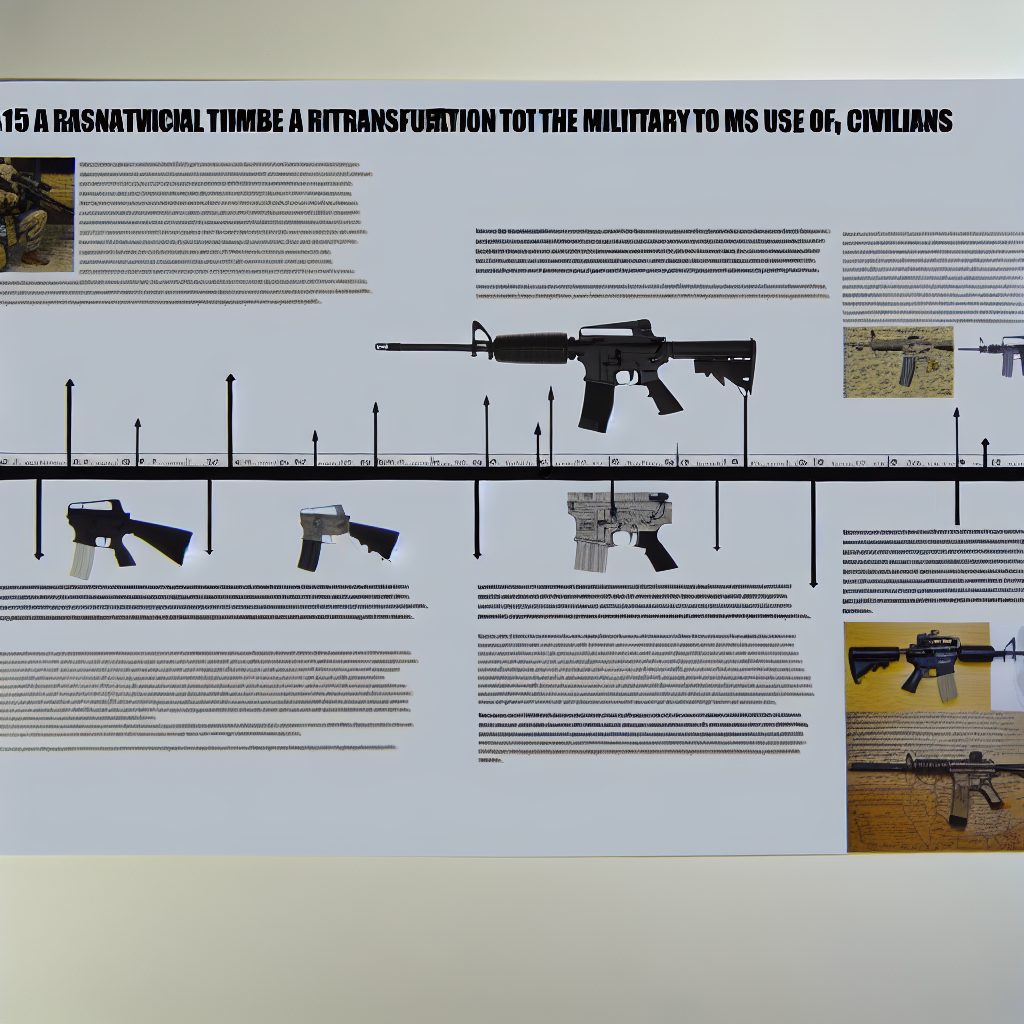
The AR-15 rifle is one of the most recognizable firearms in modern history, with a storied past that spans military innovation, civilian adaptation, and cultural significance. Originally designed as a military weapon, the AR-15 has evolved over decades into a symbol of both technological advancement and controversial debate in the United States and beyond. This article delves into the fascinating journey of the AR-15—from its inception as a groundbreaking military rifle to its current status as a popular civilian firearm—and explores how it became embedded in American culture.
Origins of the AR-15: Military Innovation and Design
The AR-15’s story begins in the post-World War II era, during a period of rapid innovation in small arms technology. The rifle was designed by Eugene Stoner in the late 1950s while working for the Armalite Corporation, hence the “AR” designation, which stands for “Armalite Rifle.”
Stoner sought to create a lightweight, reliable, and easy-to-maintain assault rifle that would meet evolving military needs. The result was a revolutionary design featuring:
- Lightweight Construction: The use of aluminum alloys and synthetic materials significantly reduced weight compared to traditional steel rifles.
- Gas-operated Direct Impingement System: This innovative mechanism allowed for efficient cycling with fewer moving parts.
- Modularity: The rifle’s design made it easy to customize and adapt for different roles.
The original Armalite AR-15 was pitched to various branches of the U.S. military but initially met resistance due to its unconventional materials and design philosophies. However, in 1959, Colt acquired the rights to manufacture the rifle and marketed it aggressively to military clients.
By 1964, after further modifications and testing, the U.S. military adopted a variant known as the M16 as its standard infantry rifle during the Vietnam War. The M16 retained many core features of Stoner’s original AR-15 but incorporated improvements based on combat feedback.
The Transition to Civilian Markets: Colt’s Marketing Strategy and Early Adoption
While the M16 became synonymous with American soldiers during Vietnam, Colt recognized early on that there was potential for a civilian version of this innovative rifle. In 1963, Colt introduced the semi-automatic AR-15 to civilian markets—a version intended for recreational shooting, hunting, and self-defense rather than military combat.
This transition marked several important developments:
- Semi-Automatic Operation: Unlike fully automatic M16s used by soldiers, civilian AR-15s were restricted to semi-automatic fire to comply with firearm regulations.
- Customization Potential: Early adopters quickly realized they could modify their rifles with different barrels, stocks, sights, and accessories.
- A New Market Segment: The AR-15 appealed to enthusiasts who valued precision engineering combined with versatility.
The popularity of hunting and sport shooting in America helped spur demand for this new type of rifle. Furthermore, Colt’s marketing emphasized reliability and ease of use—qualities that resonated with both experienced shooters and newcomers alike.
The Rise of Modularity: Customization as a Cultural Phenomenon
One of the defining characteristics that propelled the AR-15 into widespread acclaim was its modular design. Unlike many traditional rifles with fixed components, the AR platform allowed users unprecedented flexibility to tailor their firearms according to specific needs or preferences.
This modularity led to an explosion in aftermarket parts and accessories throughout the late 20th century. By the 1990s and early 2000s, hundreds of companies produced components such as:
- Barrels of varying lengths and calibers
- Sights including red dot optics and magnified scopes
- Adjustable stocks for comfort and control
- Trigger upgrades for improved accuracy
- Muzzle devices like flash suppressors or compensators
This ecosystem transformed ownership from merely possessing a firearm into an active hobby involving customization and technical knowledge. Enthusiasts formed communities centered around building “custom” AR-style rifles suited for competition shooting, hunting various game species, or home defense scenarios.
A notable example is competition shooting sports such as 3-Gun matches where accuracy at speed is critical; many top shooters prefer customized AR platforms tailored for their style.
The Impact of Legislation: Navigating Gun Laws and Public Perception
The evolution of the AR-15 has not occurred in a vacuum—its rise has been closely intertwined with shifts in gun legislation and public discourse surrounding firearms ownership in America. The rifle’s increasing visibility brought scrutiny from lawmakers seeking to regulate so-called “assault weapons.”
Key legislative moments include:
- The Federal Assault Weapons Ban (1994–2004): This law prohibited certain features on semi-automatic rifles like detachable magazines combined with pistol grips or folding stocks. While some AR variants were affected temporarily, manufacturers adapted designs accordingly.
- State-Level Regulations: Various states have enacted their own restrictions on magazine capacities or specific features associated with AR-style rifles.
-
The National Firearms Act (NFA): This legislation introduced regulations on specific firearm types, including machine guns and short-barreled rifles, impacting the AR-15 market by imposing additional requirements for ownership.
As the AR-15 continues to evolve, its role in American culture remains a topic of passionate debate and discussion.