How to Legally Transport Guns Across Different States
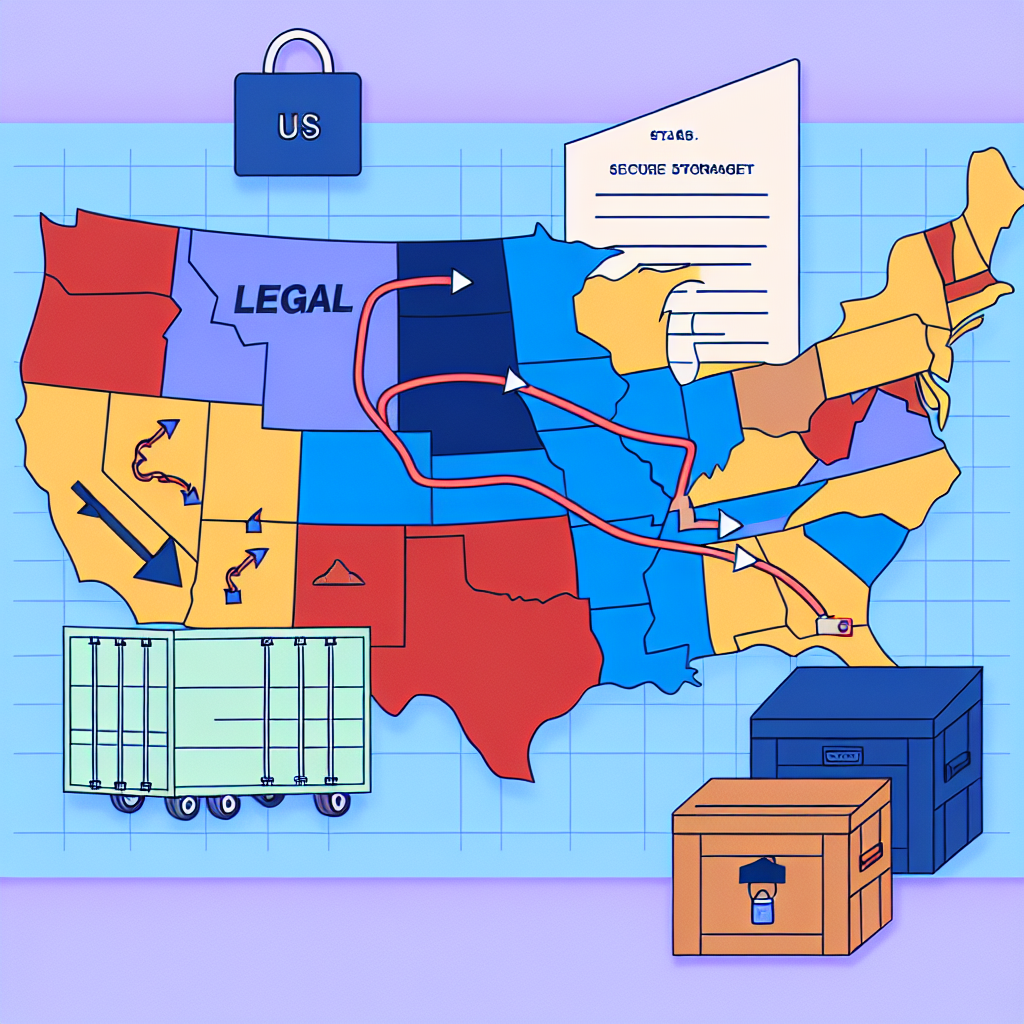
Transporting firearms across state lines in the United States can be a complex process due to varying state laws and federal regulations. Whether you are moving, traveling for hunting, or attending a shooting competition, understanding the legal framework surrounding interstate gun transportation is crucial to avoid legal pitfalls. This article provides a comprehensive guide on how to legally transport guns across different states, supported by examples, case studies, and essential statistics.
Understanding Federal Laws Governing Gun Transportation
The foundation for legally transporting firearms across state lines is primarily governed by federal law. The most important statute that addresses this issue is the Firearm Owners Protection Act (FOPA) of 1986. FOPA provides certain protections for individuals traveling with firearms, but it also imposes specific conditions.
Under FOPA, an individual may transport a firearm for lawful purposes from one place where they have the right to possess it to another place where they also have that right. However, the firearm must be unloaded and stored in a locked container other than the glove compartment or utility box of a vehicle.
- Unloaded Firearm: The gun must be completely unloaded during transport.
- Locked Container: The firearm should be kept in a locked container inaccessible to the vehicle occupants.
- Ammunition Storage: Ammunition should be stored separately from the firearm if possible.
This federal protection acts as a “safe harbor” provision against prosecution under state laws for possession of firearms during interstate travel, provided these conditions are met. However, it’s important to note that FOPA does not override all state laws—some states still impose restrictions on certain types of firearms or magazines.
Example: The Supreme Court Case of Brian v. United States
In Brian v. United States, a traveler was prosecuted under state law despite complying with FOPA’s requirements. The court ruled that while FOPA protects against certain prosecutions, it does not provide blanket immunity if an individual violates other applicable laws (e.g., possessing prohibited weapons). This case highlights the importance of understanding both federal and state regulations before transporting firearms.
Navigating State-Specific Firearm Laws
Each state has its own set of rules regulating firearm possession and transportation. These differences can range from permit requirements to outright bans on certain weapons or accessories. To legally transport guns across states, travelers must familiarize themselves with each state’s laws involved in their route and destination.
- Permit Reciprocity: Some states recognize concealed carry permits issued by other states; others do not.
- Banned Firearms: Certain states ban assault weapons or large-capacity magazines.
- Open Carry Restrictions: Laws vary widely on whether open carry is allowed or restricted during transport.
- Storage Requirements: Some states mandate specific storage conditions beyond federal law.
A useful tool for travelers is consulting resources such as the HandgunLaw.us website, which provides updated maps and summaries of state firearm laws and reciprocity agreements.
Case Study: Traveling from Texas to California
A common challenge arises when transporting firearms from permissive states like Texas into restrictive ones like California. California prohibits many semi-automatic rifles with certain features and restricts magazine capacity to 10 rounds. Even if a traveler complies with FOPA requirements, bringing banned firearms or magazines into California can result in severe penalties including felony charges.
This example underscores why travelers must check destination state laws before transporting firearms and consider alternative options such as temporarily storing prohibited items outside restricted jurisdictions.
The Role of Concealed Carry Permits in Interstate Travel
If you carry a concealed weapon during travel, your permit status becomes critical. The U.S. does not have a national concealed carry permit; instead, each state issues its own permits with varying degrees of reciprocity.
- Reciprocity Agreements: Some states honor permits from other states fully or partially; others do not recognize out-of-state permits at all.
- No Permit States: A few states allow permitless carry but may have restrictions on non-residents carrying firearms within their borders.
- Interstate Travel Considerations: Carrying concealed without recognition of your permit can lead to arrest or confiscation of your firearm in some jurisdictions.
The National Rifle Association’s Institute for Legislative Action (NRA-ILA) maintains an updated list of reciprocity agreements which can help travelers plan accordingly: NRA Reciprocity Map.
Example: The Impact of Reciprocity on Cross-Country Road Trips
A concealed carry permit holder from Florida planning a road trip through Georgia, Tennessee, Kentucky, and Indiana must verify whether each state recognizes their Florida permit. While most southeastern states recognize Florida’s permit, Indiana requires registration for non-resident permits obtained after July 2011. Failure to comply could lead to violations despite having a valid permit at home.
It’s essential to stay informed about the laws in each state to ensure a safe and legal journey.