The History of the FN FAL Rifle
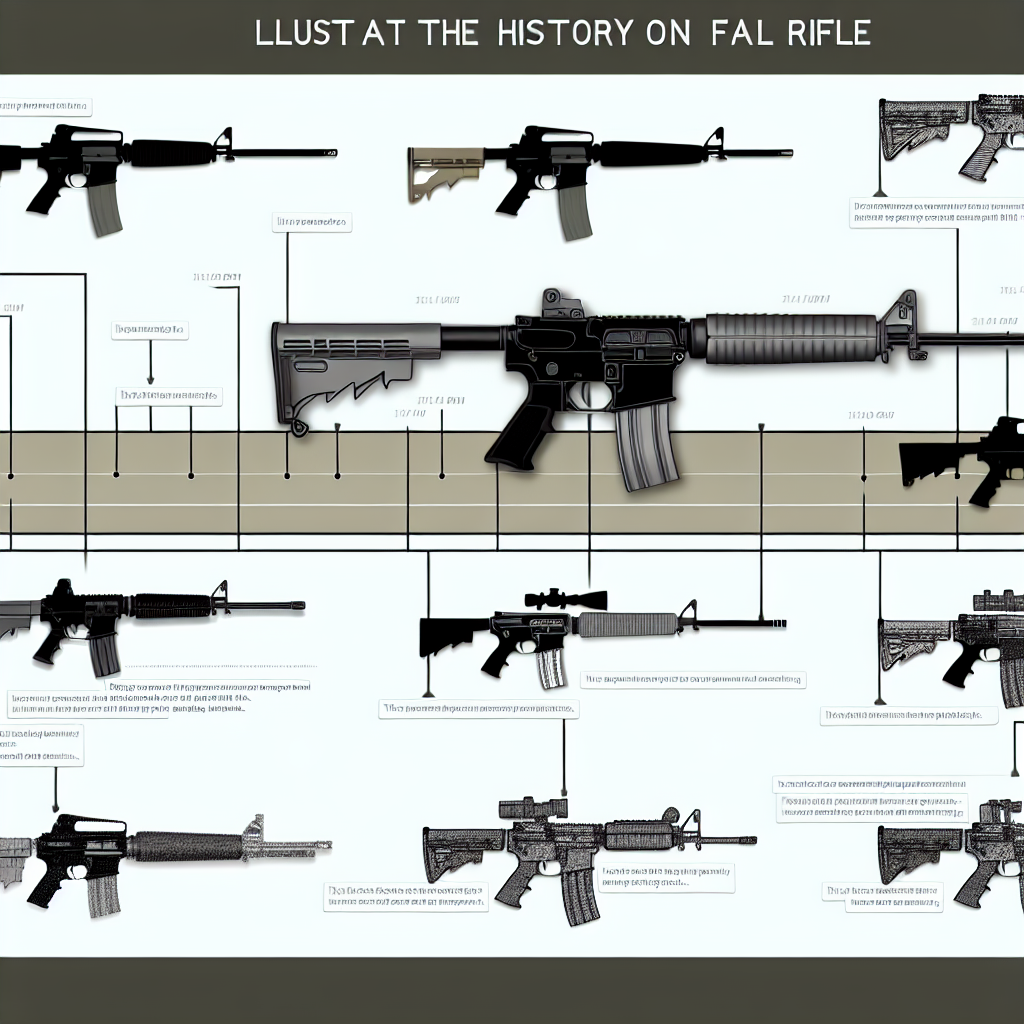
The FN FAL rifle is often regarded as one of the most iconic and influential battle rifles of the 20th century. Known as the “Right Arm of the Free World,” this weapon has played a significant role in numerous conflicts and military forces around the globe. Its robust design, reliability, and adaptability have made it a preferred choice for many nations during the Cold War era and beyond. This article delves into the rich history of the FN FAL rifle, exploring its development, global adoption, combat usage, and enduring legacy.
Origins and Development: The Birth of a Legend
The story of the FN FAL begins in the aftermath of World War II when military strategists worldwide sought to develop a new generation of infantry rifles. The transition from bolt-action rifles to semi-automatic and fully automatic weapons was well underway, but there was still debate about the ideal cartridge size for a standard service rifle.
In 1947, Fabrique Nationale de Herstal (FN), a Belgian arms manufacturer with a strong reputation, began developing a new rifle based on earlier designs by John C. Garand and other innovators. FN’s chief designer, Dieudonné Saive, led the team that created what would become the Fusil Automatique Léger (FAL), meaning “Light Automatic Rifle.”
- Early Design Influences: The FAL’s operating system drew inspiration from the M1 Garand’s gas-operated mechanism but incorporated a tilting bolt design similar to that found in the German Sturmgewehr 44.
- Caliber Selection: Initially chambered in .280 British (7x43mm), designed to balance recoil with lethality, but NATO eventually standardized on 7.62x51mm NATO cartridges in 1954.
- Adaptability: The FAL was designed with modularity in mind, allowing variants with different barrel lengths and configurations for specific military roles.
The switch to 7.62x51mm NATO delayed full adoption by some countries due to concerns over recoil and ammunition weight but ultimately helped cement its place as a NATO-standard weapon.
Global Adoption: The “Right Arm of the Free World”
Following its development, the FN FAL quickly gained attention worldwide due to its robustness and performance. By the late 1950s and early 1960s, it had been adopted by over 90 countries, including many NATO members and allies outside Europe.
- United Kingdom: Adopted as the L1A1 Self-Loading Rifle (SLR), chambered in 7.62x51mm NATO but with a semi-automatic-only firing mode for better accuracy control.
- Australia and Canada: Both countries adopted versions similar to the British L1A1 variant, using it extensively through several decades.
- Argentina: Produced under license domestically as the FMAP FAL in various configurations.
- Brazil: Manufactured its own licensed versions known as M964 and M973 models.
The widespread adoption was aided by licensing agreements allowing local production which helped reduce costs and encourage use in local armed forces. The FN FAL became synonymous with Western-aligned military forces during much of the Cold War period.
The FN FAL in Combat: Proven Through Conflict
The true test of any weapon lies on the battlefield. Over decades, the FN FAL proved itself across multiple terrains and conflicts, demonstrating its reliability under harsh conditions.
- Suez Crisis (1956): Used by British forces during their intervention in Egypt, showcasing its effectiveness in desert warfare.
- Biafran War (1967–1970): The rifle was heavily used by Nigerian government troops, highlighting its role in African conflicts where it became ubiquitous among various factions.
- The Falklands War (1982): Both British L1A1 SLRs and Argentine FMAP FALs were deployed extensively during this conflict between Argentina and the United Kingdom over disputed islands.
- Southeast Asia Conflicts: Australian troops used their L1A1 variants during operations in Vietnam from 1965 to 1972.
The FN FAL’s ruggedness was evident as it performed well despite exposure to mud, sand, humidity, and extreme temperatures. Its controllable recoil for an intermediate cartridge allowed effective accuracy at medium ranges up to about 600 meters—a significant advantage over some contemporaries.
Technical Features: What Made the FN FAL Stand Out?
The success of the FN FAL can be attributed to several key technical features that balanced firepower with user-friendliness.
- Semi-Automatic & Select-Fire Capability: Most original models offered both semi-automatic and fully automatic firing modes; however, some countries limited their rifles to semi-auto only for better control during sustained fire.
- Tilted Bolt Operation: This gas-operated mechanism ensured reliable cycling even under adverse conditions while simplifying maintenance compared to more complex systems like rotating bolts.
- Diverse Configurations: Variants included standard full-length battle rifles (~44-inch overall length
Diverse Configurations: Variants included standard full-length battle rifles (~44-inch overall length) as well as shorter models, allowing for adaptability in various combat situations.
Overall, the FN FAL remains a significant milestone in firearm design, influencing many modern rifles today.