Tactical Shooting Drills You Can Practice at Home
Tactical shooting is a discipline that combines precision, speed, situational awareness, and decision-making under pressure. Whether you are a law enforcement officer, a competitive shooter, or an enthusiast aiming to improve your skills, regular practice is essential. However, accessing a range or training facility isn’t always feasible. Fortunately, there are many tactical shooting drills you can safely practice at home to sharpen your abilities without live ammunition. This article explores these drills in detail, providing practical advice and examples to help you enhance your tactical proficiency from the comfort of your own space.
Understanding the Fundamentals of Tactical Shooting
Before diving into specific drills, it’s crucial to understand what tactical shooting entails. Unlike traditional target shooting focused solely on accuracy, tactical shooting incorporates elements such as movement, threat identification, and weapon manipulation under stress. The goal is not just to hit targets but to do so efficiently and effectively in dynamic scenarios.
Tactical shooting skills typically include:
- Marksmanship: Accurate shot placement under varying conditions.
- Speed and transitions: Moving quickly between targets while maintaining accuracy.
- Reloading and malfunction drills: Efficient weapon handling under pressure.
- Movement and positioning: Utilizing cover and angles effectively.
- Decision making: Reacting appropriately to different threat levels.
The following sections outline drills designed to develop these skills using dry-fire techniques, simulation tools, and mental conditioning exercises that can be safely performed at home.
Dry-Fire Drills: The Cornerstone of At-Home Tactical Training
Dry-fire training involves practicing trigger control and weapon manipulation without live ammunition. It is one of the most effective ways to build muscle memory for tactical shooting because it allows for repetition without the constraints of range access or ammunition costs.
Benefits of Dry-Fire Training:
- Enhances trigger control by focusing on smooth press without flinching.
- Improves sight alignment and sight picture consistency.
- Allows practice of reloads, malfunction clearance, and grip techniques.
- Can be combined with movement drills for realistic scenarios.
Examples of Dry-Fire Drills:
- The Wall Drill: Stand close (6-12 inches) to a blank wall. Align your sights on a spot on the wall and practice dry-firing while maintaining sight alignment. This drill improves trigger control without disturbing your sight picture.
- The Dot Torture Drill: Utilize a printable target with several dots arranged in a pattern. Dry-fire on each dot focusing on accuracy and trigger press speed. This drill challenges precision under time constraints.
- The Reload Drill: Practice magazine changes repeatedly until they become smooth and reflexive. Time yourself to add an element of speed improvement over sessions.
- The Malfunction Clearance Drill: Simulate stovepipe jams or double feeds by using snap caps or dummy rounds (if available) or simply practicing the motions involved in clearing stoppages efficiently during dry-fire sessions.
A study conducted by the National Institute of Justice found that dry-fire training significantly improved shooters’ accuracy and reaction times when transitioning back to live fire exercises. This highlights how foundational dry-fire work is for tactical competence.
Tactical Movement Drills You Can Perform Indoors
Tactical shooting isn’t just about static firing—it requires fluid movement combined with accurate shooting under stress. While you cannot fire live rounds indoors safely, you can still practice movement patterns that develop balance, footwork, and transitions between positions.
Tactical Movement Skills Include:
- Shooting stance transitions (from standing to kneeling or prone).
- Lateral movement with simulated weapon presentation.
- Maneuvering around corners or obstacles safely.
- Shooting from behind cover (using household items as props).
Indoor Movement Drills Examples:
- Ladder Footwork Drill: Lay down tape or string in a ladder pattern on the floor. Step through each square quickly using various foot placements (two feet per square, lateral shuffles). This develops foot speed and coordination critical for tactical maneuvers.
- Corners & Angles Drill: Use furniture corners or doorways as simulated cover points. Practice moving from one position to another while maintaining proper muzzle discipline (pointing the unloaded firearm in a safe direction) and presenting your firearm as if engaging a target immediately upon exposure.
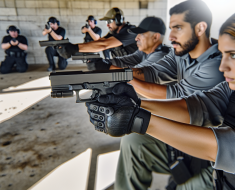
- Shooting Positions Drill: Practice transitioning between standing, kneeling, sitting, and prone positions smoothly while maintaining good grip and sight alignment with an unloaded training pistol or airsoft gun if available.
A case study involving military trainees showed that integrating movement drills with marksmanship training resulted in a marked improvement in their ability to engage targets accurately while moving—an essential skill in real-world encounters where static firing is rare.
ision-making skills can be honed through various mental exercises, such as scenario-based training and visualization techniques. These practices help shooters prepare for high-stress situations.
Incorporating these drills into your routine can significantly enhance your tactical shooting skills, making you more prepared for real-life scenarios.