How to Reload Ammunition for Different Calibers: A Comprehensive Guide
Reloading ammunition is a rewarding and practical skill that many shooting enthusiasts and professionals embrace. Not only does it offer cost savings, but it also allows for customization of loads to optimize performance for specific firearms and purposes. Whether you’re a seasoned reloader or a curious beginner, understanding how to reload ammunition for different calibers is essential for safety, efficiency, and accuracy.
This article delves into the step-by-step process of reloading ammunition across various calibers, highlighting important considerations, tools, safety protocols, and practical tips. We’ll also look at some case studies and statistics to underscore the benefits and challenges involved.
Understanding the Basics of Ammunition Reloading
Before diving into caliber-specific processes, it’s crucial to grasp the fundamental components of ammunition and the general steps involved in reloading.
Ammunition primarily consists of four parts:
- Case: The metal shell that holds all components together.
- Primer: The ignition source that sparks the powder when struck by the firing pin.
- Powder: The propellant that generates gas to push the bullet out of the barrel.
- Bullet: The projectile fired from the gun.
The basic steps in reloading include:
- Cleaning and inspecting cases
- Resizing cases to ensure they fit properly in the chamber
- Priming cases with new primers
- Dosing powder charges accurately according to load data
- Seating bullets to the correct depth with proper crimping if necessary
This process may vary slightly depending on caliber and firearm type, but understanding these fundamentals will help you reload safely across all calibers.
Selecting Equipment and Components for Different Calibers
The choice of tools and components is pivotal in successful reloading. Different calibers require specific dies, powders, primers, and bullets tailored to their dimensions and performance characteristics.
Reloading Equipment Essentials:
- Reloading Press: Single-stage presses are ideal for beginners due to simplicity; progressive presses increase speed for experienced reloaders.
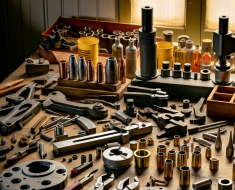
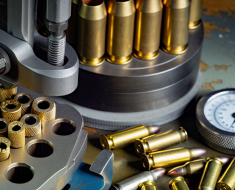
- Dies: Sized specifically for each caliber; typically include resizing/depriming die, expanding die (for bottleneck cartridges), seating die, and crimp die if needed.
- Scale: Precision scales are critical for measuring powder charges accurately — small errors can cause dangerous overpressure or poor performance.
- Case Trimmer & Chamfer Tool: Used primarily for rifle cartridges where case length must be consistent.
- Tumblers or Ultrasonic Cleaners: For cleaning used brass casings before reuse.
Selecting Components by Caliber:
Ammunition components differ based on caliber specifications. Here are some examples:
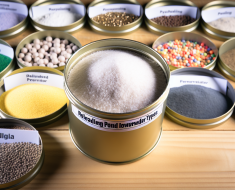
- .223 Remington / 5.56 NATO: Small rifle primers, fast-burning powders like Hodgdon CFE 223 or Varget, bullets ranging from 40-77 grains depending on purpose (varmint hunting vs. tactical).
- .308 Winchester / 7.62 NATO: Large rifle primers, medium-burning powders like IMR 4064 or RL-15, bullet weights from 150-180 grains common for target shooting or hunting.
- .9mm Luger: Small pistol primers, fast-burning pistol powders such as Alliant Power Pistol or Hodgdon Titegroup; bullet weights between 115-147 grains typical.
- .45 ACP: Large pistol primers, slow-burning pistol powders like Hodgdon HP38 or Accurate No.5; bullet weights usually range from 185-230 grains.
The selection process should always align with published load data from reliable sources like manufacturer manuals (Hornady, Hodgdon) or respected reloading handbooks (Lyman, Lee).
The Step-by-Step Process: Reloading Different Calibers Safely and Effectively
This section outlines detailed procedures tailored toward common rifle and pistol calibers. While many steps overlap across calibers, slight variations reflect cartridge design differences such as bottleneck vs. straight-walled cases or primer size differences.
Pistol Calibers (.9mm Luger as an Example)
-
Inspect & Clean Cases: Pistol brass tends to be thicker but can stretch after firing. Use a tumbler or ultrasonic cleaner to remove residue and inspect cases carefully for cracks or deformities.
-
Resize & Deprime: A resizing die will return your case to factory dimensions and remove spent primers. Pistol cases often don’t require trimming due to thick walls.
-
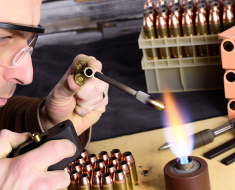
Add New Primer: Pistol primers come in small (9mm) or large sizes depending on caliber—use appropriate primer seating tools to avoid damage.
Use a powder measure to dispense the correct amount of powder for your load, ensuring accuracy for safe performance.
Following these steps will help you reload ammunition effectively for various calibers, enhancing your shooting experience.