Understanding Stages and Courses of Fire
Fire is a powerful natural phenomenon that has shaped human history, ecology, and urban development. Understanding the stages and courses of fire is crucial not only for firefighters and safety professionals but also for anyone interested in fire behavior, prevention, and control. This article delves deep into the science behind how fires ignite, grow, spread, and eventually extinguish. By examining the stages of fire development and the pathways it can take—known as courses of fire—we aim to provide a comprehensive understanding that can aid in effective fire management and safety planning.
The Science Behind Fire: A Brief Overview
Before exploring the stages and courses of fire, it’s important to understand what fire fundamentally is. Fire is a chemical reaction known as combustion, which occurs when a fuel source reacts rapidly with oxygen, producing heat, light, gases, and smoke. The key components necessary for fire to ignite are often referred to as the “fire triangle”:
- Fuel: Any combustible material such as wood, paper, or flammable liquids.
- Oxygen: Typically from the surrounding air; fires generally need at least 16% oxygen concentration.
- Heat: Sufficient energy to raise the fuel to its ignition temperature.
If any one of these elements is removed or controlled, the fire can be prevented or extinguished. This foundational knowledge sets the stage for understanding how fires develop through various phases and how they propagate through different environments.
The Four Stages of Fire Development
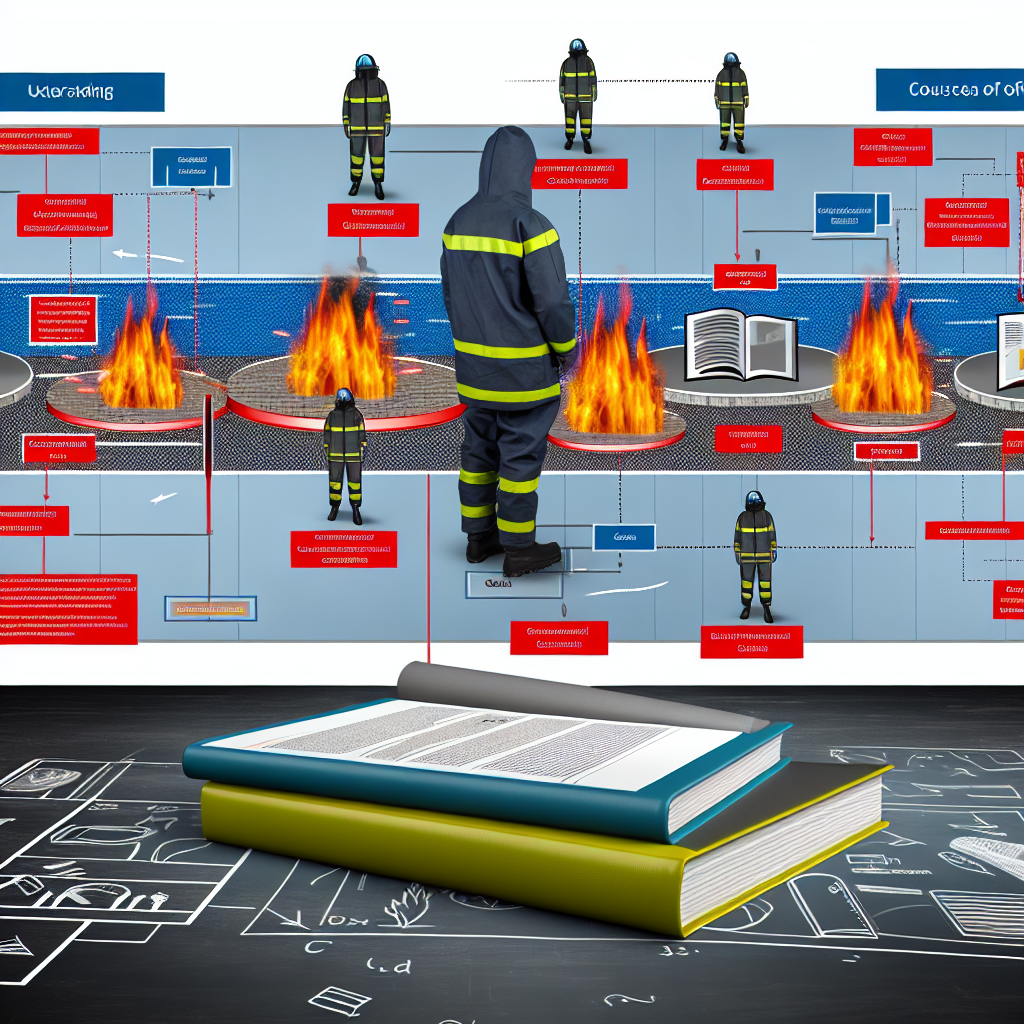
Fires do not simply start and spread instantly; they progress through predictable stages that define their behavior over time. These stages are critical for firefighting tactics, building design codes, and safety protocols. The four main stages are:
- Ignition Stage
- Growth Stage
- Fully Developed Stage
- Decay Stage
Ignition Stage: The Birth of Fire
The ignition stage marks the beginning of a fire when heat raises a fuel’s temperature to its ignition point. This stage involves a small flame or smoldering combustion that may go unnoticed initially.
For example, a cigarette dropped on dry grass can provide enough heat to ignite it if conditions are right. During this phase:
- The fire is localized.
- Heat output is minimal but increasing.
- The potential for growth depends on fuel availability and oxygen supply.
Understanding this phase helps in early detection systems like smoke alarms which aim to identify fires before they escalate.
Growth Stage: Rapid Expansion
If unchecked during ignition, the fire enters the growth stage where it spreads rapidly by consuming available fuels and generating increasing heat. This stage can be characterized by:
- An increase in flame size and intensity.
- A rise in temperature affecting nearby materials.
- The development of convection currents that draw oxygen towards the fire.
A classic case study here involves urban fires such as the Great Chicago Fire of 1871 where wooden buildings allowed rapid fire growth due to abundant fuel sources. During this stage, smoke production also intensifies due to incomplete combustion processes.
Fully Developed Stage: Peak Intensity
This is the most dangerous phase where the fire reaches its maximum heat output and consumes all available fuel vigorously. Characteristics include:
- Total involvement of combustible materials within reach.
- High temperatures often exceeding 1000°C (1832°F).
- The production of large volumes of toxic gases such as carbon monoxide.
An example is wildfires in California where entire forests enter this fully developed state causing widespread destruction over thousands of acres. At this point, suppression efforts become significantly more challenging without specialized equipment or resources.
Decay Stage: Burning Out
The decay stage begins when most combustible material has been consumed or oxygen supply becomes limited. Here:
- The fire diminishes in intensity but may still produce hazardous gases.
- The risk remains due to potential reignition if new fuels or oxygen become available.
- This phase can last from minutes to days depending on conditions such as underground peat fires that smolder long after surface flames die out.
This stage highlights why post-fire monitoring is essential even after flames subside to prevent flare-ups or secondary hazards.
Courses of Fire: How Fires Spread
The “course” of a fire refers to its path or direction as it moves through an environment. Understanding courses helps predict fire behavior during emergencies and informs strategic firefighting interventions. Common courses include:
- Lateral Spread: Movement across horizontal surfaces like floors or ground cover.
- Vertical Spread: Movement upwards via walls, stairwells, or vegetation layers.
- Creeping Fires: Slow-moving ground fires that consume low-lying fuels such as grass or leaf litter.
- Running Fires: Fast-moving fires driven by wind over continuous fuels like dense forests or
grasslands, rapidly consuming everything in their path.
Understanding these stages and courses of fire is crucial for effective prevention and response strategies.