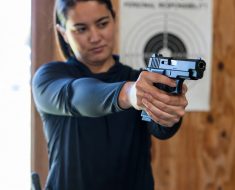
Mastering the Fundamentals: Grip, Stance, and Sight Alignment
In the realm of shooting sports and firearm handling, mastering the fundamentals is paramount to achieving consistency, accuracy, and safety. Among these fundamentals, grip, stance, and sight alignment form the foundation upon which all successful shooting techniques are built. Whether you are a novice learning to shoot or an experienced marksman refining your skills, understanding and perfecting these elements can dramatically improve your performance.
This article delves deep into these critical components, exploring their importance, best practices, and practical tips. Supported by case studies and expert insights, we aim to provide a comprehensive guide that empowers shooters to elevate their proficiency through mastering grip, stance, and sight alignment.
The Importance of Fundamentals in Shooting
Shooting is often perceived as a skill relying primarily on natural talent or advanced equipment. However, studies indicate that consistent accuracy is much more dependent on fundamental techniques than on physical strength or high-tech gear. According to a study published by the National Institute of Justice in 2018, shooters who underwent training focused on basic fundamentals showed a 40% improvement in accuracy within three months compared to those focusing primarily on speed or tactical maneuvers.
Fundamentals such as grip, stance, and sight alignment serve as the building blocks for every shot fired. Without a solid foundation in these areas:
- Accuracy tends to be inconsistent
- Recoil management becomes difficult
- Shot placement suffers due to poor control
- Overall confidence decreases
Therefore, investing time and effort in mastering these basics yields long-term benefits that transcend all shooting disciplines—be it competitive target shooting, hunting, or personal defense.
Understanding Grip: The First Point of Contact
The grip is the shooter’s primary interface with the firearm. It influences recoil absorption, trigger control, and ultimately shot placement. An improper grip can lead to muzzle flip, decreased accuracy, and even injury over prolonged shooting sessions.
Types of Grips and Their Applications
There are several grip styles used across different firearms and shooting disciplines:
- Two-Handed Grip: Commonly used with pistols; involves using both hands to stabilize the firearm.
- Thumbs Forward Grip: Popular among tactical shooters; thumbs point forward along the frame for enhanced control.
- C-Clamp Grip: Often used in competition shooting; the support hand forms a “C” shape around the front of the firearm for added stability.
- Single-Handed Grip: Traditional style used in cowboy action shooting or specific defensive scenarios.
Selecting an appropriate grip depends on your firearm type and shooting purpose. For example, law enforcement officers often adopt the thumbs forward grip for better recoil management during rapid fire sequences.
The Mechanics of an Effective Grip
An effective grip should ensure:
- Firmness without Tension: The hold should be firm enough to control recoil but not so tight as to induce muscle fatigue or shake.
- Consistent Placement: The web between thumb and index finger should be high on the backstrap of the pistol for better control.
- Even Pressure Distribution: Pressure should be applied evenly across both hands to prevent muzzle deviation.
A practical example comes from competitive shooter Max Michel who emphasizes that “a consistent grip allows you to predict how your firearm will behave with each shot,” highlighting that even minor inconsistencies can compound under stress or rapid firing conditions.
The Foundation of Stability: Perfecting Your Stance
Your stance provides balance and stability—the platform from which every shot is fired. An unstable stance leads to poor shot placement and increased recovery time between shots due to excessive movement caused by recoil.
Common Stances Explained
- Isosceles Stance: Feet shoulder-width apart with arms extended forward forming an isosceles triangle; favored for its simplicity and balance.
- Weaver Stance: One foot slightly back with knees bent; dominant hand pushes forward while support hand pulls back creating tension for recoil control.
- Shooters’ Modified Isosceles: A hybrid stance blending features from both stances based on shooter comfort and situation demands.
A study conducted by the International Practical Shooting Confederation (IPSC) demonstrated that shooters using an isosceles stance scored approximately 15% higher in rapid-fire accuracy tests compared to those using less balanced stances.
The Elements of an Effective Stance
- Foot Placement: Feet shoulder-width apart or slightly wider for enhanced balance;
- Knee Flexion: Slight bend in knees absorbs recoil impact;
- Torso Angle: Leaning slightly forward at hips helps maintain center of gravity;
- Weight Distribution: Weight evenly distributed between both feet prevents swaying;
- Comfort & Consistency: The stance should feel natural enough for sustained use without fatigue.
An effective stance is crucial for achieving accuracy and control in shooting. Practicing these fundamentals will significantly improve your performance.